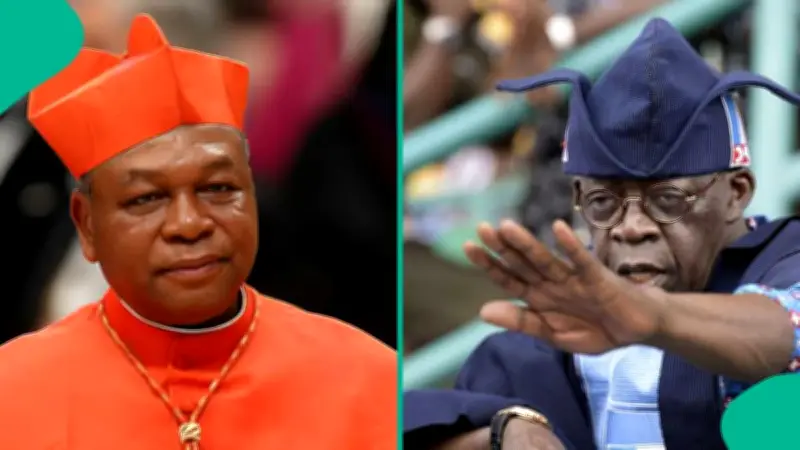
John Cardinal Onaiyekan, the Archbishop Emeritus of Abuja, has issued a stark warning that if Nigerians become convinced the All Progressives Congress (APC) is destined to win the 2027 general elections, the resulting voter apathy could severely undermine the legitimacy of the next government. Speaking on Monday during an appearance on Frontline, a current affairs programme on Eagle 102.5 FM in Ilese-Ijebu, Ogun State, the Cardinal argued that a perception of a predetermined outcome would discourage citizens from participating in the democratic process, thereby weakening its foundation before the elections even take place.
Onaiyekan connected this concern to a broader pattern observed in recent Nigerian elections, where declining voter turnout reflects a public growing increasingly sceptical about whether their votes truly count. He argued that Nigeria has never conducted a genuinely free and fair election, a failure he says has fueled the disillusionment driving citizens away from the polls. Drawing a sharp contrast with military administrations, he stressed that elected governments derive their authority from the people and must remain accountable to them through regular, credible elections.
Electoral Credibility and Democratic Accountability
The Cardinal referenced the United Kingdom as an example, noting that regular and peaceful transfers of power between competing parties are what build strong democratic institutions and support national development. He also highlighted the conduct of security agencies during elections as a critical factor that directly shapes public trust in the electoral process. According to Onaiyekan, when citizens witness security forces acting in a partisan manner, their confidence in the system erodes further, compounding the problem of low turnout.
Onaiyekan's remarks come at a time when Nigeria's electoral history is under intense scrutiny. The 2023 general elections recorded a voter turnout of approximately 27%, down from 35% in 2019, reflecting a worrying trend of disengagement. The Cardinal's warning suggests that without meaningful reforms, 2027 could see even lower participation, potentially delegitimising the outcome in the eyes of both Nigerians and the international community.
Onaiyekan Calls for INEC Reforms
Beyond the issue of voter apathy, Onaiyekan renewed his push for comprehensive electoral reforms ahead of 2027. He focused particularly on the Independent National Electoral Commission (INEC), arguing that the body cannot function with genuine independence under its current leadership appointment process. He said the existing framework for selecting INEC's leadership raises legitimate questions about impartiality, and called for it to be overhauled to rebuild public confidence in the commission.
According to Onaiyekan, a truly independent electoral body is not optional but essential to restoring faith in Nigeria's democracy. He maintained that credible elections and good governance are inseparable, insisting that the quality of leadership produced by any election is directly tied to the integrity of the process that produced it. The Cardinal's call for reform echoes the demands of numerous civil society organisations, which have long argued that the president's power to appoint INEC's chairman and commissioners compromises the commission's neutrality.
Onaiyekan's intervention is particularly significant given his standing as one of Nigeria's most respected religious leaders. His previous critiques of electoral malpractice have carried weight, and this latest statement is likely to intensify pressure on the government to address systemic flaws before the next election cycle. As the 2027 elections approach, the debate over electoral integrity is expected to dominate public discourse, with the Cardinal's warnings adding a moral imperative to the calls for change.
The Cardinal's message also resonates with broader concerns about democratic backsliding in the region. Across West Africa, several countries have experienced military takeovers, often justified by citing flawed elections and governance failures. Onaiyekan's warning implicitly cautions that Nigeria, Africa's largest democracy, could face similar risks if it fails to ensure that elections are free, fair, and credible.
In his concluding remarks, Onaiyekan urged all stakeholders, including political parties, security agencies, and the electorate, to work together to safeguard the integrity of the electoral process. He emphasised that the future of Nigeria's democracy depends on the collective will to uphold the principles of transparency and accountability. As the nation looks toward 2027, his words serve as a timely reminder that the legitimacy of any government rests on the trust of its people.