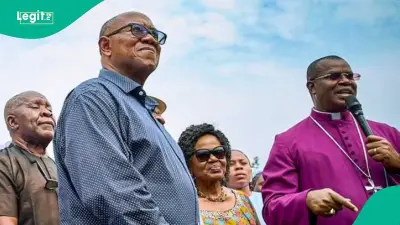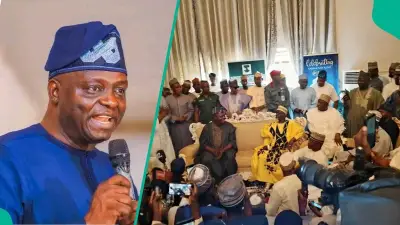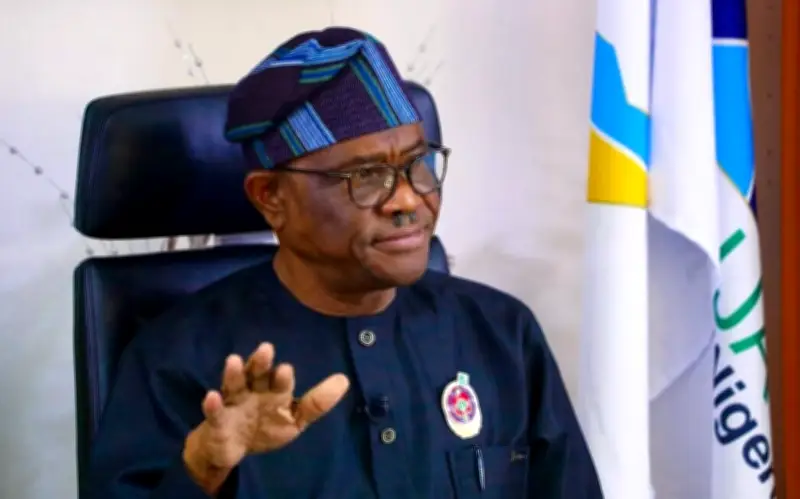
The Minister of the Federal Capital Territory (FCT), Nyesom Wike, has declared that the battle for political control of Rivers State has been won by his political structure, while extending an olive branch to former allies and opponents to return to a united political family. Wike made these remarks during a political luncheon in Port Harcourt, the Rivers State capital, on Saturday. He also warned individuals outside Rivers State against interfering in the state's political affairs, insisting that any attempt to undermine its political stability would be resisted. His comments were contained in a statement issued on Sunday by the Deputy Director of Press in the Office of the Minister, Rabi Umar.
Prolonged Feud and Political Realignment in Rivers
The political confrontation between Wike and his successor, Governor Siminalayi Fubara, has been widely described as a struggle for control of Rivers State's political and financial architecture. The dispute escalated from an informal succession arrangement into a deep and sustained power contest shortly after Fubara assumed office in 2023. Disagreements over control of political appointments, access to state resources, and influence over the state's governing party structure fueled the crisis. What initially appeared as a transition under a shared political understanding quickly degenerated into a full-blown crisis.
As tensions escalated, the Rivers State House of Assembly became a major battleground, splitting into rival factions. One bloc remained aligned with Wike's political network, while another group backed the governor, deepening institutional paralysis and political uncertainty. The legislative crisis later triggered a wave of legal and political interventions, including court rulings affirming the legitimacy of lawmakers aligned with Wike's camp. This development further tilted the balance of power in favor of his structure, intensifying pressure on the governor's administration. At the peak of the crisis, impeachment proceedings were initiated against Fubara and his deputy by the faction aligned with Wike, on allegations of gross misconduct.
President Bola Tinubu eventually declared a state of emergency in Rivers State, suspending Fubara, Deputy Governor Ngozi Odu, and all elected lawmakers of the state House of Assembly for six months. The crisis has consistently been traced to competing interpretations of loyalty and authority within the political arrangement that produced the Fubara administration. Wike accused his successor of distancing himself from the political structure that backed his emergence, while Fubara maintained the need for administrative independence. Amid the prolonged standoff, Fubara eventually withdrew from the Rivers State All Progressives Congress (APC) governorship primaries, claiming it was a voluntary sacrifice to reduce tensions and prevent further destabilization ahead of the 2027 election cycle.
'Governorship Race Is Gone' — Wike
Speaking at the Port Harcourt event, Wike maintained that his political structure remains firmly in control of Rivers politics, insisting that the governorship contest is no longer open to speculation. 'If you are talking about the governorship election in this state, forget it, it's gone. If you are thinking that any miracle will happen to overturn, to pull the rug off us, it's a lie,' he said. The minister attributed the political strength of his camp to what he described as a broad-based 'rainbow coalition' that has continued to command support across Rivers State. He assured supporters that the structure remained vigilant and prepared for any political challenge.
Extends Olive Branch
Despite his confidence, Wike adopted a conciliatory tone, announcing that he had forgiven all those who opposed him during the political crisis. He urged former allies and political associates who left the fold during the dispute to return and contribute to the development of the state. 'I use this opportunity today to announce that I have forgiven everybody,' he said. The minister stressed that prolonged political hostility would not benefit Rivers people and called for reconciliation among all factions. 'I want you to come back home sincerely. We have played politics, we have abused ourselves, this is the right time for you to come back,' he said, adding 'We are very over-alerted anytime, any day. We'll take you back, we'll work with everybody. We are not selfish.' His remarks are seen as one of the strongest public signals yet of a possible consolidation of peace efforts within the Rivers political family after months of intense political disagreements.
Warning to External Actors
Wike, however, drew a line against what he described as interference by political actors from outside Rivers State. Without mentioning any individual or group, he warned that those attempting to influence or destabilize the state's political environment would face stiff resistance. 'Anybody from another state who is trying to destroy Rivers State, the person will have problems. You put your hand, you get fire,' he warned. The former governor insisted that Rivers people should be allowed to determine their political future without external manipulation.
Tinubu's Third Anniversary
Beyond the Rivers political situation, Wike used the occasion to highlight major infrastructural achievements recorded in the Federal Capital Territory under his leadership. He announced that the FCT Administration would embark on a 31-day project commissioning program to commemorate the third anniversary of President Bola Ahmed Tinubu in office. According to him, the commissioning will feature major road projects, public infrastructure, urban renewal initiatives, and other landmark developments across Abuja. He said the projects were made possible through the support and vision of President Tinubu, whom he credited for providing the leadership required to transform the nation's capital. 'This third year of Mr President alone, we are taking 31 days for commissioning of projects in Abuja. I'm not talking about boreholes. I challenge anybody to contradict this,' he said. The minister maintained that the scale of infrastructure development currently taking place in the FCT was unprecedented and challenged critics and opposition figures to match the achievements recorded by his administration. He noted that the projects serve as evidence of purposeful governance and demonstrate the impact of the Tinubu administration's commitment to improving infrastructure and public services in the capital city.