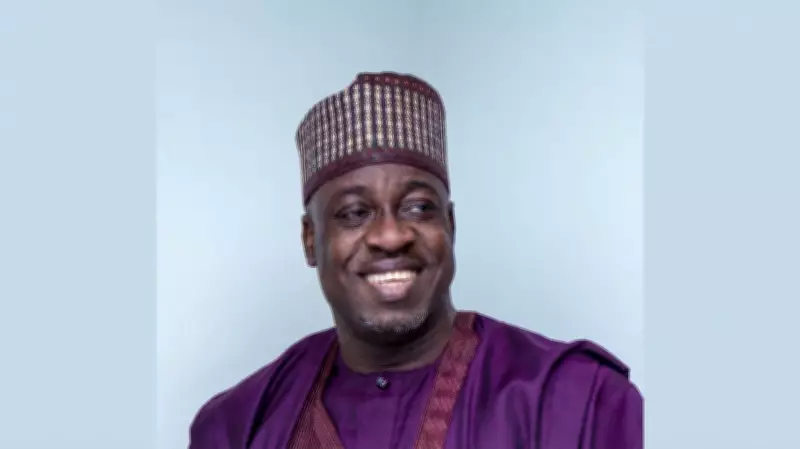
The National Publicity Secretary of the African Democratic Congress (ADC), Bolaji Abdullahi, has stated that the party has regained stability following the defection of prominent political figures Peter Obi and Rabiu Kwankwaso. Speaking during an interview on Arise News, Abdullahi admitted that the departure of the two politicians initially came as a surprise but insisted the party has moved on. He maintained that the ADC remains focused on its broader objective of strengthening multi-party democracy and addressing the steady deterioration of governance in Nigeria.
Abdullahi stressed that, despite setbacks, efforts to build a broad opposition coalition remain alive. He noted that a united front remains the most viable path to challenging the ruling All Progressives Congress (APC) in future elections. “The vision of building a big coalition of opposition political parties is still a possibility... because we are convinced that a unified opposition stands a better chance of challenging for power,” he said. He acknowledged that the failure to bring major opposition figures under a single platform was a setback not just for the ADC but for the wider opposition movement.
PRP Chairman Explains Why Obi, Kwankwaso Didn't Join
Meanwhile, the National Chairman of the Peoples Redemption Party (PRP), Dr. Hakeem Baba-Ahmed, has explained why former Labour Party presidential candidate Peter Obi and his New Nigeria People’s Party (NNPP) counterpart Rabiu Kwankwaso were unable to join the PRP ahead of the 2027 general elections. Speaking during a Hausa political programme on DITV Kaduna, Baba-Ahmed said discussions between the PRP and the two politicians broke down after disagreements over conditions for joining the party.
According to him, Obi and Kwankwaso initially approached the PRP for possible collaboration, and negotiations progressed to the point where a committee was proposed to continue talks. “They came and said they wanted to join the PRP, but when we sat down and discussed with them, there were certain demands they made,” he said. The PRP chairman said one of the major issues was the request by both politicians to secure the party’s presidential ticket without facing internal opposition. “Before they joined, they told us that they were the presidential candidates, meaning they should be given the ticket. We told them no, this is PRP; we do not practise that kind of politics,” Baba-Ahmed said. “I told them: first come into the party. After joining, you can then tell me, ‘I am Obi, and I want to run for President,’ and ‘I am Kwankwaso, and I want to be his running mate.’”
Obi Woos UK Investors, Pushes MSME-Led Growth Agenda
In another development, Peter Obi has intensified his international economic outreach with a series of meetings in London aimed at strengthening trade relations and attracting investment opportunities to Nigeria. In a statement shared via his X handle, Obi disclosed that he met with stakeholders in British politics and the business community, including the Chairman of the Commonwealth Enterprise and Investment Council (CWEIC), Lord Jonathan Marland. According to him, discussions centred on expanding prospective trade partnerships, improving economic cooperation, and advancing strategies to support micro, small and medium-sized enterprises (MSMEs) across Nigeria.
Obi said the engagements underscored the importance of building a resilient economy driven by productive sectors, particularly agriculture and manufacturing, which he identified as critical to job creation and long-term national development. He argued that Nigeria’s economic transformation depends heavily on deliberate support for MSMEs, describing them as the backbone of sustainable growth and employment generation.