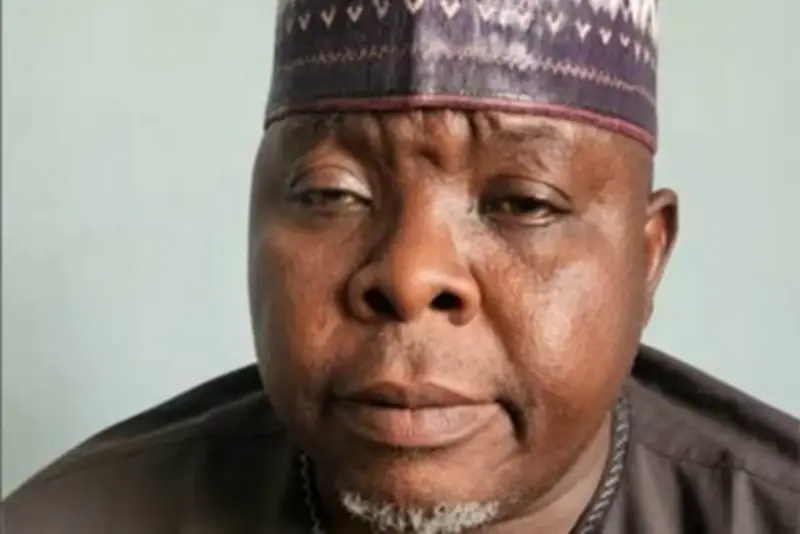
While much public attention remains focused on the ruling All Progressives Congress (APC) and the administration of Governor Dikko Radda in Katsina State, another political contest is unfolding within the African Democratic Congress (ADC). At the centre of that contest is Salisu Uli, who was nominated by a camp in the party. Rival factions continue to lay claim to the party structure in Katsina, while reconciliation efforts have yet to produce a lasting agreement. The disputes have generated legal challenges and intensified debate over the party's future direction as it seeks to position itself as an alternative to the ruling APC.
Beyond party politics, Katsina continues to grapple with major challenges, including insecurity, unemployment, agricultural productivity, healthcare delivery and broader economic pressures. These issues are expected to shape political debate ahead of the 2027 governorship election. In this telephone interview conducted on 2 June 2026, Mr Uli rejects allegations that he is a proxy candidate, addresses the ADC's internal divisions, discusses his plans for party unity and outlines his seven-point agenda for Katsina State.
Party Unity and Reconciliation Efforts
When asked about uniting the ADC ahead of 2027, Mr Uli emphasised the importance of cohesion. "As far as I am concerned, and it is a universally accepted fact, there is strength in unity. Party cohesion is very instrumental to victory in any election. Therefore, where we have disagreements within the party, our responsibility is to extend hands of friendship, engage people, appeal to them and encourage them to come together." He acknowledged the difficulty of the journey but stressed the party's objective to provide an alternative to the ruling APC, focusing on issues such as insecurity, poverty, hunger, weak healthcare, fragile education, youth unemployment, lack of transparency, lack of industries and corruption.
Regarding the parallel camp's failure to produce a consensus candidate, Mr Uli attributed it to operating outside recognised party structures. "Political parties are governed by structures and procedures. My view is that when people attempt to operate outside recognised party structures, confusion becomes inevitable. The party exists for a reason. There are recognised leaders, constitutional provisions and established procedures. Once those structures are neglected, difficulties naturally arise."
He detailed reconciliation efforts, including a meeting in Kano that lasted through the night and into the following day. Various power-sharing proposals were considered, from a 50-50 arrangement to 30-70 and 25-75, but all were rejected. The other side offered only nine per cent representation—six seats on the State Executive Committee and control of five local government areas: Funtua, Dandume, Bakori, Malumfashi and Daura. A draft settlement was prepared but not signed, leading to the matter being before the Court of Appeal. Despite this, Mr Uli remains open to dialogue.
Rejecting Proxy Claims
Addressing whispers that he is a proxy candidate aided by influential figures, Mr Uli laughed and said, "No, no, no. Not at all. Am I not qualified to run for the governorship of Katsina State? If I am qualified, then I do not see why anybody should suggest that I am a pawn or a proxy. I say categorically that I am not and I will not be a proxy to Governor Dikko Radda or anybody else. My candidature is from the party, not from a faction."
He explained that he was initially reluctant to contest but was encouraged by the state chairman, who believed the party needed a credible candidate after several members left. "Initially, I resisted the idea, but eventually I accepted. And let me also say this: my candidature came from God. It is God that made it. I did not aspire to become governor, but circumstances made it possible."
On claims that his candidacy emerged from a faction, Mr Uli insisted it came through the recognised party structure. "There is a recognised party leadership in Katsina State, and the party conducted its activities through that structure. Through that recognised structure, the party conducted primaries and produced candidates across different levels of the electoral process."
Regarding INEC's position on party congresses, he stated that INEC officials monitored their activities, including primaries on May 28, with electoral officers from all 34 local government areas, press and security agencies present.
National Disputes and Political Experience
On ADC's national-level disputes, Mr Uli said the Katsina chapter cannot detach itself from the national party, but disputes are for national leadership and courts to address. At the state level, focus remains on strengthening the party.
When asked how he intends to compete against opponents with significant political and financial structures, Mr Uli highlighted his experience as State Organising Secretary of the PDP and later Deputy Chairman and Acting Chairman. "Those positions brought me into contact with people across local governments, wards and communities throughout the state. I have been in touch with virtually every angle, every sector and every nook and cranny of Katsina State, right from the 361 wards. I have spent years building relationships with grassroots stakeholders."
On campaign financing, he said funding must operate within legal limits, and he is confident that once candidates are formally recognised, resources will be mobilised.
Seven-Point Agenda: Security, Agriculture, Transparency
Security is the first pillar of his seven-point agenda. "We will prioritise adequate security personnel, stronger collaboration with federal security agencies, effective use of state security structures and deployment of modern technology. No society can achieve meaningful development without security." He stressed that a comprehensive strategy exists but operational details must remain confidential.
Agriculture is the second pillar. "We intend to modernise agriculture through mechanisation, irrigation, digital technology and improved access to inputs. Katsina possesses enormous agricultural potential, and we want to maximise that potential." He aims to support three farming cycles annually through improved irrigation, increasing food production, creating jobs and strengthening the economy, ultimately making Katsina a major agricultural hub.
On ensuring local government funds reach communities, Mr Uli emphasised transparency and accountability. "I previously served as a local government vice chairman, so I understand the realities of local government administration. We intend to strengthen accountability mechanisms, improve transparency in resource allocation and ensure that public resources reach the communities they are intended to serve. The fight against corruption is also a major component of our programme."
Ideology and Vision
Responding to critics who call the ADC a platform for politicians leaving larger parties, Mr Uli said political movement is common in Nigeria, but the important issue is principles and ideology. He described himself as shaped by progressive, left-wing politics, with family participation in NEPU during the First Republic, PRP during the Second Republic, and later SDP. "Those traditions emphasised social justice, inclusion and concern for ordinary citizens. That remains the foundation of my political philosophy today."
When asked why Katsina voters should trust him, he said: "The people of Katsina deserve a government that places their welfare at the centre of governance. Many citizens had high expectations when the APC came to power. People had confidence in APC in 2015. They voted Buhari massively, but many believe those expectations have not been fully realised. Today, many still face insecurity, economic hardship and inadequate public services. I believe Katsina can do better. People should come out and rally around us for what I describe as the emancipation of Katsina State from the challenges that have held it back. Our vision is for a safer, more prosperous, more transparent and more accountable state. And if you go through my seven-point agenda, you will also see our commitment to energy development. We want Katsina State to move significantly towards energy independence and reduce reliance on the national grid."