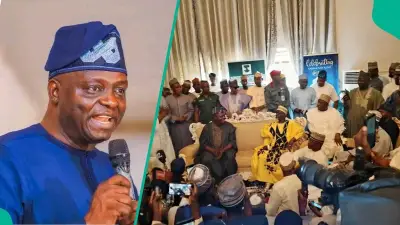
The debate over President Bola Tinubu's academic credentials has taken a new turn as an All Progressives Congress (APC) chieftain, Alwan Hassan, launched a scathing counterattack against opposition critics. Hassan challenged them to demonstrate what the academic qualifications of past leaders have actually delivered for Nigeria, questioning the substance behind their attacks on the president.
Hassan Questions the Value of Opposition Leaders' Qualifications
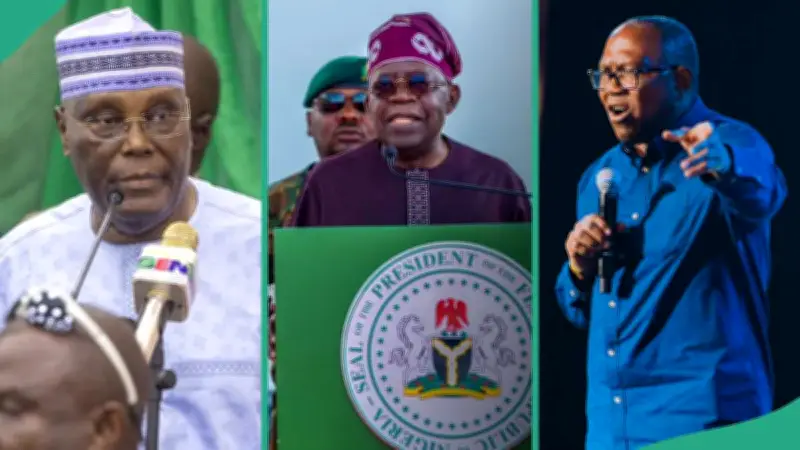
In a pointed interview, Hassan asked critics to reflect on the achievements of their own preferred leaders, specifically referencing former President Goodluck Jonathan, former Vice President Atiku Abubakar, and Labour Party's 2023 presidential candidate Peter Obi. "Tell me what Jonathan's PhD has done to Nigeria. Tell me how Obi's BSc has helped improve his communication skills. Tell me what it has done to Atiku to help him navigate and know the time to contest or when to concede for the best person of the time," he said.
These remarks come amid ongoing scrutiny of Tinubu's academic history, which has been a recurring theme in Nigerian political discourse since the 2023 elections. Hassan's comments suggest that the APC views these attacks as politically motivated rather than grounded in genuine concerns about governance.
Political Context: Obi's Recent Political Moves
The timing of Hassan's remarks is significant, as Peter Obi has been actively repositioning himself for the 2027 elections. After resigning from the African Democratic Congress (ADC) on May 2, 2026, Obi was ratified as the presidential candidate of the New Democratic Congress (NDC) on May 29, 2026. This makes him a central figure in the political landscape, and Hassan's critique appears aimed at undermining his credibility.
Hassan argued that the opposition has failed to present any substantive policy alternative, instead resorting to personal attacks on the president. "The opposition currently holds nothing of substance against the sitting president," he asserted, adding that their focus on academic certificates is a distraction from real issues.
Public Reactions: Nigerians Weigh In
The interview has sparked a flurry of reactions on social media, with Nigerians divided over Hassan's defense of Tinubu. A user identified as Teejay expressed frustration with the opposition, stating, "They are frustrated; let them continue crying. They have everything about Tinubu in 2023, from the CSU in 2023. Including his admission letter from the college."
Another commenter, Beks, argued that the conversation has drifted from governance, saying, "Leadership is not a degree competition. We judge leaders by their decisions, integrity, competence & results—not by d letters before or after their names. If the only defence of a government is to mock the education of opponents, then the conversation has moved away from governance."
However, some critics accused Hassan of dodging the core issue. Chris Aspirewealth wrote, "When you can’t verify the credentials, you attack the value of education itself. Imagine going on national television to argue that degrees don't matter, just to dodge fundamental transparency about academic records."
Support for Tinubu: A Builder and Visionary?
Amid the criticism, some Nigerians defended Tinubu's record. A user named Mr Explorer explained his preference, stating, "Tinubu is just better but not the best or standard for Nigeria. The reason some of us still pick Tinubu despite all his stains (all the top 4 candidates have bloody stains) is that he's a builder and a visionary above others. The worst of them all will still be Obi anytime, any day."
This sentiment reflects a broader divide in public opinion, where supporters highlight Tinubu's infrastructure projects and economic reforms, while detractors focus on transparency issues.
Impact and Outlook
Hassan's remarks underscore the deepening political polarization as Nigeria approaches the 2027 elections. The focus on academic credentials, rather than policy proposals, suggests that both sides are relying on personal attacks to sway voters. As the electoral cycle progresses, the debate over leadership qualifications is likely to intensify, with each camp seeking to define the narrative.
For now, Hassan's challenge to the opposition remains unanswered, but it has certainly reignited discussions about what truly constitutes effective leadership in Nigeria. With the 2027 elections on the horizon, the coming months will reveal whether these exchanges translate into meaningful policy debates or remain mired in personal recriminations.