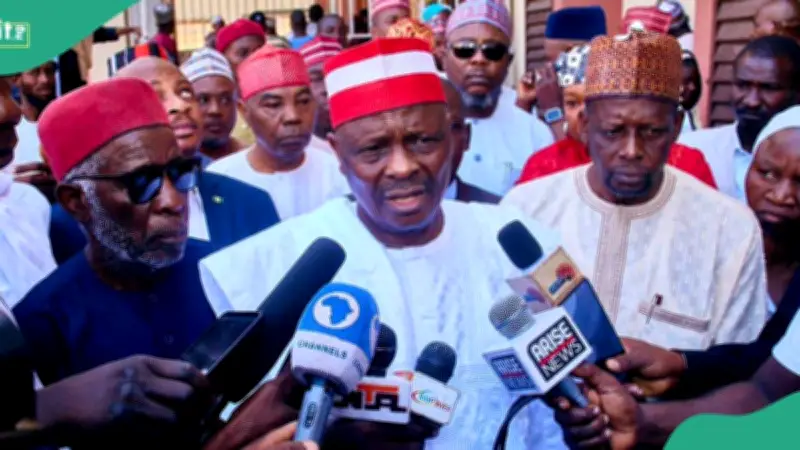
Senator Rabiu Musa Kwankwaso, the vice presidential candidate of the Nigeria Democratic Congress (NDC), has openly condemned remarks credited to Islamic cleric Sheikh Sani Yahaya Jingir, saying the comments were dangerous to national unity.
Kwankwaso made his position known in a statement posted on his Facebook page on Monday, July 28, 2026, saying he was deeply troubled by what Jingir allegedly said at a weekend event in Kano.
Jingir's Controversial Statements at Kano Mass Wedding
Jingir's comments came during an address at a mass wedding organised by the Kano State government. In a video that spread widely online, the cleric declared that Nigeria is an Islamic state, argued that the Muslim-Muslim presidential ticket was a permanent reality, and alleged that Christians were responsible for a mosque bombing in Kano that killed several people.
The remarks drew swift condemnation from both Christian and Muslim voices across the country, with many warning that the statements risked deepening religious tensions.
Kwankwaso Distances Kano from Jingir's Views
The former Kano State governor said Nigeria was at a critical point in its history and could not afford the kind of divisive language attributed to the cleric. "At this critical moment in our nation's history, statements that promote division and disunity must be firmly discouraged," Kwankwaso said.
He expressed particular concern given Jingir's considerable influence as a religious figure, arguing that leaders of such standing carry a responsibility to promote cohesion rather than conflict. He was firm, however, that the views expressed did not reflect the position of Kano's residents.
Call for Responsible Leadership
Kwankwaso called on both political and religious figures to be more careful with their public statements, urging a commitment to truth, unity and reconciliation rather than utterances that could erode the country's foundation.
He emphasized that the role of religious leaders is to foster peace and understanding, not to sow seeds of discord. The NDC candidate stressed that Nigeria's diversity is a strength that should be celebrated, not exploited for political or religious gain.
NDC Candidate Connects Crisis to 2027 Elections
Kwankwaso also used the moment to turn attention towards the 2027 general elections, saying the polls would give Nigerians a direct opportunity to evaluate the performance of those currently in power. He said the ballot box remained the proper channel for rewarding good governance and rejecting failure.
The statement comes amid rising political tensions as the country gears up for the next electoral cycle. Kwankwaso's remarks are seen as an attempt to position the NDC as a party committed to unity and inclusive governance, in contrast to what he perceives as divisive tactics by the current administration.
Political analysts note that the controversy could have significant implications for the 2027 elections, particularly in northern Nigeria where religious sentiments often play a crucial role in voter behavior. Kwankwaso's condemnation of Jingir's remarks may appeal to moderate voters, but it also risks alienating conservative religious groups.
The Kano State government has not yet officially responded to the controversy, but sources indicate that officials are working to manage the fallout. Meanwhile, interfaith leaders in Kano have called for calm and urged both Christians and Muslims to avoid retaliatory actions.
As the nation awaits further developments, Kwankwaso's strong stance against religious intolerance has been praised by civil society organizations, who see it as a positive step towards national cohesion. However, critics argue that his political motives may undermine the sincerity of his message.
The incident underscores the fragile nature of Nigeria's religious harmony and the need for leaders to exercise caution in their public utterances. With the 2027 elections on the horizon, the challenge of balancing religious sensitivities with political ambitions remains a delicate one.