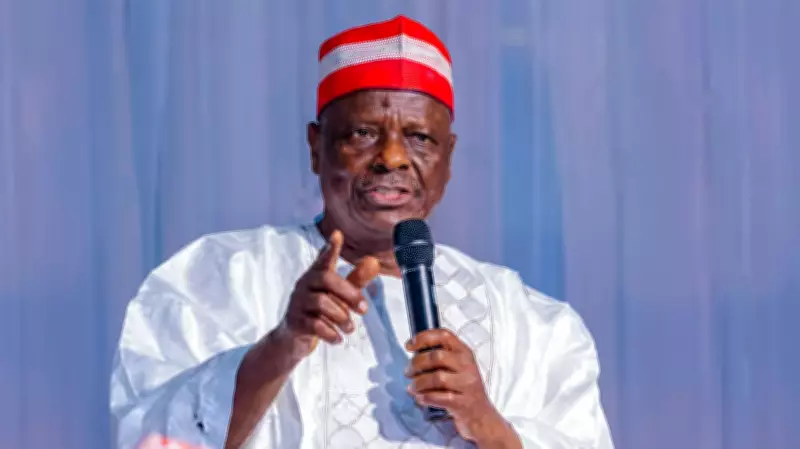
Senator Rabiu Kwankwaso, the former presidential candidate of the New Nigeria Peoples Party (NNPP), is considering a new political realignment with another opposition party amid uncertainty surrounding the coalition African Democratic Congress (ADC). Kwankwaso, who led a faction of his Kwankwasiyya Movement to the ADC two months ago after a mass defection from the NNPP, is now weighing options between the National Democratic Congress (NDC) and the People’s Redemption Party (PRP) to maintain his political influence.
The search for a new platform comes after a recent Supreme Court judgment on the ADC leadership dispute, which returned party leadership to the faction led by David Mark and Rauf Aregbesola. However, with the verdict directing the Mark-led faction back to the Federal High Court in Abuja to resolve the substantive suit, Kwankwaso appears to have lost confidence in the ADC due to the electoral timeline, which could jeopardize his political ambitions ahead of the 2027 general elections.
In a statement, the spokesperson for the Kwankwasiyya Movement, Dr. Habibu Sale Mohammed, explained that the fresh realignment became necessary because of the limited time within the electoral cycle and the need to avoid being caught in prolonged legal battles within the ADC. Mohammed revealed that Kwankwaso is already engaging in consultations with the leadership of the NDC and PRP to explore possible alliances.
“At this critical juncture, we wish to state that the Kwankwasiyya Movement is carefully studying the judgment and rigorously analyzing its implications, particularly in light of the limited time available within the electoral cycle,” Mohammed said. “This is necessary to ensure that we do not inadvertently fall into any political or legal trap that could ultimately undermine or prevent our principal and other key actors within the opposition from effectively participating in the 2027 general elections.”
He added: “In the same vein, we are actively exploring all lawful and strategic options available to us to neutralize any potential obstacles. These options include constructive engagements and the careful consideration of alignments with other progressive political platforms such as the National Democratic Congress and the People’s Redemption Party, among others, strictly in the overriding interest of protecting democratic participation and ensuring that the voice of the people is not silenced.”
Mohammed further stressed: “Our objective remains clear: to safeguard our political rights, protect democratic participation, and ensure that no contrived circumstances are allowed to disenfranchise millions of Nigerians who look to the opposition for credible leadership. We wish to assure all members of the Kwankwasiyya family that, in no distant time, an official position of our leader regarding a new political alignment will be communicated as soon as a definite decision is reached.”
He concluded: “Nigeria’s democracy must be protected not only by the strength of its institutions but by the courage of its people to stand firm in the face of uncertainty. We believe the judiciary, particularly the Supreme Court, will continue to rise to this responsibility as the ultimate guardian of justice and national cohesion.”
Kwankwaso’s search for an alternative platform began a few months ago when he parted ways with Governor Abba Kabir Yusuf, who defected from the NNPP to the ruling All Progressives Congress (APC). Although Governor Yusuf cited multiple internal crises, leadership disputes, and lack of direction within the NNPP as reasons for his defection, Kwankwaso maintained that the governor’s decision was unnecessary. Political observers, however, believe that Governor Yusuf was vindicated when Kwankwaso also left the NNPP amid controversy over its leadership for the ADC, after previously criticizing the governor for abandoning the party.