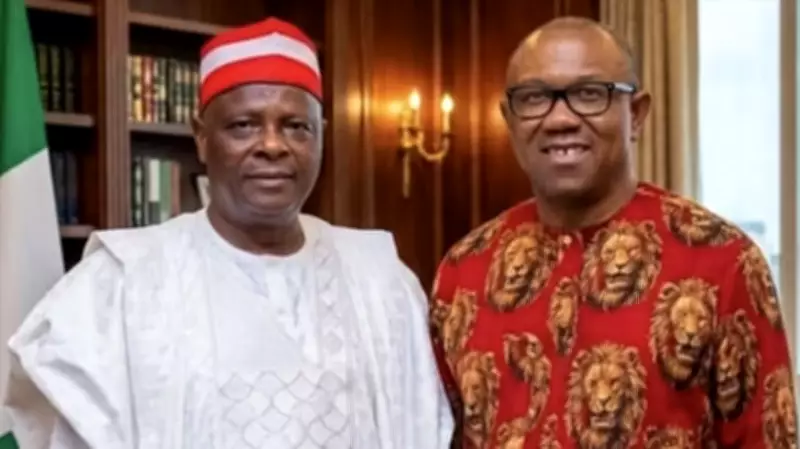
Nigeria's opposition space is approaching a decisive inflection point as Peter Obi and Rabiu Musa Kwankwaso weigh a coordinated move into the fast-emerging Nigeria Democratic Congress (NDC), amid intense time pressure and mounting grassroots agitation.
Insiders say the decision is largely settled, with only a formal announcement, expected on Monday, remaining. What is unfolding, they argue, is not a routine defection but a convergence of movements, timelines, and political necessity.
Deadline and Warning
At the centre is a hard deadline, and a blunt warning. Receiving Senator Aishatu Ahmed Dahiru into the party a day earlier, NDC National Leader Seriake Dickson set the tone for what now appears to be a coordinated last-mile push: “Those who are still in doubt should come now. By law, you are free to join or leave any party at any time. Our registration portals are open, but there is a deadline. Move now before the 4th or 5th if you want to be part of the process. Don’t waste time, delay is dangerous.”
Behind the scenes, multiple sources confirm that Obi and Kwankwaso’s camps have concluded consultations and are aligning structures to meet that window, suggesting a move driven as much by timing as by strategy.
Strategic Considerations
For Obi, the looming declaration caps months of uncertainty following his 2023 presidential run, where he secured over six million votes and redefined youth-driven mobilisation. His political base has since been complicated by instability within coalition arrangements, raising the cost of staying put. Kwankwaso, with a disciplined northern grassroots machine, faces a parallel dilemma: remain siloed or plug into a broader national vehicle capable of scale.
The NDC, promoted by Dickson, offers three elements neither leader fully controls alone: legal stability, organisational blank space, and timing leverage. In Nigeria’s volatile party system, the absence of court cases and factional disputes is itself a strategic asset, one Dickson has aggressively marketed.
OK Movement Summit
Driving the momentum is the “OK Movement”, a fusion of Obi’s Obidient base and Kwankwaso’s Kwankwasiyya network. Its weekend unity summit read less like a rally and more like a pre-alignment war room. Veteran strategist Buba Galadima framed the stakes in stark, almost prophetic terms: “We have issues in this country. Nigerians must stand up to solve them, and they are solvable.” He pivoted quickly to power and history. “People who think they are unbeatable should learn from history. Governments have been removed in the blink of an eye.” Then came a coded escalation: “I dare say there will be a ‘Moses’ that will contest elections with the APC, and defeat them.”
Galadima’s warnings carried layers, part mobilisation, part caution about institutional choke points. “They want to weaken opposition parties so they can run almost unchallenged. That has been the plan. If timelines are manipulated, can a party even produce a candidate? We must think ahead.”
Urgency and Grassroots Sentiment
If Galadima spoke in strategy, Isaac Fayose spoke with urgency, mixing street idiom with political warning: “The time is now. If we don’t act now, we may not get another chance. It’s easy to vote, but you must be ready to defend that vote. We are already on the ground, those who have fallen don’t fear falling again.” His message, stripped of metaphor, was clear: momentum without protection is fragile.
Across the summit, speakers returned to recurring themes: economic strain, insecurity, institutional decay, and a growing belief that existing political structures are either unable or unwilling to respond. Director-General of the movement, John Ughulu, framed it as a national reset: “We are not talking about one region, we are talking about the whole of Nigeria. Everything will be okay in Nigeria, that is the message.”