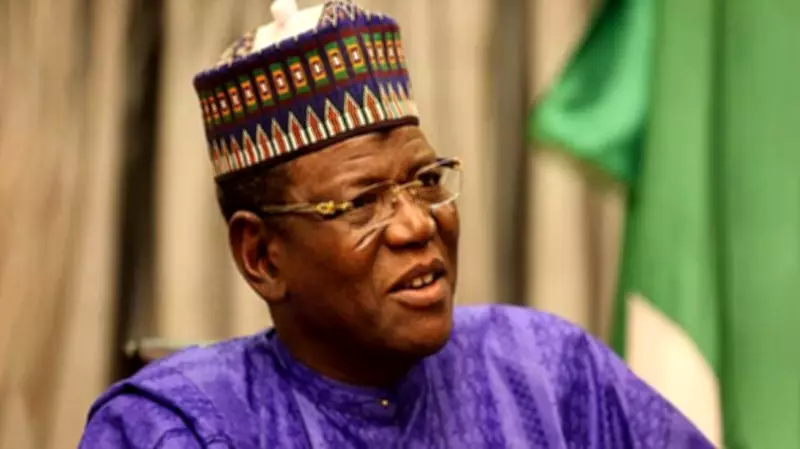
Former Governor of Jigawa State and founding member of the People's Democratic Party (PDP), Alhaji Sule Lamido, has ignited fresh debate across Nigeria's political landscape with a blunt and emotionally charged reflection on the country's deepening political uncertainty. He warned that Nigeria may be losing its ideological direction twenty-seven years after the return to democracy.
Lamido's Emotional Statement
In a statement posted on his Facebook wall titled 'My Dilemma in Today's Murky Political Environment!', Lamido painted a troubling picture of a nation where old political loyalties have collapsed, alliances have become fluid, and former allies now occupy opposing camps with little ideological distinction. The elder statesman openly admitted he is struggling to understand the political 'chemistry and direction' of the moment as the build-up to the 2027 elections accelerates.
PDP Roots Across Party Lines
What made the statement particularly explosive was Lamido's assertion that nearly every major political bloc currently competing for power in Nigeria is populated by leaders whose political careers were nurtured and elevated by the PDP. According to him, the ruling All Progressives Congress (APC), the opposition-aligned African Democratic Congress (ADC), and the emerging Nigeria Democratic Congress (NDC) are all now filled with former PDP figures who once rose through the ranks of the party during its dominant years.
Listing names across party lines, Lamido pointed to Senate President Godswill Akpabio, Secretary to the Government of the Federation George Akume, former APC National Chairman Abdullahi Adamu, former Kano governor Abdullahi Umar Ganduje, Senator Aliyu Magatakarda Wamakko, and former Gombe governor Danjuma Goje as prominent figures now aligned with the APC. He also referenced former Vice President Atiku Abubakar, former Rivers governor Rotimi Amaechi, former Sokoto governor Aminu Waziri Tambuwal, former Cross River governor Liyel Imoke, and other longtime PDP stalwarts who are now active within the ADC coalition.
In the NDC camp, Lamido mentioned Bayelsa political heavyweight Seriake Dickson, New Nigeria Peoples Party (NNPP) leader Rabiu Musa Kwankwaso, and Labour Party's 2023 presidential candidate Peter Obi as part of the evolving political realignment.
Lamido's Disbelief
He expressed disbelief that many of the same politicians who once campaigned under the PDP umbrella and benefited from the party's structure are now championing different movements and ambitions outside the platform that brought them national prominence. 'Whatever titles or status they hold were conferred on them by PDP. Whatever visibility they now command is all thanks to PDP,' Lamido declared.
Reflections on Democracy's Soul
Beyond party politics, Lamido's message carried the tone of a statesman worried about the soul of Nigeria's democracy. Reflecting on the events that followed the annulment of the June 12 election and the transition from military rule in 1999, he recalled how political leaders from different backgrounds united under the PDP to stabilize the country, restore public trust, and rebuild Nigeria's damaged international image. According to him, that generation of leaders inherited a deeply divided nation but succeeded in restoring political order, strengthening democratic institutions, and re-establishing Nigeria's influence within the Economic Community of West African States (ECOWAS) and the African Union.
Lamido argued that the spirit of collective national purpose that defined that era now appears absent in today's politics, replaced by shifting alliances, personal ambitions, and ideological confusion. 'We knew where we were in 1999. Do we know where we are today, twenty-seven years after?' he asked.
Political Reactions and Analysis
The statement has already triggered intense political reactions, with many interpreting it as both a criticism of Nigeria's fractured opposition politics and a veiled warning about the uncertain direction of the country ahead of 2027. Political observers say Lamido's intervention reflects growing anxiety among older PDP powerbrokers who fear the fragmentation of the opposition may ultimately strengthen President Bola Tinubu's re-election prospects while weakening any coherent alternative movement.
Others, however, believe the former governor's comments expose a deeper crisis within Nigeria's political system — one where ideology has become secondary to survival, defections have become routine, and political parties increasingly serve as temporary vehicles for power rather than institutions driven by clear principles. As coalition talks, defections, and strategic alliances continue to reshape the political map ahead of 2027, Lamido's unusually candid remarks may have reopened a larger national conversation about whether Nigeria's democracy still possesses the vision and unity that defined the beginning of the Fourth Republic.