Amupitan and the Ruse of Law: Judicial Confusion and Political Sabotage in Nigeria
In Nigeria, political disputes inevitably find their way into the courts, but the outcomes often defy logic and understanding. This pattern, rooted in colonial-era tactics, uses judicial orders to legitimize dirty politics. Since President Bola Ahmed Tinubu took office in May 2023, this playbook has become a familiar script, with judges being labeled as "authors of confusion." The process typically starts with an orchestrated internal conflict in an opposition party, followed by a court case, vague interim orders in Latin, paralysis at the Independent National Electoral Commission (INEC), and the crippling of the opposition. This is what is known as the ruse of law.
The ADC Case: A Textbook Example of Political Sorcery
As Nigeria approaches the 2027 national elections, judges have been particularly active. The latest target is the African Democratic Congress (ADC). By mid-2025, the Peoples Democratic Party (PDP) had been hollowed out, leading many members to seek new political vehicles. In a system that prohibits independent candidacy, controlling a party is essential for political ambition. These defectors had two options: register a new party, which required INEC approval unlikely under ruling party control, or infiltrate an existing party through entryism.
They chose the latter, striking a deal with the ADC's then-leadership. On July 2, 2025, Ralph Nwosu, the ADC founder and chairman, resigned along with the national executive, endorsing a new interim leadership under former Senate President David Mark and former Interior Minister Rauf Aregbesola. However, four weeks later, Nafiu Bala Gombe, a former ADC governorship candidate in Gombe State, declared himself interim chairman, claiming authority as deputy national chairman under Nwosu. He dismissed a resignation letter attributed to him as false and malicious.
Legal Maneuvers and Judicial Confusion
On September 2, 2025, Nafiu Bala filed a case at the Federal High Court in Abuja, seeking to restrain INEC from recognizing Mark and Aregbesola. Assigned to Judge Emeka Nwite, Bala applied for an ex parte order without hearing the defendants, including Aregbesola, INEC, ADC, and Nwosu. Notably, David Mark was not a party to the case. Judge Nwite declined the request, instead ordering all parties to be notified for a fair hearing.
Despite this, INEC recognized Mark and Aregbesola as ADC leaders on September 9, 2025, granting them access to its portal for candidate certification. Mark, not originally part of the High Court case, then appealed to the Court of Appeal, challenging the court's authority to issue the notice order. Legal experts were baffled, as Mark lacked permission to appeal, making his case incompetent. The Court of Appeal took over five months and nearly 60 pages to reach a decision.
Contradictory Judgments and INEC's Role
On March 12, a panel of three justices issued their ruling. Senior Justice Uchechukwu Onyemenam, in a 40-page judgment, dismissed the appeal with costs of two million naira and ordered parties to maintain the status quo ante-bellum, preventing any actions that could undermine the trial court. Junior Justice Okon Abang, in a 15-page judgment, concurred in name but ruled the appeal incompetent and a nullity, questioning how an non-existent appeal could be dismissed. The third justice, Mohammed Mustapha, did not issue a clear judgment, leaving the outcome ambiguous.
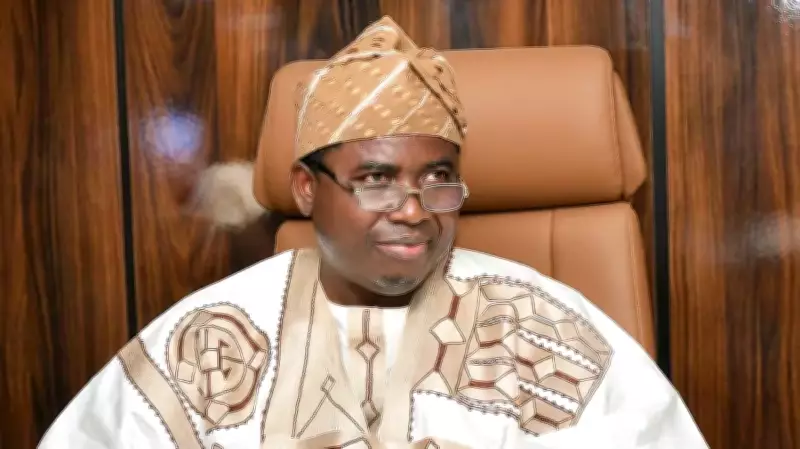
INEC, led by Chairman Joash Amupitan—a Senior Advocate of Nigeria and law professor—took three weeks to analyze the judgment. On April 1, 2026, via spokesperson Mohammed Haruna, INEC announced it would withdraw recognition of Mark and Aregbesola, citing respect for the Court of Appeal's order. The timing on All Fools Day was ironic, as party primaries were set to begin in three weeks, with membership registers due 21 days prior. A party entangled in court disputes cannot meet these requirements, risking disqualification for the 2027 elections.
The Malevolent Design Beneath the Legal Facade
Amupitan's actions reveal a deliberate strategy. By threatening political Armageddon if the ADC proceeds with a congress, he sheds any pretense of neutrality. Presidential spokesperson Bayo Onanuga reinforced this, advising the ADC to heed Amupitan as a law professor. Beneath the ruse of law, a malevolent design is clear: using judicial confusion and INEC's authority to cripple opposition and manipulate the electoral landscape ahead of 2027.
This case underscores how Nigerian politics is increasingly shaped by legal subterfuge, where courts and electoral bodies become tools for political sabotage, undermining democracy and fair competition.