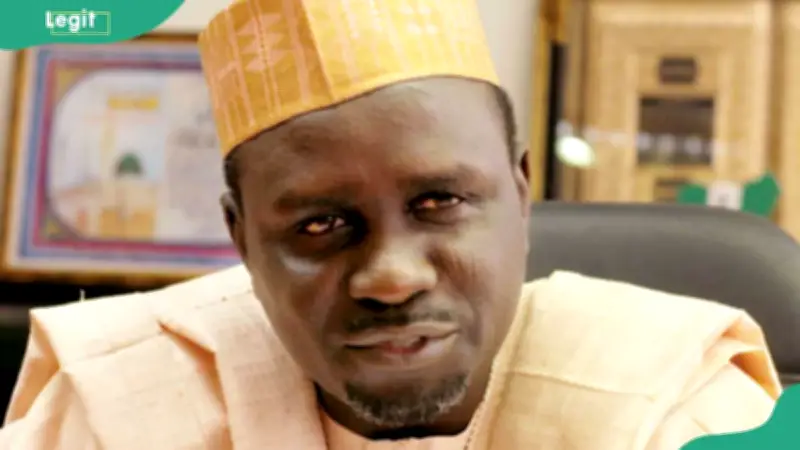
Ibrahim Shekarau, the 70-year-old elder statesman from Kano State, has formally returned to the All Progressives Congress (APC) after resigning from the Peoples Democratic Party (PDP) in April 2026, and has since emerged unopposed as the APC's Kano Central senatorial candidate for the 2027 elections. His political journey, marked by a rise from classroom teacher to two-term governor, federal minister, and senator, reflects a career defined by shifting party loyalties and enduring influence in northern Nigeria.
Early Life and Civil Service Career
Shekarau was born on 5 November 1955 in the Kurmawa quarters of Kano, Nigeria, to a police officer father. He grew up in a city primarily inhabited by the Hausa and Fulani people. He pursued higher education at Ahmadu Bello University and Bayero University, Kano, and speaks Hausa, English, and Kanuri. His early professional life was dedicated entirely to public service, beginning as a classroom teacher and rising to the position of permanent secretary in the Kano State Civil Service before entering politics in the early 2000s.
President Bola Tinubu has hailed Shekarau's consummate public service career, noting his progression from teacher to permanent secretary. This trajectory established Shekarau's reputation as a principled civil servant rather than a career politician. Upon retirement, he aligned with the All Nigeria Peoples Party (ANPP), positioning himself as an outsider candidate emphasising moral integrity and anti-corruption.
Governor of Kano State: The ANPP Years
Lacking personal wealth for political funding, Shekarau reportedly borrowed money from friends to purchase nomination forms for the ANPP gubernatorial primary, underscoring his non-elite entry into the political arena without reliance on established patronage networks. In the 2003 governorship election, he contested under the ANPP platform and defeated the incumbent governor, Rabiu Musa Kwankwaso, assuming office on 29 May 2003.
As governor, Shekarau was the driving force behind the creation of the local religious police, the "Hisbah Guard," which enforces Sharia law. This move was popular among conservative Kano constituencies but controversial at the federal level. Shekarau also opposed polio vaccination campaigns on the grounds that they were attempts to make Muslim women infertile, a claim denied by the World Health Organization. His administration placed particular emphasis on improving the education sector, reflecting his professional background as an educationist. He was re-elected in 2007, beginning his second term as Governor of Kano State. President Tinubu recalled Shekarau's phenomenal election in 2003 and his human-centred approach to governance during his two terms.
Presidential Bid and Federal Roles
After leaving government house, Shekarau set his sights higher. He was one of the candidates who aspired to become president in the Nigerian general elections of 2011. He ran as the ANPP candidate, competing against incumbent President Goodluck Jonathan of the PDP, Nuhu Ribadu of the Action Congress of Nigeria, and Muhammadu Buhari of the CPC. He did not succeed, but the campaign raised his national profile.
Shekarau served as Minister of Education from 2014 to 2015, appointed under President Goodluck Jonathan. He served in that capacity from 9 July 2014, succeeding Nyesom Wike and preceding Adamu Adamu. He later served as Nigerian Senator for Kano Central from 11 June 2019 to 11 June 2023, having succeeded Rabiu Kwankwaso in that role. During that tenure, he participated in legislative debates and committee activities concerning national development, education, security, and public administration. His senatorial term ended in June 2023 without re-election, but he maintained an active profile in public discourse, emphasising governance integrity, educational advocacy, and selective political commentary.
Party Journey and Return to APC
Shekarau's career spans multiple party affiliations, a defining feature of his political identity. He moved from the ANPP to the PDP in 2014, then to the APC in 2018, before joining the NNPP in May 2022 after a leadership tussle with former Governor Abdullahi Ganduje. As leader of the "G-7" faction within the APC, Shekarau felt marginalised by Ganduje's absolute control over the party at the grassroots. His tenure in the NNPP lasted only three months; he returned to the PDP in August 2022, alleging that Rabiu Kwankwaso and the NNPP leadership had failed to honour an agreement to integrate his supporters into the party's list of candidates for the 2023 elections.
Ibrahim Shekarau officially resigned from the PDP on Sunday, 19 April 2026, at his residence in Kano, following extensive consultations with his Shura committee and political supporters. A resignation letter was addressed to the PDP Chairman of Giginyu Ward, stating that his exit took immediate effect. He subsequently renewed his membership with the APC at Giginyu Ward in Nasarawa Local Government Area, signalling his full return. He has since emerged unopposed as the APC's Kano Central senatorial candidate for the 2027 elections. His defection came after consistent lobbying by APC National Chairman Professor Nentawe Yilwatda and Governor Abba Kabir Yusuf, who visited his private residence in Kano. In August 2024, Shekarau had chaired the national organising committee for the 70th anniversary of the Muslim Students' Society of Nigeria (MSSN), an Islamic student organisation he has long supported.
Family and Personal Life
Shekarau is married to four wives: Amina Shekarau, Zainab Shekarau, Halima Shekarau, and Gaji Dantata. Consistent with northern Nigerian Islamic tradition, he has maintained a polygamous household throughout his adult life. No reliable public information is available on the specific number or names of his children. Shekarau is also widely referred to by the title Sardaunan Kano, an honorary distinction conferred upon him by the Emir of Kano, Ado Bayero, which cemented his standing as a traditional and religious figure, not only a political one. In a state where politics is defined by shifting alliances and entrenched rivalries, Shekarau's latest move is seen by many not as an isolated development but as part of a familiar cycle of political realignment, underscoring both his enduring relevance and the fluid nature of Kano's political landscape.