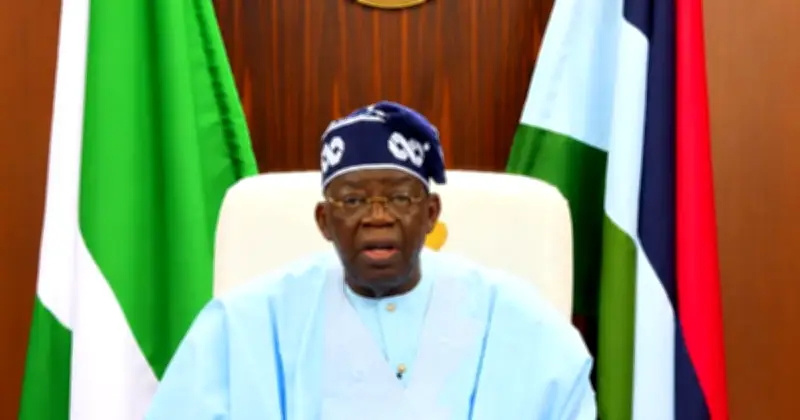
President Bola Tinubu has declared that Nigeria has moved beyond the most difficult phase of his administration's economic reforms and is now entering what he described as an “age of prosperity,” with a new focus on reducing the cost of living, creating jobs, and ensuring economic growth translates into better living conditions. He made this declaration on Thursday, October 1, 2026, in his Independence Day address marking Nigeria's 66th anniversary, a speech titled “From Reform to Prosperity.”
From Reform to Prosperity: The President's Core Message
Tinubu said the government's focus had changed after three years of what he described as difficult economic reforms. According to the President, the initial phase was about correcting longstanding economic distortions, while the next phase would focus on ensuring that Nigerians benefit from the changes. “The emergency treatment is over. The foundation has been repaired,” Tinubu said. He added that the government's central economic task had changed from correcting the country's course to pursuing “shared and widespread prosperity.”
The President said prosperity should not simply mean higher economic statistics but should be reflected in the daily lives of Nigerians through affordable food and transportation, productive jobs, accessible education, and greater economic opportunities.
Defending the Reforms and Citing Economic Growth
Tinubu again defended the reforms introduced since he assumed office in 2023, acknowledging that they had caused hardship but arguing that they were necessary to address deeper problems in the economy. He compared Nigeria to a patient diagnosed with cancer who must choose between undergoing painful treatment or taking medication that merely masks the symptoms. “Our reforms did not create the weaknesses in our economy. They confronted them,” he said. The President also urged Nigerians to resist calls to abandon the reforms and return to what he described as the “abuse of addictive subsidies.”
The President said Nigeria's economy had grown by more than 4% in 2026, with both the oil and non-oil sectors contributing to what he described as a period of stable growth. He also said oil theft had declined, inflation had fallen substantially from its peak, foreign reserves had been rebuilt, and the foreign exchange market had stabilised. Tinubu further stated that Nigeria recorded its highest-ever revenue from non-oil exports in 2025, exceeding $6 billion. “These are not idle claims. International observers, journalists, NGOs and multilateral institutions can see the change,” he said.
Priorities: Lower Living Costs, Jobs, and Local Production
One of the clearest messages in the speech was Tinubu's pledge to make reducing the cost of living a central priority of the next phase of his administration. He said the government would attempt to achieve this by reducing the cost of producing and transporting the goods Nigerians consume. The President pointed to agriculture, infrastructure, storage, and transportation as areas where the government intends to intervene. He said the government would expand mechanised irrigation and dry-season farming, improve access to seeds and fertiliser, increase mechanisation, and invest in storage and transportation. He also pointed to roads, railways, and ports as part of the infrastructure needed to move agricultural and industrial products more efficiently.
Tinubu said economic prosperity would require more than cheaper goods and that his government would put jobs, enterprise, and industrial growth at the centre of its policies. He highlighted Nigeria's young population, noting that millions of young Nigerians enter adulthood every year with talent and ambition. Among the areas he mentioned were using Nigeria's gas resources to power industries, supporting businesses seeking to revive factories, expanding digital connectivity, and investing in skills demanded by employers. He also said the government would provide Nigerian businesses with infrastructure and financing needed to expand.
The President called for a stronger domestic production base, saying he wanted to see more Nigerian farms supplying cities and factories and more Nigerian companies selling locally produced goods internationally. He also expressed his ambition for young Nigerians to build major technology companies from within the country. “I want to see more Nigerians making things,” Tinubu said.
Acknowledging Hardship and Outlining Social Programmes
Despite his emphasis on economic improvements, Tinubu acknowledged that many Nigerians continue to face serious financial difficulties. He specifically mentioned families struggling to afford their next meal, school fees, medical bills, and transportation to work. The President argued that these problems did not begin with his administration but were the accumulated result of decades of low productivity, inadequate infrastructure, limited opportunities, and weak institutions. “We cannot erase in four years what accumulated over generations. But we can change its course,” he said.
Tinubu said the government would continue strengthening support for Nigerians who cannot immediately benefit from broader economic opportunities. He mentioned efforts to improve the National Social Register so that assistance reaches households considered to be genuinely in need. He also highlighted the Nigerian Education Loan Fund (NELFUND), saying it would help children from low-income families pursue higher education without being prevented by tuition costs. Another programme he mentioned was CREDICORP, which he said provides working Nigerians with access to consumer credit for assets such as vehicles, solar systems, and digital devices. The President also said the government would continue working with state and local governments to strengthen primary healthcare, basic education, and other essential public services.
The President said social programmes were not intended to become a permanent substitute for economic prosperity. Instead, he described them as a bridge to help vulnerable Nigerians while the broader economy creates more opportunities. “Our objective is not to manage poverty more efficiently. We will defeat it,” Tinubu said. He acknowledged that achieving this would take time and would require sustained economic growth and the creation of millions of productive opportunities. Tinubu also said his administration had paid salaries and pensions on time and in full since 2023 and had reformed the national pension programme to benefit retirees and vulnerable Nigerians.
A Call to Move Forward Without Looking Back
Tinubu ended his address with one of its most striking lines, comparing Nigeria's economic journey to the biblical crossing of the Red Sea. “Nigeria has corrected its course. We have passed through our own Red Sea. This is not the time to look back,” he said. The President urged Nigerians to move forward with faith in themselves and the country, saying the sacrifices made during the reform period would eventually yield results. He described the future he envisions as a Nigeria of “abundance and opportunity,” where prosperity is broadly shared and children can dream beyond the circumstances into which they were born. “Our destination is in sight. Our foundations are strong. Our direction is clear. So let us go forward. No looking back,” Tinubu said.
Tinubu's Independence Day speech therefore marked a shift in his administration's messaging from defending the difficult economic reforms of its first three years to promising Nigerians that the next phase would focus on the tangible benefits of those reforms. The President's stated priorities are now lower living costs, increased food production, industrial growth, job creation, stronger social protection, and broader economic opportunities. Whether those objectives translate into measurable improvements in Nigerians' daily lives will depend on how the policies outlined in the address are implemented and their effects over time.