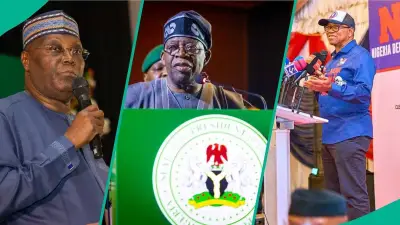
The 2027 presidential candidate of the National Democratic Congress (NDC), Peter Obi, has sharply criticized the administration of President Bola Tinubu following the release of a United States government report that cautioned investors about business conditions in Nigeria.
In a statement posted on his X account, Obi said the 2026 Nigeria Investment Climate Statement, issued by the US Department of State, confirmed what he described as the "incompetence, ineffectiveness and corruption" of the All Progressives Congress (APC)-led federal government. The report, which serves as an official advisory for American firms, highlighted several structural and operational risks that could deter investment in the country.
Key Risks Identified in the US Report
The US Department of State's report flagged a range of concerns, including endemic corruption, pervasive insecurity, inconsistent regulatory enforcement, weaknesses in the judiciary, cargo delays at ports, and persistent problems in the power sector. It also warned that American businesses operating in Nigeria could face arbitrary detention, travel restrictions, and immigration enforcement as leverage in commercial or regulatory disputes with Nigerian authorities.
The report specifically cautioned that "standard business trips can escalate into detention if the firm is under regulatory suspicion or faces charges by Nigerian authorities." This warning underscores the unpredictable legal and administrative environment that investors may encounter, according to the document.
Port Inefficiency as a Hidden Tax
Port inefficiency was singled out as a significant "hidden tax" on investment. The report noted that cargo dwell times at the Apapa and Tin Can ports in Lagos still exceed 20 days, largely due to manual examination processes that slow down clearance and increase costs for importers and exporters.
Despite these challenges, the report acknowledged some positive developments. The Lekki Deep Seaport, which opened in 2023, handled $9.6 billion in trade in 2025 and was operating at 50 per cent capacity, providing a measure of relief to the beleaguered port sector. However, the overall picture presented by the report remains one of caution for potential investors.
Obi Highlights Low Foreign Direct Investment
Beyond the US report, Obi leveraged Nigeria's own capital importation data to press his argument. He pointed out that of the $10.37 billion in total capital that entered Nigeria in the first quarter of 2026, only $135.08 million—approximately 1.3 per cent—was Foreign Direct Investment (FDI). In contrast, Foreign Portfolio Investment (FPI) accounted for roughly $9.86 billion, or about 95.1 per cent of total inflows, with loans and other capital making up the remainder.
Obi argued that this breakdown demonstrates that Nigeria is failing to attract the long-term, productive investment that its market size warrants. He blamed the shortfall directly on the federal government's policies and governance failures, asserting that a competent administration would have treated the US advisory as an urgent call to action, especially given Nigeria's pressing need for FDI to stimulate economic growth.
Instead, Obi accused the government of celebrating macroeconomic indicators while the underlying conditions described in the US report—such as corruption, insecurity, and port delays—remain unaddressed. He stressed that these persistent issues undermine investor confidence and hamper the country's economic potential.
As of the time of this report, the federal government had not publicly responded to Obi's remarks. Obi, who left the African Democratic Congress on May 2, 2026, was ratified as the NDC's presidential candidate for the 2027 general elections on May 29, 2026. His criticism adds to growing concerns about Nigeria's investment climate and the effectiveness of the current administration's economic management.