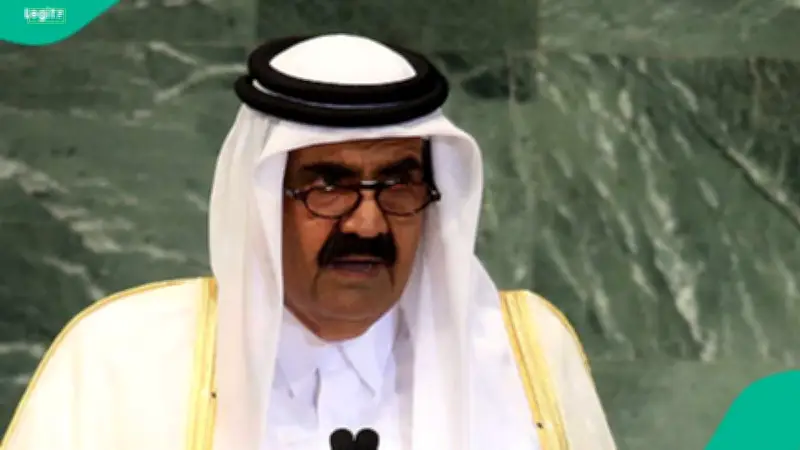
The Amiri Diwan of Qatar has declared a four-day national mourning period beginning Sunday, July 12, following the death of former Emir Sheikh Hamad bin Khalifa Al Thani at the age of 74. The national flag will fly at half-mast throughout the country as a mark of respect for the former ruler.
Government Operations Suspended
All ministries, government departments, public bodies, and state institutions suspended operations from Monday, July 13. Employees are expected to return to work on Sunday, July 19, according to an official statement from the Amiri Diwan.
Sheikh Hamad's 18-Year Reign
Sheikh Hamad bin Khalifa Al Thani ruled Qatar from 1995 to 2013, a period widely regarded as the most transformative in the nation's modern history, as reported by the Times of India. Over his 18 years in power, he oversaw sweeping changes that repositioned Qatar as a significant force in regional and global affairs.
Key Achievements
Among the landmark achievements of his reign was the adoption of Qatar's first permanent constitution in 2004, alongside the introduction of municipal elections that granted women both the right to vote and to stand as candidates. His tenure also coincided with several high-profile international milestones, including the 2006 Asian Games in Doha, the 2012 UN Climate Change Conference, the Doha Agreement, and the Fatah-Hamas Doha Agreement.
Voluntary Abdication
In 2013, Sheikh Hamad made a decision that drew considerable attention across the Gulf region by voluntarily relinquishing power to his son, Sheikh Tamim bin Hamad Al Thani. This transfer made him one of the few hereditary Gulf rulers to willingly step aside in favor of a chosen successor while still alive.
Legacy and Global Impact
Sheikh Hamad's leadership oversaw major investments in infrastructure and economic development that dramatically elevated Qatar's international standing. The country became a leading exporter of liquefied natural gas (LNG) under his guidance, securing its role as a major energy player globally.