President Bola Tinubu has instructed the National Identity Management Commission (NIMC) to ensure that every Nigerian is captured in the national identity database before the close of 2026, the agency's Director-General and Chief Executive Officer, Abisoye Coker-Odusote, has confirmed.
Presidential mandate for universal enrolment
Coker-Odusote disclosed this during an appearance on Channels Television's Sunday Politics, describing the presidential mandate as central to the Federal Government's broader push to build a robust identity infrastructure that underpins governance, planning and public service delivery.
"The President has given us till the end of this year to make sure that we capture every single Nigerian," she said.
Strategy to meet the deadline
To accelerate the enrolment exercise, the commission said it is working through the World Bank-supported Identification for Development (ID4D) project, partnering with private sector agents who have been licensed to register citizens on behalf of the agency at community level.
"What we have done is we have partnered through the World Bank ID4D project with front-end partners. They are part of the digital identity ecosystem. These are private citizens that we've enabled and given jobs to enrol citizens on our behalf," Coker-Odusote explained.
Beyond addressing coverage gaps, she said the exercise would settle uncertainty around Nigeria's true population, with current estimates ranging from 200 million to 250 million people, as reported by Punch.
"It is estimated that we're 200 million. When we're done enrolling, we will then know the actual numbers that we have. Some estimates say 230 million, while a few people say 250 million. Your identity is basically the foundation for effective governance and service delivery. How can you plan if you don't know the total number of persons that you have?" she said.
Biometric system blocks multiple registrations
Responding to concerns about Nigerians holding multiple identity records, Coker-Odusote said the commission's upgraded biometric system resolves the problem at the point of enrolment rather than after the fact.
She said the previous platform could only flag duplicates once records had already entered the central system, whereas the current architecture identifies them in real time and routes them to a deduplication bucket for invalidation.
"You would only have one identity generated for you. The other record goes into a deduplication bucket where it is invalidated," she said.
She added that fingerprint and facial recognition verification has made it near-impossible for a single individual to maintain more than one identity, and that private and public sector organisations will henceforth verify identities through direct API integration with NIMC rather than capturing biometrics independently.
"The telcos are already doing that with us. If you need a SIM card, they capture your facial biometrics, which are matched against our database in real time to confirm that you are who you claim to be," she said.
NIMC Act 2026 and NIN as foundational credential
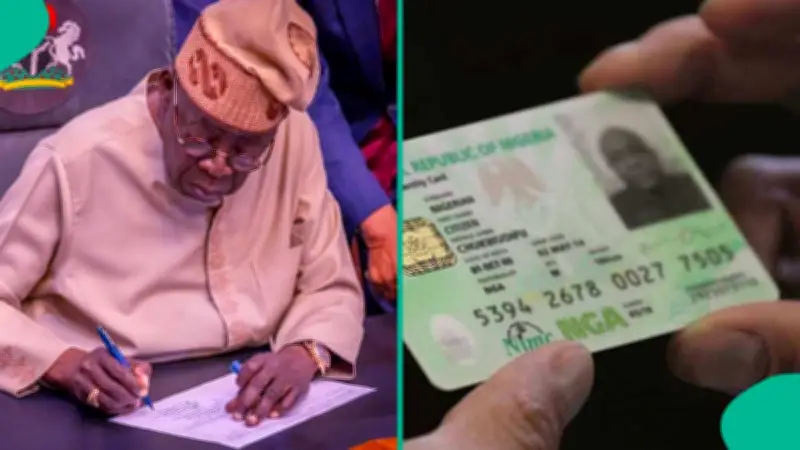
The statements follow President Tinubu's signing of the NIMC Act 2026 into law on June 26, which repealed the 2007 legislation and cemented the National Identification Number as the country's foundational credential for accessing banking, passports, tax administration, pensions, land transactions and consumer credit services.
Current enrolment figures
Legit.ng also reported that NIMC announced that 127 million Nigerians have enrolled in the NIN database as of December 2025. Lagos state led nationwide enrolment with over 13 million registered residents. Enrolment figures showed near-equal distribution between northern and southern Nigeria.