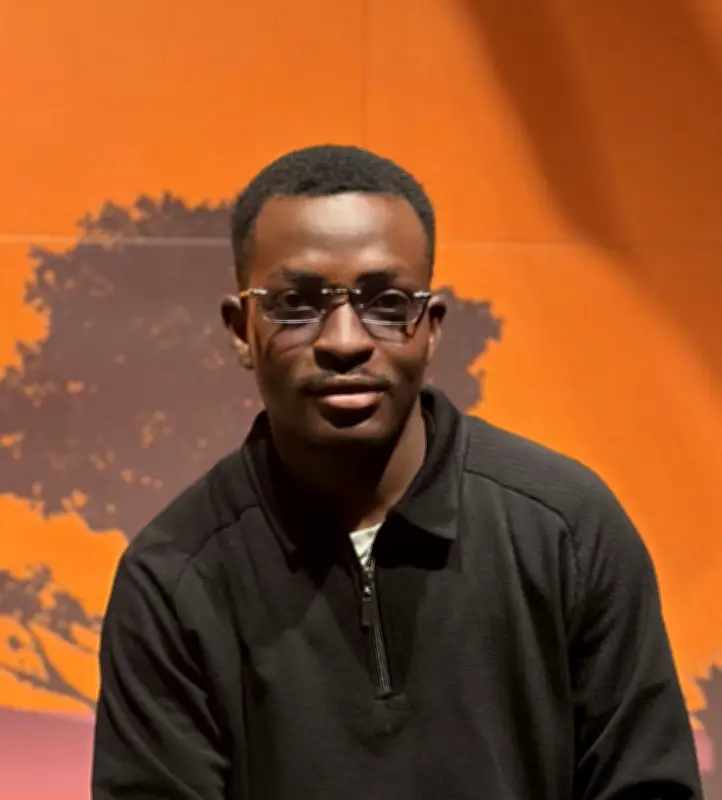
Nigerian lawyer Testimony Jesutoye has issued a stark warning that the nation's celebrated resilience has transformed from a virtue into a curse, enabling a predatory ruling class to pillage the country while citizens quietly pray for miracles or flee abroad. In a hard-hitting opinion piece, Jesutoye argues that the burden of national survival can no longer be deferred to the next election cycle or packaged into desperate prayers, insisting that it falls squarely on the citizens.
Resilience as a Psychological Cage
Jesutoye contends that for decades, Nigerians have worn resilience like a badge of honour, with the world praising their unique capacity to absorb pain and navigate systemic indignity. However, he asserts that this resilience has become a psychological cage, the very anaesthetic that allows a predatory ruling class to pillage the homeland while citizens quietly pray for miracles and run abroad in search of a better life.
He anchors his argument on Section 14(2)(b) of the 1999 Constitution (as amended), which provides that "the security and welfare of the people shall be the primary purpose of government." According to Jesutoye, this section is the sacred bond that binds the Nigerian people and the government together. Any government formed in Nigeria which cannot keep children safe in schools, farmers safe on their farms, worshippers safe in their place of worship, and travellers safe on the road has not merely underperformed but failed woefully, he argues.
Schools as Hunting Grounds
The lawyer points to the abduction of 276 girls in Chibok twelve years ago as the opening chapter of a country-wide enterprise of terror, rather than an isolated tragedy. He notes that Nigerians have grown so desensitised that they scroll past headlines such as "Forty-five students (45) violently abducted in Ogbomoso," "Gunmen kill seven in fresh attack on Plateau village," and "Classrooms raided in Nasarawa" without feeling a shiver of terror.
Jesutoye highlights that Nigeria already carries the burden of over 20 million out-of-school children, the highest rates in the world, a figure that exceeds the population of Lagos state. By turning schools into hunting grounds, the state forces a devastating choice upon rural parents: keep children at home in illiterate safety or send them to school and risk losing them to the wilderness. When a child's education is permanently halted by the trauma of a gun barrel, a thread of national development is cut forever, he warns.
Exponential Decay and the Social Contract
The lawyer argues that a fatal mistake Nigerians make is assuming that national decline is linear, when in reality national decay compounds exponentially. Two sustained years of crisis can set a nation back by decades, he asserts, systematically engineering an illiterate, traumatised generation and guaranteeing a future of unending unrest.
Jesutoye draws attention to the sprawling Internally Displaced Persons (IDP) camps that have multiplied across Northern Nigeria over the last fifteen years. These camps are no longer temporary shelters but permanent monuments to a government that has surrendered its own territory. Millions of Nigerian children are being born and raised beneath plastic tarpaulins, stripped of identity, dignity, and hope, he states, describing a nation that breeds its future inside refugee camps on its own soil as suffering from a brain haemorrhage.
He invokes the political philosophy of John Locke, whose work "Second Treatise of Government" (1689) argued that the sole justification for the existence of any government is the preservation of the citizens' fundamental rights: life, liberty, and estate. Locke made it clear that if a government fails to protect its citizens, it defaults on the social contract, and the people possess a moral right to lawful civic resistance and must replace the leadership.
Venezuela's Collapse as a Warning
Jesutoye draws a parallel between Nigeria and Venezuela, which in the late 20th century was the wealthiest, most stable democracy in South America, sitting on the world's largest oil reserves. The country relied solely on oil for 80 per cent of its total export revenue, which funded two-thirds of its government budget and embarked on a subsidy regime that supported at least 13 South American countries at its peak.
Between 1999 and 2014, Venezuela's political class treated national wealth as a private piggy bank, replacing technical competence with ideological loyalty and surrendering local policing to armed civilian gangs called Colectivos. A 2016 publication by GSI described Venezuela's capital city, Caracas, as the 'kidnap capital of the world'. When the oil cycle turned, the freefall to complete destruction took less than 36 months.
By 2017, Venezuela was locked in hyperinflation, the healthcare system had vanished, and the UNHCR reported 7.9 million Venezuelan refugees and migrants globally. Today, the International Monetary Fund (IMF) reports show that the inflation rate in Venezuela stands at 387.4 per cent, and about 56 per cent of Venezuelans live in extreme poverty. Jesutoye notes that a quick search of what caused the collapse of the Venezuela economy matches the current reality of Nigeria: insecurity, poor governance and economic mismanagement, political corruption, hyperinflation, and over-reliance on one resource.
South Korea's Redemption and the Call to Action
However, Jesutoye insists that history shows the cycle can be broken, citing South Korea as an example. Following the devastation of the Korean War in the 1950s, South Korea was an impoverished, corrupt state with low literacy and zero industrial future. Yet, through a massive public obsession with education, a ruthless, uncompromising crackdown on corruption, and overwhelming citizen protests such as the Gwangju and June democratic struggle, the people forced the state to align with the public good. South Korea's democracy was not secured in a year; it was built upon the protest and sacrifice of many.
The lawyer reminds Nigerians of the billions of the Abacha loot, the sovereign rights bartered away in the dark corridors of the Malabu Oil scam, and the national dignity compromised in the predatory manoeuvres of the P&ID scandal and the Alison-Madueke case. He argues that leaders make these short-sighted, foolish decisions and loot with such brazen impunity because they have calculated the cost of citizens' resistance and found it to be absolutely zero.
Jesutoye concludes that Nigerians must shed their fear, organise horizontally, build parallel networks of community security, fiercely interrogate every public official, and ensure that every single act of governance failure carries a severe, unbearable social and political cost for the perpetrator. He urges citizens to rise to the occasion, reclaim their country, and force Nigeria onto the path of greatness, or accept that their silence makes them accomplices to their own destruction. Testimony Jesutoye is a Nigerian lawyer and can be contacted through [email protected]. His opinions do not reflect that of any organisation or body he is associated with.