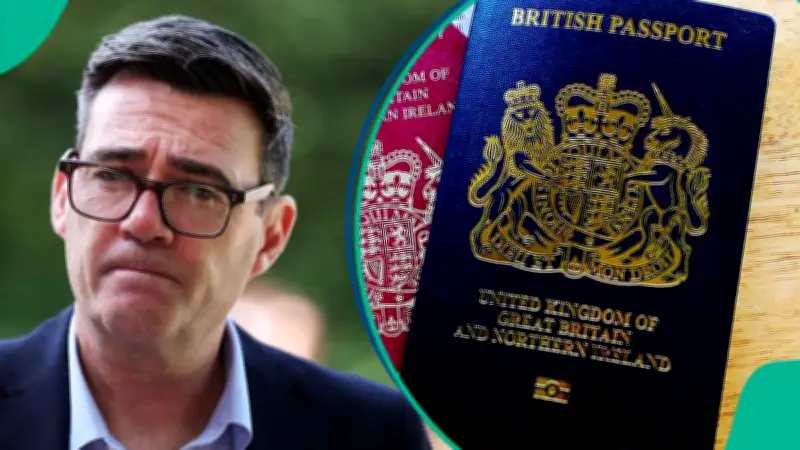
UK Government Publishes Clear Breakdown of British Passport Eligibility
The British government has published a clear breakdown of who qualifies to apply for a British passport, outlining six distinct categories of British nationality that grant eligibility. The guidance, published on the official UK government website, confirms that any individual holding one of these six nationality types may submit a passport application.
Six Categories That Qualify for a British Passport
According to the official UK government website, the eligible groups are: British citizens, British overseas territories citizens, British overseas citizens, British subjects, British nationals (overseas), and British protected persons.
1. British Citizens
British citizenship is the broadest and most widely held category. It allows a person to live and work in the United Kingdom without any immigration restrictions. Eligibility for this status depends on a combination of factors, including where and when a person was born, as well as the circumstances of their parents at the time of birth. Crucially, being born in the UK does not automatically confer British citizenship. Those who do not hold British citizenship may still be able to register as one or pursue naturalisation, for example after settling in the UK.
2. British Overseas Territories Citizens
Formerly known as British dependent territories citizenship before 26 February 2002, this generally applies to individuals who held citizenship of the United Kingdom and Colonies on 31 December 1982 and had a qualifying connection to a British overseas territory through birth, registration, or naturalisation of themselves, their parents, or grandparents.
3. British Overseas Citizens
This status was assigned on 1 January 1983 to those who held citizenship of the United Kingdom and Colonies on the last day of 1982 but did not transition into either British citizenship or British overseas territories citizenship. A notable exception involves Hong Kong: those whose only connection to British overseas territories citizenship was through Hong Kong lost that status on 30 June 1997, when sovereignty over the territory returned to China.
4. British Subjects
The British subject category has covered very few people since 1983. It applies primarily to individuals who were British subjects without citizenship as of 31 December 1948 and did not subsequently acquire citizenship of the UK and Colonies, a Commonwealth country, Pakistan, or Ireland. Persons who held Irish citizenship on that same date and had formally declared their wish to remain British subjects also fall within this group.
5. British Nationals (Overseas)
British national (overseas) status is specific to those who held British overseas territories citizenship through a connection with Hong Kong and registered under this status before 1 July 1997. This category is closed, meaning no new applications to become a British national (overseas) are accepted.
6. British Protected Persons
British protected person status was generally assigned on 1 January 1983 to citizens or nationals of Brunei, those who were already British protected persons, or individuals who would otherwise have been born stateless in the UK or an overseas territory. In most cases, this status is lost once a person acquires any other nationality or citizenship, or if the territory they were connected with gained independence and they became a citizen of that new country.
Fees for British Citizenship Application
Meanwhile, Legit.ng previously reported that the UK government published official guidelines and fees for foreigners who want to become British citizens through marriage to a UK national. The guidelines specify a mandatory three-year physical presence requirement in the UK, and the fees were also broken down.