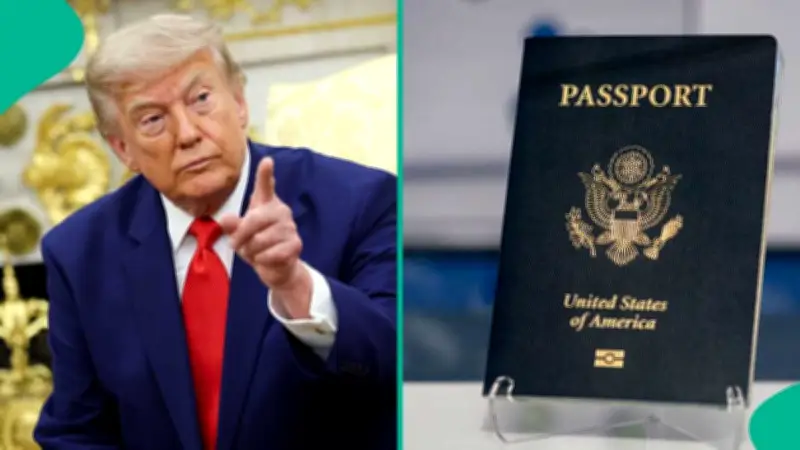
The United States government has updated its official guidance on proving citizenship without a birth certificate, with the latest revision taking effect on March 17, 2026. The procedure applies to individuals born in the US whose birth was never officially registered or whose records cannot be located.
First Step: Contact the Vital Records Office
According to the official guidance, the first step is to contact the vital records office in the state where the person was born. That office will carry out a search for any existing birth record. If the record exists, a certified copy can be obtained. However, if no record is found, the office will issue a Letter of No Record.
This letter is a formal document that confirms a search was conducted. It includes the person's name, date of birth, the range of years searched, and a statement that no birth certificate was found on file. The Letter of No Record is essential but does not alone prove citizenship; it must be combined with secondary evidence.
Secondary Evidence That Can Be Used
The guidance lists several types of documents that may serve as secondary evidence of birth in the United States. These include a hospital birth certificate, a baptism certificate, census records, and early school records. The government advises that the strength of a citizenship claim depends on the range and reliability of the supporting materials provided.
Each document should be original or a certified copy. Hospital birth certificates are often issued by the facility where the birth occurred and may be accepted even if the state did not register the birth. Baptism certificates, especially those created near the time of birth, can also be strong evidence. Census records and early school records help establish continuous presence in the US.
Building a Strong Case
The government emphasizes that multiple pieces of secondary evidence strengthen the claim. For example, combining a Letter of No Record with a hospital birth certificate and a baptism certificate provides a more convincing case than relying on a single document. The process may require patience, as some records may be archived or difficult to obtain.
In a related development, the US government has also highlighted the challenges faced by dual citizenship holders. Dual citizens are urged to research the laws of any country where they hold nationality before departure. The guidance applies to anyone who is a national of the United States and at least one other country, whether acquired by birth, parentage, or naturalisation.
Challenges for Dual Citizenship Holders
Dual citizens may face issues such as conflicting legal obligations, taxation requirements, or travel restrictions. For instance, some countries do not recognize dual citizenship, which could affect entry or exit. The US government advises dual citizens to carry both passports and be aware of each country's regulations.
Overall, proving US citizenship without a birth certificate requires careful documentation and adherence to official procedures. The Letter of No Record combined with secondary evidence forms the foundation of a successful claim.