Governor Alex Otti's Bold Vision for Abia's Energy Independence
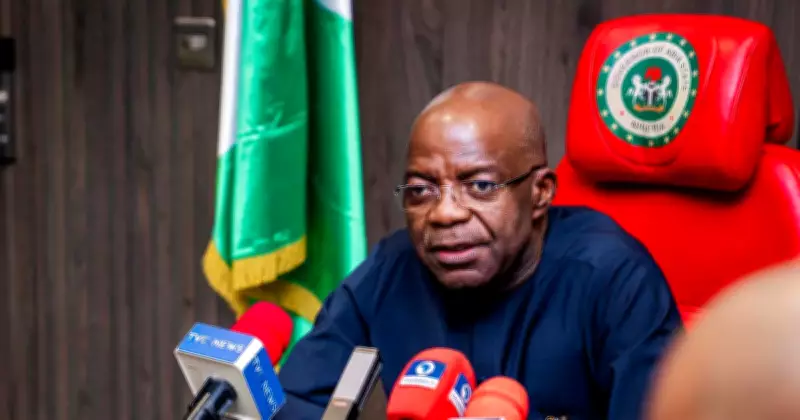
Governor Alex Otti of Abia State has unveiled a groundbreaking strategy to completely remove his state from Nigeria's national electricity grid, marking a significant step toward energy autonomy. The announcement came during the commissioning ceremony of Ultimum Beverages' multimillion-dollar production facility in Aba on March 27, 2026, where Otti outlined his administration's comprehensive power infrastructure development plans.
Strategic Power Infrastructure Development
According to Governor Otti, enhancing Abia's power infrastructure represents a fundamental component of his government's economic development agenda, designed to position the state as a premier investment destination. "My primary objective is to completely remove Abia State from the national grid," Otti declared emphatically. "My Commissioner for Power is currently engaged in negotiations in the Netherlands. Should we successfully secure an additional 125 megawatts of capacity, we will direct this power directly to Umuahia and completely detach our entire state from the national grid. This mission represents our unwavering commitment to energy independence."
The governor further emphasized that while the initiative involves private enterprise collaboration, his administration stands ready to provide substantial support because the project promises widespread benefits for all Abia residents and businesses.
Building on Existing Power Sector Reforms
Since assuming office in 2023, Governor Otti has implemented transformative reforms that have already yielded significant improvements in Abia's power sector. During a January 2026 press briefing at the state house, Otti proudly noted that portions of Abia State have already achieved independence from the national grid, insulating the state from the frequent grid collapses that continue to plague other Nigerian regions.
The foundation for this ambitious grid-exit plan was established in February 2024 when Governor Otti inaugurated the Abia Geometric Power Plant. This gas-fired independent power facility boasts an initial capacity of 141 megawatts, with expansion plans to reach 188 megawatts. Under the leadership of former Minister of Power Bart Nnaji, the plant currently provides reliable electricity to nine local government areas, serving both industrial and residential customers.
Regulatory Framework and Implementation Strategy
To facilitate this transition, the Abia State government has established the Abia Electricity Regulatory Authority, a specialized body tasked with managing power generation, distribution, and transmission within the state. This regulatory framework aligns perfectly with Governor Otti's vision of ensuring the Abia Geometric Power Plant can eventually supply electricity to the entire state, thereby eliminating dependency on the national grid entirely.
The legal foundation for this initiative stems from the Electricity Act 2023, which empowers state governments and private investors to generate, transmit, and distribute electricity independently. This legislative deregulation has enabled Abia State, under Governor Otti's leadership, to assume a pioneering role in Nigeria's quest for reliable, 24-hour electricity supply.
National Context and Contrasting Realities
While Abia State progresses toward making electricity challenges a distant memory, the broader Nigerian context presents a stark contrast. During a recent press conference, Minister of Power Adebayo Adelabu publicly apologized for the nationwide decline in power supply that has disrupted lives and businesses across the country.
Minister Adelabu revealed that Nigeria requires approximately $100 billion in investment to achieve stable, year-round electricity supply nationwide. He acknowledged that many power sector challenges extend beyond government control but assured citizens that President Bola Tinubu's administration remains committed to reaching the target of 6,000 megawatts by December 2026.
Governor Otti's ambitious grid-exit plan represents a bold departure from traditional approaches to Nigeria's persistent power challenges, potentially establishing Abia State as a model for regional energy independence and sustainable development.