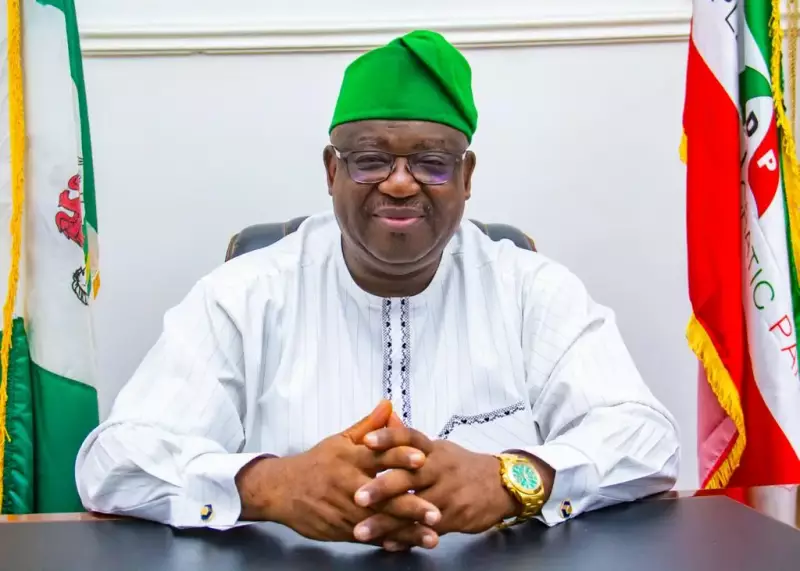
In a significant political development, Plateau State Governor Caleb Mutfwang has officially stepped down from the Peoples Democratic Party (PDP). This move sends ripples through Nigeria's political landscape, coming at a time of notable realignments among opposition figures.
A Formal Departure from the PDP
The governor made his resignation official through a letter personally signed by him and dated December 30, 2025. The correspondence was directed to the PDP Ward Chairman in Ampang West Ward, located within the Mangu Local Government Area of Plateau State. The News Agency of Nigeria (NAN) obtained and published the letter from its office in Jos on Thursday, January 1, 2026.
In his communication, Governor Mutfwang expressed gratitude to the PDP for providing the platform that enabled his political rise. He specifically thanked party leaders at every level for their unwavering support and solidarity over the years. Mutfwang, who was elected governor in 2023 under the PDP's banner, did not, however, announce his next political destination.
Seeking a New Direction
The governor explained his decision was driven by the current political realities and a deep-seated commitment to effective governance. “Given the realities of the moment and guided by my commitment to purposeful leadership, clarity of direction and service delivery, I’m compelled to seek an alternative political platform,” Mutfwang stated in his resignation letter.
This statement underscores a growing sentiment among some Nigerian politicians who are increasingly dissatisfied with the status quo and are searching for vehicles they believe can deliver genuine change and improved governance to the people.
A Wave of Opposition Realignment
Governor Mutfwang's exit from the PDP occurs amidst a notable shift in Nigeria's opposition politics. His resignation came just one day after a major political defection that captured national attention.
On Wednesday, December 31, 2025, Mr. Peter Obi, the former Labour Party presidential candidate in the 2023 general elections and a former Governor of Anambra State, formally joined the African Democratic Congress (ADC). Obi made the announcement during a New Year address delivered at the Nike Lake Resort in Enugu.
In his speech, Obi framed his move as a patriotic act necessary for national salvation. He accused the current political leadership of enabling state capture, economic mismanagement, and a systematic erosion of democratic values. Obi passionately called on Nigerians and opposition forces to unite under a broad national coalition to rescue the country.
“This decision is guided solely by patriotism and national interest. I now respectfully call on my political associates, the Obidient Movement and opposition leaders across the country to join this broad national coalition under the African Democratic Congress. History will not forgive silence in moments of national peril,” Obi declared.
He painted a grim picture of a nation in distress, highlighting critical issues:
- Over 130 million Nigerians living in multidimensional poverty.
- More than 80 million youths who are unemployed.
- Pervasive insecurity across the nation.
“Nigeria is looted into poverty,” Obi asserted, rejecting the notion that the country's crises were inevitable and instead blaming leadership failure.
Implications and the Road Ahead
The back-to-back defections of two prominent political figures—Peter Obi and Governor Caleb Mutfwang—signal a potential period of significant realignment within Nigeria's opposition space. While Mutfwang has not yet declared for the ADC or any other party, the timing suggests a coordinated or inspired movement towards alternative platforms.
These developments set the stage for a reconfiguration of political forces as the country looks ahead to future electoral cycles. The central question now is whether Governor Mutfwang will follow a similar path to Peter Obi and join the ADC, or if he will chart a different course in his quest for an alternative political platform that aligns with his vision for purposeful leadership and service delivery in Plateau State.