Plateau Governor Mutfwang Defends Armored Vehicle Use After Deadly Jos Attack
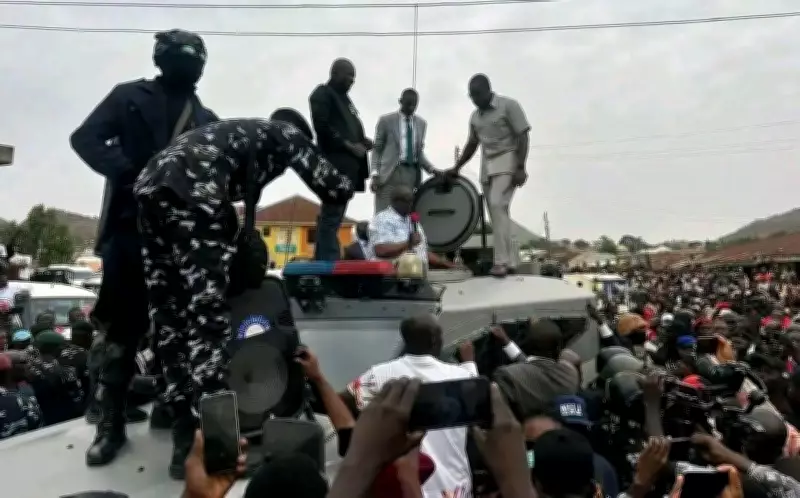
Governor Caleb Mutfwang of Plateau State has publicly defended his decision to use an armored personnel carrier during a visit to Angwan Rukuba in Jos North, following a devastating Palm Sunday attack that claimed 28 lives. The governor's actions, which were captured in viral videos, sparked significant criticism on social media, with many accusing him of acting out of fear. However, Mutfwang firmly rejected these claims, stating that his approach was guided strictly by security protocols and practical considerations.
Security Protocols and Public Safety Concerns
In a detailed television interview, Governor Mutfwang explained that he was in Abuja for official engagements when he received the urgent news of the attack. He immediately returned to Plateau State to address the crisis. Upon arrival, he faced a highly volatile situation where tensions were running extremely high among residents. "The security personnel have a duty to protect me, and if they assess that the situation they perceived was hostile, they had a duty to protect me," Mutfwang emphasized. He noted that security operatives advised caution due to the unstable environment, leading to the initial use of the armored vehicle.
Addressing the Crowd and Managing Expectations
Mutfwang clarified that standing through the roof hatch of the armored vehicle was a practical measure to effectively address the large crowd gathered at the scene. "From the height I stood... it was for me to gain height in order to address the crowd," he said. He also revealed that residents had refused to allow the evacuation of victims' bodies until he personally arrived, underscoring the critical need for his presence. "Unless they see the governor, they are not going to allow those corpses to be evacuated," he recounted, highlighting the community's demand for direct gubernatorial intervention.
Criticism of Social Media Representation
The governor expressed frustration over how his visit was portrayed online, arguing that social media clips misrepresented the full context of his engagement. "If not for mischief, why are people not focusing on where I spent 90 percent of the time with the crowd, seeing the corpses, appealing to people, calming people?" he questioned. Mutfwang maintained that he felt safe among the community during the visit, despite the initial security precautions, and criticized the selective sharing of videos that omitted his extensive interactions with residents.
Broader Implications and Community Response
This incident sheds light on the challenges faced by public officials in balancing security concerns with public accessibility during crises. The attack, suspected to be carried out by bandits, not only resulted in significant loss of life but also injured several others, exacerbating communal tensions in the region. Mutfwang's defense highlights the ongoing struggle to maintain transparency and trust while adhering to necessary security measures in Nigeria's volatile security landscape.