
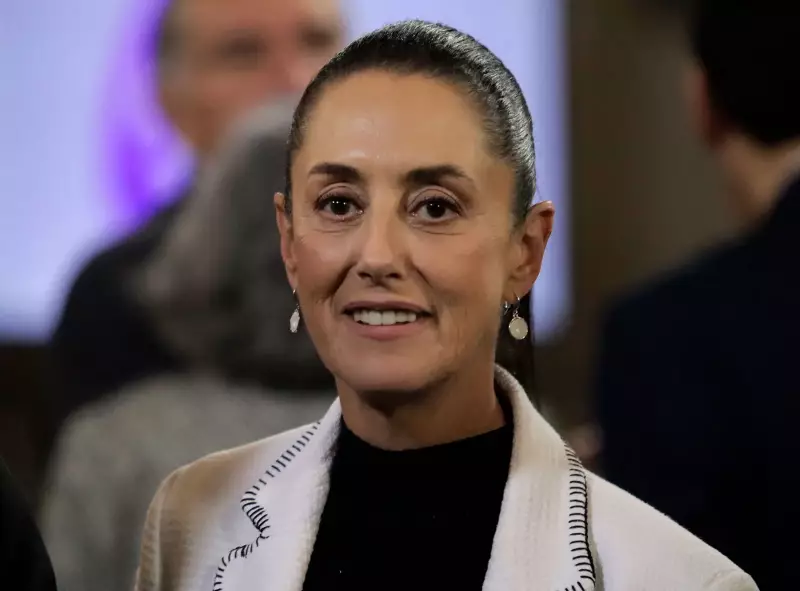
Mexico's first female president Claudia Sheinbaum has taken legal action against a man who assaulted her during a public walk in Mexico City, igniting nationwide conversations about gender-based violence and women's safety.
Presidential Assault Sparks National Fury
On November 4, 2025, President Sheinbaum was walking near the National Palace in Mexico City when a man identified as Uriel Rivera approached and groped her. Security personnel immediately detained the assailant, who now faces formal sexual harassment charges.
The following day, President Sheinbaum filed an official complaint, describing the incident as "an attack on all women" in her televised address to the nation. She explained her decision to press charges by stating, "I decided to press charges because this is something that I experienced as a woman... that we as women experience in our country."
A Nation Confronts Its Gender Violence Crisis
The assault on Mexico's leader has highlighted the country's ongoing struggle with gender-based violence, where approximately 10 women are killed daily in femicide-related cases. When Sheinbaum made history by becoming Mexico's first female president in 2024, many hoped her leadership would challenge the nation's deeply rooted sexist culture.
However, this very public violation occurring just thirteen months into her term demonstrates how entrenched gender violence remains in Mexican society, affecting women at every level - including the country's highest office.
Across social media platforms and television networks, the incident triggered widespread outrage. Many women expressed shock that even the president isn't safe from harassment, while others voiced frustration about the slow pace of change despite years of activism and legal reforms.
From Personal Violation to National Policy
By Thursday, President Sheinbaum responded to the crisis by announcing a comprehensive national initiative against sexual abuse, framing it as both a legal and cultural battle. The new plan includes several key components:
- Making sexual harassment a punishable crime across all Mexican states
- Strengthening specialized education for prosecutors and judges handling gender violence cases
- Launching a nationwide campaign encouraging victims to report abuse
Mexico City Mayor Clara Brugada pledged to implement stronger public safety measures, while President Sheinbaum confirmed she would review her security protocols while maintaining her commitment to remaining accessible to citizens.
The incident has become a political flashpoint, with some commentators focusing on security lapses following the recent assassination of Carlos Manzo, a popular mayor from Michoacán. However, for many Mexicans, the deeper concern remains the normalization of violence and harassment against women at every level of society.
President Sheinbaum's decision to transform her personal violation into public policy has drawn both strong support and scrutiny. Supporters view this as a defining moment in her presidency that could establish her legacy as a genuine reformer. Critics, however, question whether symbolic gestures can effectively shift attitudes that have resisted change for generations.
Regardless of perspective, the assault on Mexico's first female president has forced a national reckoning, serving as a stark reminder of the cultural challenges the country continues to face in addressing gender-based violence.




