Adebayo Demands Action After Plateau Attack, Criticizes Security Failures
Former presidential candidate of the Social Democratic Party (SDP), Adewole Adebayo, has issued a strong call for immediate and decisive action from the Federal Government in response to the deadly attacks in Angwa Rukuba, Plateau State. He warned that continued inaction could exacerbate insecurity and undermine public confidence in leadership.
Condolence Visit and Systemic Critique
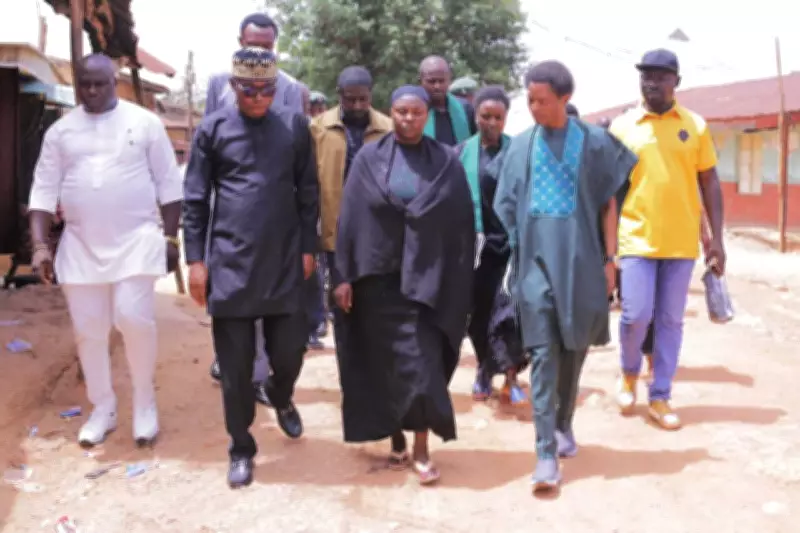
During a condolence visit to the affected community, Adebayo met with grieving families and displaced residents, describing the incident as more than an isolated tragedy. He framed it as a stark reflection of systemic failures within Nigeria's security architecture, emphasizing that the issue extends beyond one community to the government's fundamental duty to protect its citizens.
"This is not just about one community," Adebayo stated. "It is about the ability of government to protect its people when it matters most." He highlighted that repeated cycles of violence across the country have exposed critical gaps in intelligence gathering, response coordination, and community engagement.
Call for Proactive Security Measures
Adebayo urged authorities to move beyond routine condemnations and adopt a proactive, intelligence-driven security framework that prioritizes prevention over reaction. He argued that effective security must be built on trust between law enforcement agencies and local communities, noting that residents often serve as the first line of information but remain disconnected from formal structures.
"Government must empower security agencies with the right tools, logistics, and intelligence while building strong partnerships with the people," he said. Additionally, he emphasized the need for empathy in governance, asserting that leadership must be visible and responsive during crises, supporting victims, rebuilding communities, and restoring hope.
Demand for Justice and Accountability
Adebayo further called for swift justice, insisting that perpetrators of the attack must be tracked, arrested, and prosecuted without delay. He warned that failure to ensure accountability emboldens criminal elements and perpetuates a cycle of violence.
"No Nigerian life should be taken without consequences," he declared. "Justice must be done, and it must be seen to be done." He urged President Bola Ahmed Tinubu to treat the incident as a defining moment for reforming Nigeria's security response, advocating for stronger coordination among security agencies and a renewed commitment to protecting citizens nationwide.
Community Vulnerability and Local Appeals
Meanwhile, the District Head of Angwa Rukuba, Haruna Bala, highlighted the community's vulnerability during the attack, revealing that there was little to no security presence as assailants operated freely. He noted that the incident exposed serious weaknesses in existing security arrangements and raised concerns about emergency response capacity.
"We had no immediate protection. They came, did what they wanted, and left without resistance," Bala said. He appealed to security authorities to urgently upgrade the local police facility, deploy adequate personnel, and provide modern equipment to enable faster and more effective responses to threats.
Bala described Angwa Rukuba as a diverse and vibrant settlement—often called a "mini-Nigeria"—where people from different ethnic backgrounds coexist and engage in trade. He warned that insecurity threatens not only lives but also livelihoods and community unity. He commended traditional rulers for maintaining calm during the crisis while expressing hope for concrete steps to prevent recurrence.
Conclusion: A Call for Political Will
As grief lingers in the community, the message from both leaders is clear: restoring peace in Plateau and across Nigeria will require more than promises. It demands strong political will, coordinated security efforts, and leadership that is both firm and compassionate in the face of adversity.