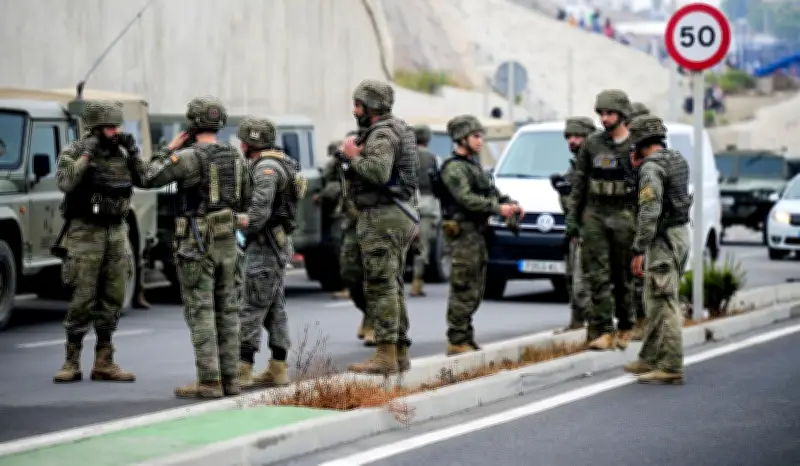
Spanish police and military personnel on Saturday, August 1, escorted a large group of migrants from the Spanish enclave of Ceuta to the El Tarajal border crossing with Morocco. Security forces were seen accompanying migrants toward designated border areas, as the Spanish government continued its push to reverse a record-breaking influx.
The escorts came after hundreds of migrants entered Ceuta from neighbouring Morocco in the preceding days, many swimming around the Tarajal breakwater or crossing through coastal border points. The scale of the arrivals forced emergency responses and drew in military support, with the enclave struggling to cope with the sheer number of people on its streets.
Over 50,000 Crossed, Most Returned by Friday
Spain’s Interior Ministry said around 50,000 people had crossed into Ceuta since Thursday morning. By Friday evening, approximately 48,300 had returned, according to the same ministry. The Spanish government emphasised that the majority of these departures were voluntary, though the exact circumstances of many returns were not independently verified.
The head of Ceuta’s local government, Juan Jesus Vivas, offered an even higher estimate, saying as many as 60,000 people had pushed across over the past couple of days. That figure, though not confirmed, underscores the immense pressure the small enclave was subjected to in a very short period.
Death Toll Reaches 57, More Feared
The Spanish government’s representative in Ceuta reported that 57 bodies had been recovered on the Spanish side of the border. The official said some migrants drowned while attempting the swim around the breakwater, and others were crushed in the rush to climb the breakwater structure that holds the border fence. The representative also noted the possibility of additional casualties on the Moroccan side, but no numbers were provided.
The deaths have raised serious concerns about the safety of the crossing routes, and the potential for more bodies to be found means the final toll may rise. The breakwater, designed to prevent border access, has become a site of repeated tragedy.
EU’s Only Land Border With Africa Under Strain
Ceuta and Melilla, Spain’s autonomous cities in northern Morocco, form the European Union’s only land borders with Africa. Both have experienced periodic surges in attempted crossings by migrants hoping to reach European soil. However, the scale of Thursday’s rush appeared unprecedented, according to reports, and has placed Ceuta squarely in the spotlight of Europe’s migration challenges.
The events have tested the relationship between Spain and Morocco, as thousands arrived despite the two countries’ longstanding migration agreements. The weekend’s military escorts demonstrated a firm Spanish response, even as the voluntary return narrative was complicated by the visible presence of armed forces at the border.
As the operation continued, attention turned to the logistical question of how the enclave will recover, and how both governments will address the underlying conditions that drive such mass crossings. The images from Ceuta — of people wading ashore, others emerging from the surf, and security cordons sending them back — are likely to shape migration policy debates for some time to come.