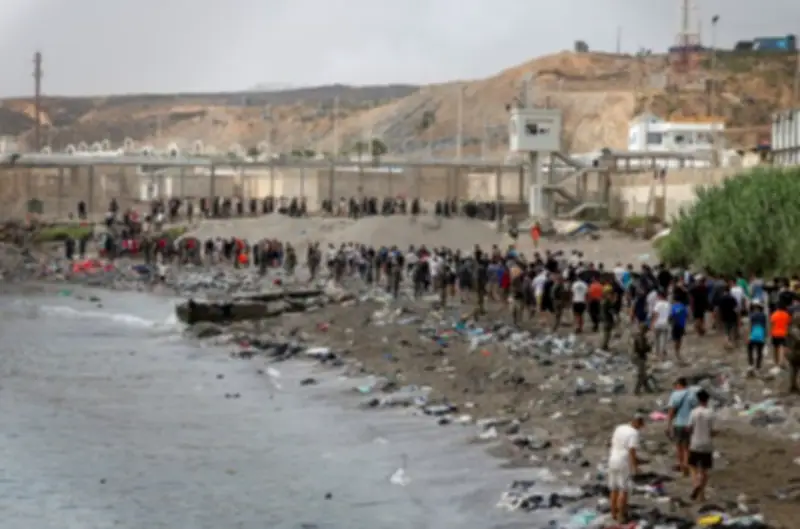
At least 41 people died as a massive crowd of migrants breached the Spanish border with Morocco and poured into the enclave of Ceuta, according to local authorities. The Ceuta government told The Associated Press that approximately 60,000 migrants entered the city from Morocco within a 24-hour window, an unprecedented influx that has stretched local resources to breaking point.
Ceuta is an autonomous city of Spain situated on the northern coast of Africa, sharing its only land border with Morocco. Together with the neighboring Spanish city of Melilla, Ceuta forms the European Union’s sole land boundary with Africa. The latest crisis unfolded a day after the regional government disclosed that between 1,500 and 2,000 migrants had already arrived in the preceding 10 days, signaling a dramatic escalation in attempted crossings.
Deadly Crossing at Tarajal Beach
Authorities confirmed that some of the migrants died in a stampede while attempting to breach the frontier, specifically crossing the breakwater fence at Tarajal beach. Rachid Sbihi, who leads a local workers association representing Civil Guard officers, told the Associated Press that some of the 18 fatalities recorded during that incident also drowned. Spanish broadcaster RTVE broadcast images of burned cars on the Moroccan side of the border following reported clashes between migrants and security forces. NBC News also reported that video footage showed several Moroccans walking around the breakwaters onto local roads; the crowds were predominantly composed of young men, but families with women and small children were also present.
The deadly attempt to enter Ceuta is the latest in a series of dangerous crossings into Europe that have been widely documented. The scale of this particular surge, however, has prompted alarm both in Madrid and across the European Union, as Ceuta authorities described the situation as a “serious humanitarian crisis.”
Spain’s Hard Line
Prime Minister Pedro Sanchez has characterized the incident as an attack on Spain’s “territorial integrity” and vowed to ensure the safety of Ceuta’s residents. In a post on X, he wrote: “What has happened is an attack on Spain’s territorial integrity and deserves our most resounding and energetic condemnation.” He stated that his government was intensifying the presence of “Security Forces and Corps in the city,” and that it would expedite the “repatriation files of the migrants who arrived irregularly.” Additionally, Sanchez said: “We will deploy a physical containment barrier in the sea to facilitate repatriation at the border, in compliance with the Supreme Court ruling.”
These measures reflect a tough stance aimed at restoring control over the enclave’s borders and reassuring Spanish citizens that the government is responding decisively.
Emergency Declared Then Rejected
Ceuta’s regional president, Jesus Vivas, declared an “absolute humanitarian and social emergency” on Thursday and called on Madrid to deploy troops to reassert authority over the border. The city’s local administration appealed for urgent national support as hospitals and shelters became overwhelmed by the sheer number of arrivals. However, Spain’s Interior Ministry rejected the call to declare a national emergency, stating that such a measure does not apply to migration crises, while promising additional resources to help mitigate the situation.
The divergence between regional and national authorities underscores the complexity of managing a sudden mass movement of people across an external EU border. It also sets the stage for a contentious political battle within Spain, as the left-wing, pro-immigration government of Pedro Sanchez faces growing pressure to adopt harsher border controls.
European Tensions Rise
The mass arrival by sea and land is threatening to trigger a political crisis for Sanchez on the international stage. European leaders have called for Spain’s temporary suspension from the bloc’s Schengen free-travel zone, citing fears of a fresh migration crisis that could ripple across the continent. This has led to a diplomatic row between Rome and Madrid, with France also announcing that it was increasing checks on its border with Spain.
Italian Prime Minister Giorgia Meloni went further by threatening to demand Spain’s suspension from the 29-member Schengen area, which stretches from Portugal to Poland. Meloni warned that the situation represents a concrete threat to European security. “The images coming from Ceuta are striking and demonstrate, once again, that uncontrolled illegal migration poses a concrete threat to the security of Europe’s borders,” she said.
The dispute highlights the deep divisions within the European Union over how to handle migration, with southern member states often feeling abandoned by their northern partners when faced with sudden influxes.
Ongoing Humanitarian and Political Fallout
As Ceuta struggles to cope with the aftermath of the largest recorded migrant surge in its history, both the human toll and the political consequences continue to mount. The deaths of at least 41 people serve as a tragic reminder of the dangers migrants face on these routes. Meanwhile, the diplomatic friction between Spain and its EU allies shows little sign of abating, and the situation remains fragile.
For now, the Spanish government has focused on repatriation and border enforcement, but the underlying factors driving mass migration from Africa remain unresolved. The crisis in Ceuta is likely to reshape debates on border security and migration policy across Europe for months to come.