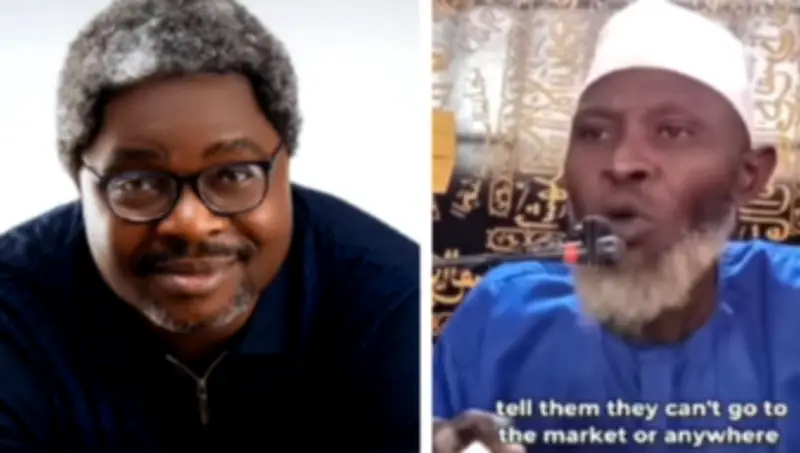
The media aide to the Minister of the Federal Capital Territory (FCT), Lere Olayinka, has demanded the arrest of an Islamic cleric, Shafiy Adeba, after a viral video showed him preaching that Muslims have the 'right' to enslave non-Muslims. In the footage, Adeba, speaking in Yoruba to congregants in a mosque in the Southwest, declared that God commanded Muslims to wage war against non-believers, take them as slaves, and confine them to their homes.
Cleric's Controversial Sermon
In the video, Adeba is heard saying: 'God said you should go to war with them. Take them as slaves, lock them inside their house, tell them they can't go to the market or anywhere, they must not be seen outside. We Muslims have the right to lock infidels in their houses, not the other way…pin them down wherever you meet them, kill them where they hide. Lock them up in their houses…that's what the Quran said.'
The cleric's remarks have sparked outrage, particularly because they were made in Yorubaland, a region known for its religious tolerance and coexistence among Christians, Muslims, and traditional worshippers.
Olayinka's Reaction
Reacting to the video, Olayinka wrote on social media: 'This Cleric, by name Shafiy Adeba said Muslims have “Right” to enslave Non-Muslims. He declared war against those he called infidels “Rooted In Islam”. And he is preaching this nonsense in Yorubaland? A land of educated and civilised people with Christians, Muslims and traditional religion worshippers living together under the same roof?'
He further stated: 'Methinks people like this man should be behind bars because extremist preachers like him caused Boko Haram that Nigeria is still battling today.'
Call for Action
Olayinka's call for arrest underscores growing concerns about hate speech and religious extremism in Nigeria. The video, shared by Linda Ikeji's blog, has gone viral, prompting demands from various quarters for security agencies to investigate Adeba's activities.
This incident highlights the delicate balance between religious freedom and national security, as authorities face pressure to curb inflammatory rhetoric that could incite violence, especially in a country already grappling with insurgency in the northeast.