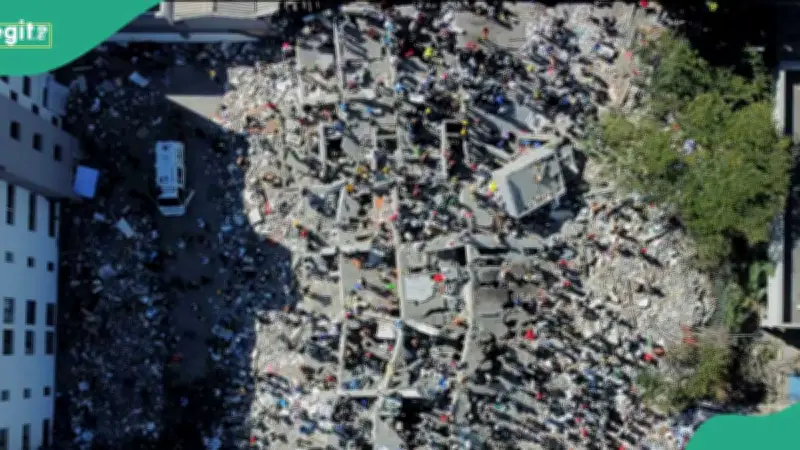
A 7.4-magnitude earthquake struck western Colombia on Monday, killing at least 169 people and injuring 700 others, according to Colombia's Association of Capital Cities. The tremor collapsed hospitals, schools, and buildings across Pereira, Cali, Quibdó, Manizales, and Armenia, all placed on red alert. Colombia's newly inaugurated president, Abelardo De La Espriella, declared a national disaster as 188 people remained missing and thousands of homes were damaged.
Strongest Earthquake This Century
Colombia's Geological Service described the tremor as the country's strongest earthquake this century. Its epicentre was in San José del Palmar in the Chocó department, roughly 250 miles west of Bogotá, and it sent shockwaves across a vast stretch of the country.
President De La Espriella told a national briefing that 700 people were injured and about 5,000 homes were either damaged or destroyed, NBC reports. Speaking from a Unified Command Centre he set up earlier in the day, he confirmed that 188 people were still missing, three hospitals had collapsed entirely, and 18 others were affected, along with 39 schools.
Rescue Efforts and Local Impact
Valle del Cauca Governor Dilian Francisca Toro reported 27 deaths in her province alone, including three children, and said the University Hospital of the Valley suffered structural collapses. Video verified by NBC News showed medical workers caring for newborns in hospital bassinets set up outdoors after the facility was evacuated.
In Cali, Mayor Alejandro Eder said at least 20 buildings collapsed, with people still trapped inside some of them. The disaster struck just as a weeklong festival celebrating Afro-Pacific culture was getting underway in the city, drawing hundreds of thousands of visitors.
Cali taxi driver Luis Angel Sarria described what he witnessed: "There are many damaged buildings, collapsed buildings, people trapped and fatalities; the quake felt here was very severe. What has happened here in my country has been very hard and very sad."
Infrastructure Disruptions and International Response
Seven airports, including those in Cali, Pereira, Manizales, and Quibdó, suspended flights pending structural safety checks, according to Colombia's civil aviation authority. Roads, water supply, energy, and telecommunications were also disrupted across affected areas. Less than an hour after the main quake, a 5.0-magnitude aftershock struck about 10 miles west of the epicentre, according to the US Geological Survey.
The United States said it would commit $15.5 million to Colombia for emergency shelter, food, and protection. "We are united in prayer with the Colombian people," the US State Department said. The International Rescue Committee warned that Chocó, already the country's poorest region and affected by armed conflict, faced particularly severe consequences. Nicole Kast, the organisation's director for Colombia, Venezuela, and Ecuador, said: "We are deeply concerned that today's natural disaster will make the needs on the ground even steeper as people lose access to health care and other essential services."
The earthquake comes weeks after back-to-back 7.2- and 7.5-magnitude tremors in neighbouring Venezuela killed more than 6,000 people in late June. Earlier, Legit.ng reported that powerful back-to-back earthquakes struck Venezuela on Wednesday evening, June 24, causing widespread damage, collapsing buildings, and sending panicked residents into the streets. The 7.2 and 7.5 magnitude earthquakes roiled the region, with buildings evacuated in cities as far away as Brazil's Amazon, about 1,700 kilometres (1,050 miles) from Caracas.