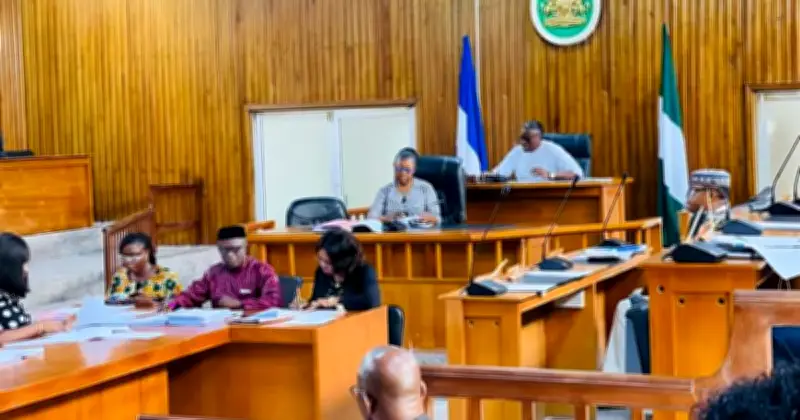
The Cross River State House of Assembly has passed a bill banning same-sex marriage and civil unions for second reading, but the legislation is already facing a legal challenge over whether the state has the authority to pass it at all.
Bill Details and Sponsorship
The bill, sponsored by Hilary Ekpang Bisong and co-sponsored by 10 other lawmakers, seeks to block recognition of same-sex marriages and civil unions in Cross River, including unions contracted outside the state or outside Nigeria. Only marriages between a man and a woman would be recognised under the proposed law, which also sets out penalties for anyone who helps arrange or take part in a same-sex union.
Unanimous Endorsement in the Assembly
Lawmakers debated the bill on Tuesday and unanimously endorsed its general principles, with no member speaking against it on the floor. House Speaker Elvert Ayambem said the Assembly has a duty to protect marriage as defined by the state's customs and existing laws, adding that lawmakers are bound to legislate in line with the values of their constituents. The bill now moves to committee scrutiny ahead of a possible third reading, after which it would go to the governor for assent.
Constitutional Objection Raised
Roughly 24 hours after the bill scaled second reading, lawyer and public affairs analyst Justice Osai Ahiakwo raised a constitutional objection, not to the substance of the ban, but to the Assembly's power to legislate on it in the first place. Citing Section 4 of the 1999 Constitution alongside Item 61 of the Exclusive Legislative List, Ahiakwo argued that matters of this kind fall under the exclusive authority of the National Assembly rather than individual state houses.
His argument does not challenge whether same-sex marriage should be banned, an issue already settled under federal law, but rather who has the constitutional right to legislate on it at the state level.
Federal Law Context
Nigeria's Same-Sex Marriage (Prohibition) Act has been federal law since January 2014, carrying a penalty of up to 14 years in prison for anyone who enters a same-sex marriage or civil union, and up to 10 years for operating or participating in gay clubs or societies. The law drew international criticism at the time from rights groups and Western governments, though Nigerian officials defended it as reflective of the country's cultural and religious values.
Next Steps
Should the bill pass a third reading and receive the governor's assent, Cross River would join a small number of states pursuing their own legislation on an issue already covered under federal law. The Assembly has not indicated when the bill will return for its next reading.