The Demise of El Mencho: A Turning Point in Mexico's Drug War
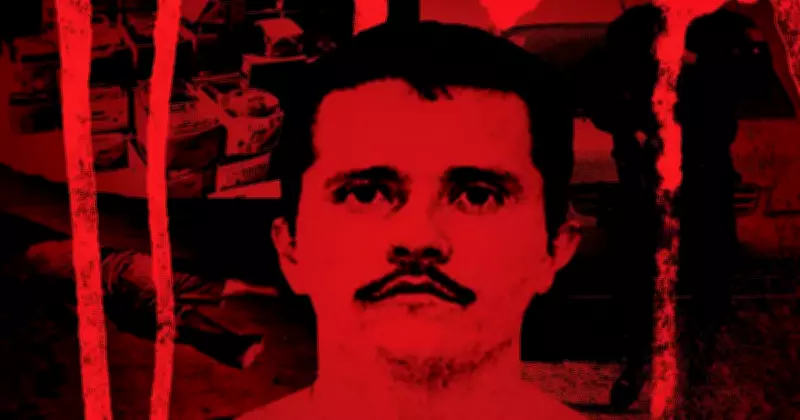
In February 2026, Mexican and international authorities confirmed the death of Nemesio Oseguera Cervantes, widely known as El Mencho, marking a crucial moment in Mexico's long and complex drug war. For over a decade, El Mencho led one of the most powerful and feared criminal organizations in the world – the Jalisco New Generation Cartel (CJNG) – until he died in a Mexican military operation in Tapalpa, Jalisco.
His influence and ruthless leadership reshaped organized crime both in Mexico and internationally, and his violent legacy continues to affect millions. When people discuss the most powerful drug traffickers in the world today, El Mencho's name consistently rises to the top of the conversation.
From Police Badge to Global Fugitive
How does someone transition from wearing a police badge to becoming one of the most feared drug traffickers on Earth? That's the remarkable story of Nemesio Oseguera Cervantes, the founder and long-time leader of CJNG. Once a police officer in western Mexico, Oseguera evolved into one of the world's most wanted fugitives.
The United States alone offered a staggering $15 million bounty for information leading to his arrest. For years, U.S. and Mexican authorities described him as a mastermind behind a global narcotics empire and as Mexico's most powerful cartel boss, particularly following the arrest of Joaquín "El Chapo" Guzmán in the previous decade.
The Rise of CJNG Under El Mencho's Leadership
Under El Mencho's command, CJNG grew from a regional organization into a sprawling criminal empire involved in trafficking cocaine, methamphetamine, heroin, and particularly fentanyl – a synthetic opioid linked to thousands of overdose deaths in the United States. Unlike older cartels that preferred operating in the shadows, CJNG made headlines with bold, public displays of force.
The cartel became notorious for attacks on military helicopters and the use of explosive-equipped drones, demonstrating a level of sophistication and audacity that distinguished them from traditional criminal groups. CJNG employed military-style tactics, including armored convoys, heavy firearms, and tactical coordination that resembled paramilitary operations more than conventional organized crime.
Global Reach and Criminal Enterprise
Employing speed, strategy, and brutality, CJNG's reach extended far beyond Mexico's borders. By the mid-2020s, authorities in North America, Europe, Africa, and Asia reported the cartel's drug flow, money laundering networks, and violent methods impacting their communities. This global footprint led law enforcement agencies to label CJNG as one of the most dangerous criminal groups worldwide.
The U.S. government described the cartel's fentanyl distribution as a "reign of terror," resulting in criminal designation and billions in sanctions. CJNG's revenue reportedly reached multi-billion-dollar levels, sustained by drug sales, extortion, kidnapping, and laundering operations spanning continents, making El Mencho more than just a trafficker – he became a central figure in transnational organized crime.
El Mencho's Background and Criminal Evolution
El Mencho was born on July 17, 1966, in a rural part of Michoacán, Mexico, into an impoverished farming family. Like many young Mexicans seeking opportunity, he migrated to the U.S. in the 1980s, where he encountered drug trafficking networks and was eventually arrested on heroin distribution charges. After serving a prison sentence, he was deported back to Mexico, where he re-entered the criminal world with new contacts and hardened ambition.
Upon his return, Oseguera reportedly worked as a police officer in the western state of Jalisco, which may have provided insight into operational structures, intelligence systems, and vulnerabilities within law enforcement. This knowledge proved instrumental as he slowly and strategically built influence in the narcotics trade, operating in the shadows while cultivating alliances.
The Formation and Expansion of CJNG
El Mencho initially integrated into the Milenio Cartel, a significant criminal organization dominating drug operations in western states. When Mexican authorities dismantled major cartels in the 2000s and power structures began to crumble, El Mencho seized emerging opportunities. He teamed up with fellow trafficker Erik Valencia Salazar ("El 85") and began building what would become CJNG around 2007–2010.
CJNG positioned itself as both an aggressive rival to older cartels, with up to 20,000 members by American government estimates, and a force claiming to protect local communities – a common tactic in organized crime to build social support. The cartel expanded aggressively across Mexico, building alliances, crushing rivals, and taking control of key drug trafficking routes.
Notorious Violence and Public Confrontations
CJNG became synonymous with extreme violence, including public executions, mass graves, and attacks on security forces. In 2015, CJNG fighters shocked the nation by shooting down a Mexican military helicopter during an operation targeting El Mencho. This event demonstrated the cartel's willingness to directly confront state security forces with unprecedented boldness.
Following El Mencho's death in February 2026, CJNG loyalists initiated widespread retaliation, blocking roads, burning vehicles, and triggering uncertain security conditions across regions. Reports indicated at least 14 deaths in post-operation violence, with several Mexican guards killed and civilians wounded in clashes.
The Final Operation and Aftermath
On February 22, 2026, Mexican federal forces, supported by U.S. intelligence, launched a high-stakes operation in Tapalpa, Jalisco, targeting El Mencho. Heavy resistance broke out during the confrontation, but El Mencho was fatally wounded and later died while being transported to Mexico City.
Governments issued travel warnings following his death, and several cities temporarily shut down schools and services due to security concerns. The widespread violence demonstrated that El Mencho's death does not necessarily mean the end of CJNG, raising critical questions about the cycle of cartel violence and the effectiveness of targeting leaders without addressing underlying structural issues.
Legacy and Continuing Challenges
Cartels like CJNG adapt, restructure, and recruit aggressively from vulnerable populations, meaning the underlying issues persist even after high-profile takedowns. Targeting leaders alone often fails to reduce recruitment or disband criminal structures, as new leadership emerges to fill power vacuums.
El Mencho's transformation from police officer to global drug lord, his leadership of one of the world's most dangerous criminal organizations, and his eventual demise in a military operation represent a significant chapter in Mexico's ongoing struggle against organized crime and drug trafficking networks that continue to evolve and adapt to law enforcement pressures.