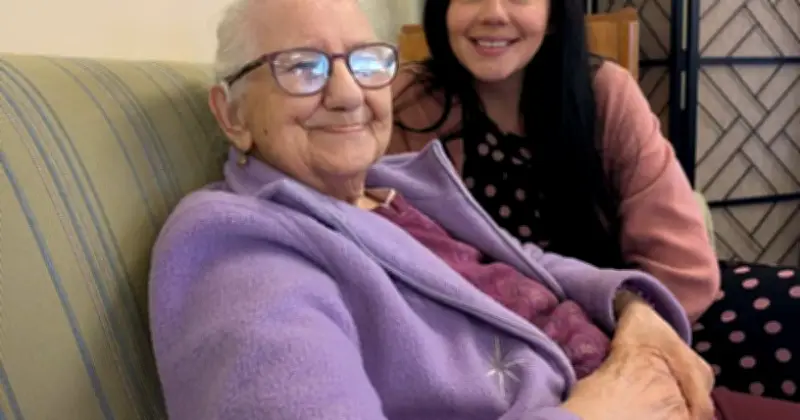
Brigitte Stegemann, an 83-year-old Christian grandmother, died on July 10, 2026, at The Pearl care home in Cannifton, Ontario, after receiving Medical Assistance in Dying (MAiD). Her granddaughter, Brigitte Kranendonk, has told the Daily Mail that the family believes Stegemann never truly wanted the procedure and that she died covered in blood after a difficult IV insertion. Belleville Police have confirmed that the circumstances surrounding her death are under investigation by its Criminal Investigations Division.
Granddaughter's Account of Refusal and Change
Kranendonk, who cared for her grandmother for about 12 years and held her power of attorney for personal care for six years, said the family had discussed assisted dying months earlier. According to Kranendonk, Stegemann's response was simple: “No, I don’t want that.” Her Christian faith was an important reason for that decision, the family says.
Stegemann was diagnosed with stage 4 stomach cancer in February. While Kranendonk was away on a 10-day trip, things changed. On July 3, the care home told her that the process for MAiD was being arranged because of Stegemann’s deteriorating condition. Kranendonk said she was stunned because, before her trip, her grandmother had still been eating, walking to the bathroom and joking with the family.

Assessment and Doubts About Consent
When she returned, Kranendonk learnt that her grandmother had already undergone a MAiD assessment. Kranendonk said she was present for part of a later assessment but was asked to leave the room while the doctor spoke privately with Stegemann. A few minutes later, she says, the doctor announced that her grandmother was capable of making the decision and had agreed to proceed.
Kranendonk strongly disagreed. She said her grandmother was severely hard of hearing, English was not her first language, and she had shown signs of confusion. According to Kranendonk, Stegemann got questions wrong during a cognitive assessment, including believing that siblings who were still alive had died.
On July 8, Kranendonk sat down with her grandmother and tried to make absolutely sure she understood what MAiD meant. She said she asked bluntly whether Stegemann knew she was going to die on Friday. Her grandmother reportedly became distressed and cried for about 45 minutes, repeatedly saying she had made a mistake. Kranendonk said she reassured her that she could still tell the medical team she did not want to go ahead.
Final Hours and the Procedure
Two days later, the family gathered around her. They took Stegemann outside in her wheelchair and gave her strawberry ice cream, her favourite. Her pastor was expected to join them, but before the scheduled procedure, Kranendonk says staff asked them to return inside so an intravenous line could be inserted.
Kranendonk alleges that a nurse struggled to insert the IV, puncturing Stegemann’s arm several times before trying the other arm. She said there was so much blood that it covered her grandmother’s arm, nightgown, pillow and bedsheets. She also alleges the nurse was not wearing gloves.
When the doctor arrived, Kranendonk said the doctor told Stegemann she was there to give her “medicine” and asked whether that was okay. Her grandmother did not open her eyes, nod or speak, Kranendonk says. Her hands, however, were tightly clasped together. The family believes she was praying.
Legal Context and Ongoing Investigation
The doctor proceeded, and Stegemann was pronounced dead about 10 minutes later. Her granddaughter says she still does not know whether the elderly woman was already unresponsive, deeply praying or dying when the medication was administered.
Under Canadian law, MAiD is allowed only under specific conditions, including a voluntary request and informed consent. Normally, a patient must also be allowed to withdraw consent immediately before the procedure. There is an exception allowing advance consent in limited circumstances, but that arrangement can become invalid if the person later demonstrates refusal or resistance.

Kranendonk says she has repeatedly sought her grandmother’s medical records and wants the authorities to determine whether Stegemann understood what she had agreed to, whether the required safeguards were followed and whether she gave valid final consent. The care home and medical practitioners involved have not publicly responded to the allegations, and the family’s account has not been proven in court. Police say the matter remains under investigation.