Why FG Should Wade into Festering Abia, A'Ibom Boundary Dispute Now — Abonta
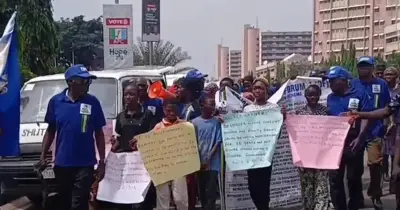
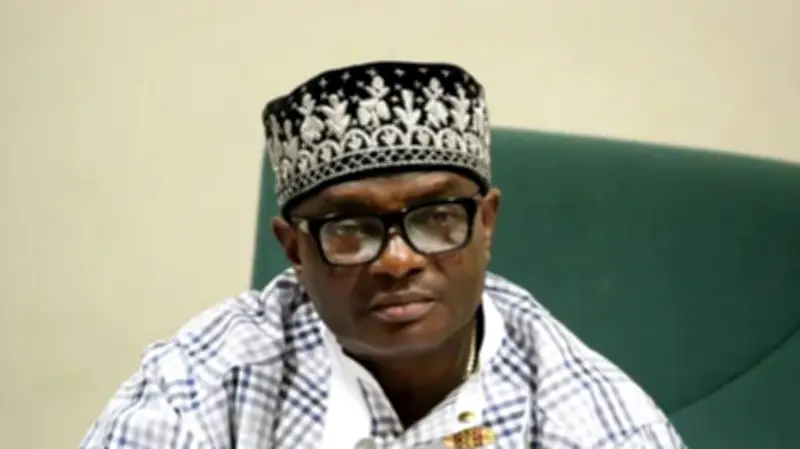
Former federal lawmaker, Dr. Uzoma Nkem Abonta, in this interview with ONYEDIKA AGBEDO, speaks about the boundary controversy between the Akirika Obu community in Abia State and the people of Ika in Akwa Ibom State, calling on the Federal Government to urgently intervene to prevent the situation from escalating into inter-community violence.
What is the Akirika Obu dispute about?
It is about the Akirika Obu community in Ukwa East Local Council of Abia State that Ika Annang people of Akwa Ibom State and the Akwa Ibom State government have been encroaching onto in their efforts to annex it. They have now been attempting so wantonly and blatantly in connivance with Abia State government officials. Akirika Obu community is within Ndoki Clan in Ukwa East Local Council of Abia State. It is one of the three communities in the Umuigubeachara Group of Communities. The people of Akirika Obu left Akirika Uku and settled on a large parcel of land allocated to their forefathers by their maternal relatives, the Abiaka people of Oberete, now in Obingwa Local Council of Abia State. The community shares partition boundaries with Abiaka in Oberete Ibeme who gave their forefathers the land and substantive boundary with neighbouring Abia State villages and Ika villages in present day Ika Local Council of Akwa Ibom State, but it has no land boundary dispute with any Ika Annang village of Akwa Ibom State.
Since after the Civil War, Ika Annang people and the predecessors of Akwa Ibom State and now Akwa Ibom State itself have been making false and fraudulent claims over the Akirika Obu community. They kept on forcefully encroaching on the community in their attempt to annex it. They have attacked and destroyed the community on several occasions. But the truth is that Akirika Obu community has no single land dispute with any Ika Annang village of Akwa Ibom State, and it has never been administered as part of the Ika Annang area of Abak Division under Uyo Province in the history of mankind. I challenge anybody claiming otherwise to come up with his or her supporting evidence. So, it is only the Akwa Ibom State government that would be claiming land and communities without evidence in the form of solid documents to prove their case. They prefer to fight. Surprisingly, the Governor of Akwa Ibom State himself does not care to find out whether those representing his state in their claims have supporting documents. A state governor does not need to be a lawyer to ask such elementary questions. He ought to ask: where are the supporting documents with which we are claiming Akirika Obu Community or Ikot Udo as they call it? Bring documents from the archives to show that Akirika Obu community has been part of Ika Annang Area in Abak Division of Uyo Province. It is not enough to rely on Abia State government officials and be prodding and cajoling them to enable you to annex Abia State boundary communities, including Akirika Obu and Azumini. It is not going to work. My constituents and I would not allow such lawlessness.
Has the Federal Government ever taken a decision on this?
Yes, more than once. The former East Central State government and later the Imo State government both complained bitterly to the Federal Government against the encroachment into Akirika Obu by Akwa Ibom State’s defunct predecessor states, the former South Eastern State and Cross River State. The Federal Government, in reaction, set up at least two commissions. Both commissions decided that Akirika Obu had been part and parcel of Ndoki Clan now in Ukwa East Local Council. At the last sitting of one of the commissions, the Kaloma Ali Boundary Ascertainment Commission of 1982, the Ika Annang people and their then Cross River State government could not produce a single document to support their claim over Akirika Obu community. The commission decided in favour of Akirika Obu being retained in the then Imo State. The commission’s decision was subsequently enacted into law – Decree No 23 of 1985 – which clearly provides that Akirika Obu is to be governed by Imo State, which part of Imo State later became part of Abia State. The decree even provides that Akirika Obu is alias Ikot Udo, but is in Imo State. Ikot Udo is one of the former names of the Akirika Obu community that the Ika Annang people have insisted on continuing to call it. But the law said that the community is in former Imo State and Abia State inherited it upon its creation.
So why are we still having this conversation in 2026?
That is the troubling part. Despite the existence of that decree, the present Abia State government officials appear to be working against its provisions and effectively ceding Abia State land comprising Akirika Obu community to the Annang people of Akwa Ibom State. The same thing is happening to the Azumini Ancient Kingdom. Azumini tenants from interior Annang connived with Abia State government officials and tried to annex the land of their Azumini customary overlords. These are what have prompted me to speak out. Which kind of government officials do such a thing and go home to sleep?
You have made allegations against Abia State government officials. Which of them specifically?
On January 21, 2026, the deputy governor of Abia State went to Community Primary School, Akirika Obu, which had long been forcefully taken over by force of arms, illegally occupied and appropriated by Akwa Ibom State government, and proceeded to partition the land in Akirika Obu community and gave part to Ika Annang people of Akwa Ibom State. He disguised this as road construction by the Akwa Ibom State government without any prior agreement with the Abia State government. He felt comfortable to stay in that forcefully occupied Community Primary School Compound and divide Akirika Obu community into four parts and ceded three of those parts to the Ika Annang people of Akwa Ibom State, and purportedly left one part in Abia State. What do those actions mean? Very embarrassing! As we are here now, Akirika Obu Community Primary School is still being occupied by AK 47 welding Ika Annang boys. These are deeply unjust and reek of sectional bias and foul play against my constituents.
That is a serious charge. How would you characterise what the deputy governor did?
What he did amounted to going into another state to manufacture a non-existing boundary dispute for his own state because no such boundary dispute exists between Akirika Obu Community and Ika Annang villages. For me as a lawyer, his conduct is treacherous and treasonous. Remember, Akirika Obu Community had already taken the Akwa Ibom State Government and others to court. In one of their defence, Akwa Ibom claimed this was a boundary dispute between Akirika Obu and their community, yet they could not name a single of their Ika Annang village with which Akirika Obu has a land boundary dispute. The Akwa Ibom State government also made one puerile and outlandish pleading bordering on blatant lies in their statement of defence. They pleaded that Decree 23 of 1985 divided Akirika Obu Community, which they call Ikot Udo, into four and gave three quarters to the former Cross River State now inherited by them and that the decree left one quarter of Akirika Obu Community in the former Imo State. Of course, Akirika Obu community’s lawyer, Femi Falana (SAN), saw through their gimmick and in the Claimants’ reply, he flatly and stoutly denied that there is anything like that in the decree. Falana tore the defence to shreds and showed to the court that there was no such provision in the decree. The decree is a public document; you can obtain a copy and read it yourself to see whether you will find where the decree divided Akirika Obu Community into four parts. That alone shows how terrible they are! But note that their claim in court was what the deputy governor of Abia State went to Akirika Obu Community to give effect to and implement on January 21, 2026, by going with the deputy governor of Akwa Ibom State to divide the community into four and purportedly gave three-quarters to Akwa Ibom State. At his instance, Akwa Ibom State government claimed to be constructing roads in Akirika Obu Community. He thought he could undermine the court’s case, but it was too late because the court case had been concluded and the Akirika Obu community could not be divided as he did. He set out to undermine the Abia State judiciary by encouraging another state government to disregard, to his knowledge, a pending court case against that state on illegal, destructive activities, especially audacious encroachment being perpetrated in Akirika Obu Community by the Akwa Ibom State government, a part of his own state. It was similar unlawful actions that necessitated the court action in the first place. Which deputy governor does that?
Does the deputy governor even have the legal authority to do what he did?
Absolutely not! The deputy governor of Abia State lacks the legal authority to alter boundaries or cede Abia State land or community to a neighbouring state. This is not within his power. One must ask: under whose directive has he been acting? Does the Akirika Obu community have boundary disputes with any community or village in Akwa Ibom State? The answer is no! Is the Abia State deputy governor a member of the National Boundary Commission? He owes the people of Abia State a clear explanation about what he went to do in Akirika Obu on those days, after his secret visits to Ika Annang people. Even the National Boundary Commission cannot act outside Decree 23 of 1985 and its own enabling statute by ceding one state land or community to another state. The greatest challenge I have is that the deputy governor has not properly briefed His Excellency, Governor Alex Otti, on this matter. The governor does not have a firm grasp of the facts and what has been going on. As you know, Governor Otti is very uncomfortable working with people who engage in illegalities, irrespective of the status of such people.
What are you calling on the Abia State government to do?
First, Governor Alex Otti must personally and urgently intervene to prevent this situation from escalating into inter-community violence. My constituents in Akirika Obu are already feeling abandoned, marginalised and uncertain about their territorial rights. I urge His Excellency to personally listen to the concerns of his people in Akirika Obu, stop the Akwa Ibom State government from using force of arms to continue their forceful occupation of Community Primary School Akirika Obu; stop other illegalities and destructions there. His Excellency should also prioritise their welfare. He should not abandon his duties to his subordinates without supervision. He needs to find out what his deputy did in Akirika Obu Community on January 21, 2026. Beyond that, the area needs serious development: roads, schools and other basic infrastructure have been neglected for far too long. I am also calling on the Federal Government and the president to step in, particularly to attend to similar issues in other affected border areas like Azumini, where the Akwa Ibom State government has clandestinely been extending infrastructure projects into Abia territory as a pretext to annex these communities.
What is at stake if this is not resolved?
Everything! Continuous encroachment and unresolved disputes in border communities like Akirika Obu will threaten peace and stability across the entire region. This is not a minor administrative matter because lives have already been lost and property destroyed before. The time for urgent action is now.