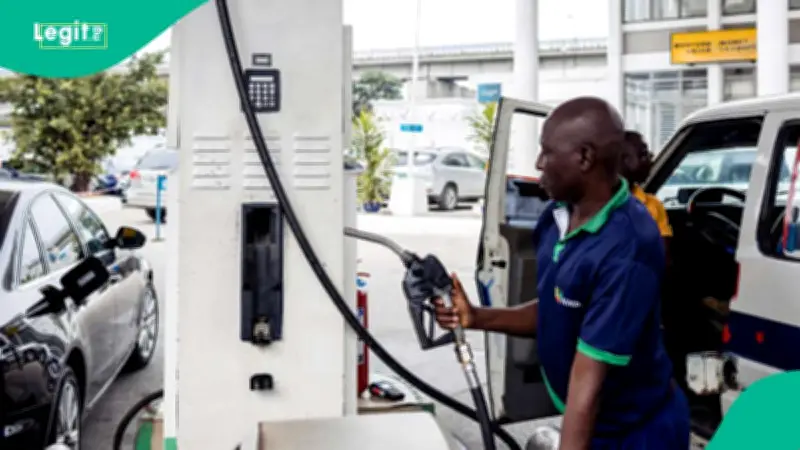
The Independent Petroleum Marketers Association of Nigeria has called on the Federal Government and the Nigerian Midstream and Downstream Petroleum Regulatory Authority to urgently reassess recently issued fuel import licences, warning that the policy could worsen pump-price inflation and place additional pressure on the naira.
IPMAN raises alarm over imported fuel prices
IPMAN’s National Publicity Secretary, Chinedu Ukadike, expressed concern over the current state of Nigeria’s downstream petroleum sector, saying some importers are now selling petrol at about ₦1,350 per litre. According to him, this rate is substantially higher than the price at which Dangote Refinery supplies fuel to marketers, making imported petrol less competitive and potentially destabilising the domestic market.
Ukadike said independent marketers had studied the issue closely, including price volatility, the import licence regime, and the sale of petroleum products in dollars, according to a report by Leadership. He argued that the licences, originally intended to create competition and moderate domestic prices, were now producing the opposite effect.
“What is the essence of issuing this price? This will create a lot of tension in society,” Ukadike said.
Landing costs 20% higher than local fuel
The IPMAN spokesman disclosed that the landing cost of imported petrol is about 20 per cent higher than the price charged by Dangote Refinery. He described the arrangement as counterproductive, noting that importing fuel at a higher cost than locally available products places unnecessary strain on Nigeria’s foreign exchange reserves and weakens the naira.
Ukadike linked the pressure on the naira to the recent rise in the dollar exchange rate to about ₦1,400, saying this development was already affecting the pump price of petroleum products across the country. He questioned why Nigeria should continue to import fuel when local refining capacity is capable of supplying the market at lower rates.
“If we are having continuous and uninterrupted supply, our problem is pricing. Is it not better we sit down and see how this issue can be controlled, than signing unnecessary import licences that will further inflate the price of petroleum products in our country?” he asked.
Call for transparent review of licences
Punch reported that IPMAN urged the NMDPRA to conduct a transparent review of the import licence regime and prioritise support for local refineries, including Dangote Refinery and government-owned plants. Ukadike also called for the Presidential Downstream Committee to be convened urgently to address the challenges facing the sector and prevent higher-cost imported fuel from undermining recent gains in domestic supply.
He warned that allowing imported products of questionable quality and higher prices into the market defeats the purpose of regulating petroleum prices and protecting consumers. According to him, independent marketers are increasingly uncertain about pricing decisions as volatility deepens in the downstream sector.
Local refining seen as key to energy security
Ukadike emphasised that one of the major benefits Nigeria has recorded since the commencement of local refining by Dangote is the continuous and uninterrupted supply of petroleum products. He recalled that during the era of heavy dependence on imports, the country often experienced fuel scarcity lasting two to three weeks at a stretch. Since local refining began, he said, such prolonged scarcity has largely disappeared, demonstrating the importance of strengthening domestic refining capacity.
IPMAN therefore urged the Federal Government to look inward and support local refiners as a strategy for guaranteeing energy security, stabilising fuel prices, and creating additional foreign exchange earnings through the export of finished petroleum products once domestic demand is fully met.
“Nigerians are suffering. This is a time to call for national unity, a time to call for one Nigeria, a time to call for support for our industrialists and our refiners,” Ukadike said.
Fuel importers announce fresh petrol price hike
Legit.ng earlier reported that petroleum product importers have notified marketers across Nigeria of an impending increase in petrol depot prices, a move that could push pump prices to as high as N1,400 per litre nationwide. The importers informed marketers on Thursday, July 16, 2026, that the depot price of Premium Motor Spirit (PMS), popularly known as petrol, will rise from N1,230 per litre to N1,350 per litre, citing the rising cost of imported fuel cargoes. According to sources familiar with the development, the new pricing regime is expected to take effect on Friday, July 17, 2026.