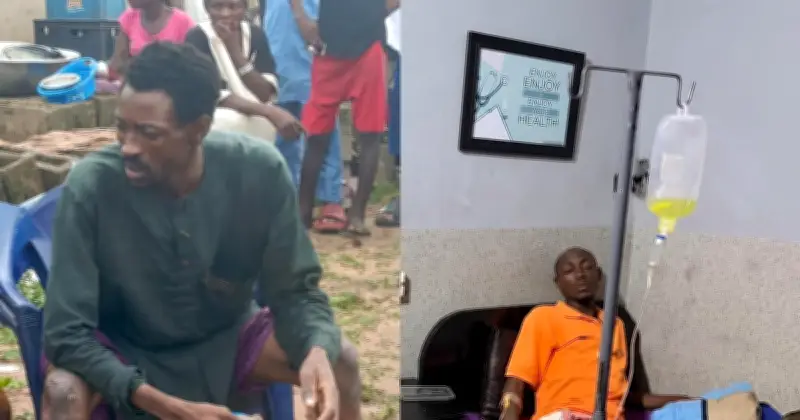
Mohammed Baba Salihu, a resident of Tsaragi in Edu Local Government Area of Kwara State, endured 141 days in captivity after being abducted from his home on May 8, 2026. During that period, he escaped from one kidnap camp, walked through the bush for nine days, and was captured again by another group of armed men before finally gaining freedom on September 26, 2026.
Abduction and Initial Captivity
Gunmen invaded Salihu's community at night and took him from his home. Salihu told journalists that the attackers were looking for an engineer and that he was not their intended victim. "They did not come for me. Something happened, and before I understood what was going on, a person was already dead, and they had turned to me," he recounted.
The gunmen took him into the bush, where he spent the next 141 days moving between bandit camps. Life there became increasingly difficult, with captives sometimes going as long as four days without food and water not provided regularly. "Sometimes it was four days before food reached us. Not just food, even water was never given daily," Salihu said. He became so weak that he lost a significant amount of weight and muscle.
Ransom Exchange Gone Wrong
During his captivity, Salihu witnessed the aftermath of a ransom exchange that went wrong. Two men arrived with about ₦13 million, reportedly intended to secure his release, but the handover ended in gunfire. One of the men was shot while the other escaped into the bush. The wounded man was later taken back to the camp. When the kidnappers asked Salihu whether he knew him, he said yes and was allowed to help care for him.
For a while, the man appeared to be recovering. "He was getting better. I could see it. He was becoming stronger," Salihu recalled. They were later separated, and Salihu did not know what happened to him until he returned home. He eventually learnt that the man had died while still in captivity.
Nine-Day Walk and Recapture
Salihu's chance to leave came when he escaped from the first camp, but freedom was not straightforward. He did not know the area and had no idea which direction would take him back to civilisation. "I did not know the road. I did not know which direction led home. I walked for nine days," he said.
For nine days, he moved through the bush, already weakened by months of hunger and poor living conditions. Then he encountered another group of bandits. Instead of finding his way home, Salihu was captured again and taken to another camp. "I thought I had escaped. Instead, I met another set of bandits who took me to another camp. The suffering continued," he said.
Second Escape and Rescue
The second captivity lasted until September 26, when Salihu and eight other captives noticed that their captors were no longer watching them closely. They seized the opportunity and escaped together. Two of the captives were Fulani men who could understand some of the kidnappers' conversations and had been passing information to the others, according to Salihu.
The nine men made their way through the bush until they reached Lata Nna, where residents found them. By then, some of them could barely stand. "When we finally walked into Lata Nna, some of us could barely stand," Salihu said. Residents provided immediate assistance before soldiers took the survivors for questioning and helped reunite them with their families.
After 141 days in captivity and two escapes, Salihu returned severely weakened and in need of treatment for dehydration and malnutrition. He had lost considerable weight and muscle and was also being monitored for the psychological effects of the experience.