Nigerian Woman Shares Harrowing Midnight Snake Encounter on Her Bed
A young Nigerian lady has recounted a terrifying experience that unfolded in the early hours of the morning at her residence, sending shockwaves through social media. The incident, which occurred last November, highlights the unexpected dangers that can lurk within one's own home, even during the quietest hours of the night.
Waking to a Rustling Sound and a Snake's Tail
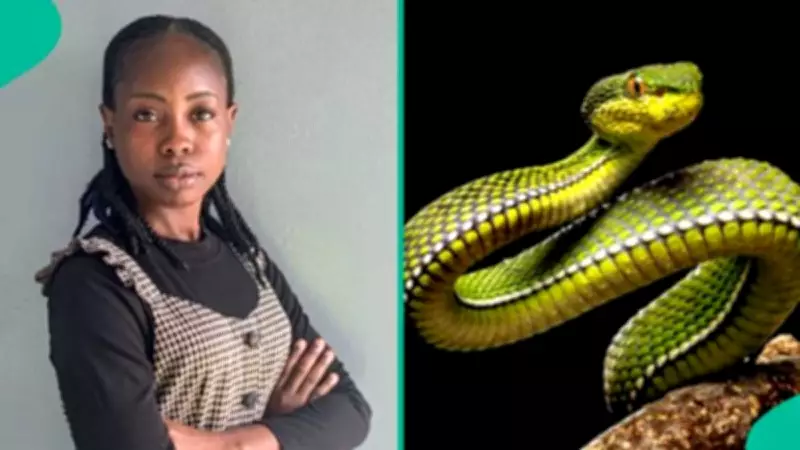
According to the lady, identified as @ifunanyaAz32917 on X, she was abruptly awakened around 1 am by a strange rustling noise. To her horror, she discovered the tail of a snake on her bed, positioned perilously close to where she had laid her head. The reptile had slithered across the sleeping area, creating a scene of sheer panic and disbelief.
In her detailed post, she expressed profound gratitude for escaping unharmed, attributing her safety to what she described as the mercy and protection of God. She stated, "I had a horrific experience last year in November. Around 1 am, a rustling sound abruptly woke me only for me to see the tail of a snake on my bed like where I laid my head. It literally passed there. It is by the mercy and protection of God that I wasn't bitten by the snake." This heartfelt acknowledgment underscores the emotional impact of the encounter and her reliance on faith in a moment of crisis.
Public Reactions and Broader Safety Concerns
The post quickly garnered widespread attention, with Nigerians flooding the comments section to share their own experiences and concerns. Many users expressed alarm over the incident, prompting discussions about home safety measures and the prevalence of snakes in residential areas, particularly during dry seasons when reptiles seek water and shade indoors.
One commenter, Luna Moon, questioned, "Wait first, Do y’all often leave your doors and windows unlocked or what?? I’m curious to know how to start preventing in ways I can cuz we have killed 3 snakes in my compound within 6 years. There is a farm behind our house." This highlights the practical challenges faced by many Nigerians living near agricultural or undeveloped land.
Another user, Bizzy, sparked debate by remarking, "Lol. So those that snakes bit doesn't have the mercy of God? Africans!!!" This comment reflects broader societal discussions about faith, fate, and the randomness of such dangerous encounters.
Further reactions included personal stories of near-misses, such as from Cornelius, who shared, "I had a near death experience during my university days. I thank God till today. I was really scared of entering the room. After killing the first one, we didn’t know there was another one hiding. Until we started hearing a sound that's not the usual hissing. Omo see another cobra oo." Such anecdotes emphasize the recurring nature of snake incidents in Nigeria and the lingering trauma they can cause.
Debates on Snake Handling and Public Health Implications
The incident also ignited debates on how to handle snakes when they enter living spaces. MBJ commented, "RIP to Nanyah. Rushed to hospital but no anti-venom available. This is the reality here. Most people cannot identify a harmless grass snake from a spitting cobra in seconds, especially when panicked. Dry season forces snakes indoors looking for water and shade. If a snake enters your space and you have a safe way to eliminate the threat, do it. Your life comes first. Stay safe out there." This points to critical issues like the scarcity of anti-venom in hospitals and the difficulty of snake identification under duress.
In contrast, Thy Burning advocated for caution, stating, "I understand the fear, especially with poor access to anti-venom. But killing should really be a last resort. Staying far away and calling trained help where possible is still the safest option." Ejike added, "I get your point, personal safety has to come first, especially where help is far away. Misidentifying a snake can be deadly, so caution over confidence makes sense. If escape or professional help is possible, that’s always the safest route." These perspectives underscore the complex balance between immediate self-preservation and ethical or safe wildlife management.
Context and Related Incidents
This story resonates with other recent reports of snake encounters in Nigeria, highlighting a pattern of such incidents that often go viral on social media. For instance, previous coverage has included a lady who was bitten by a snake and recalled why a hospital refused to administer available anti-venom, as well as a Nigerian lady whose sister survived snake attacks twice, sharing what saved her. These cases collectively shed light on the broader public safety and healthcare challenges related to snakebites in the country.
Meanwhile, in a tangential note, the platform Legit.ng previously reported on the death of a talented singer, Ifunanya Nwangene, with a lady debunking speculations of a spiritual attack. While unrelated to the snake incident, this mention reflects the diverse human-interest stories that capture public attention in Nigeria's digital landscape.
Overall, this midnight snake encounter serves as a stark reminder of the unpredictable dangers in everyday environments. It sparks crucial conversations about home safety, faith in adversity, and the urgent need for improved public health resources, such as accessible anti-venom and professional wildlife response teams, to protect Nigerians from such life-threatening situations.