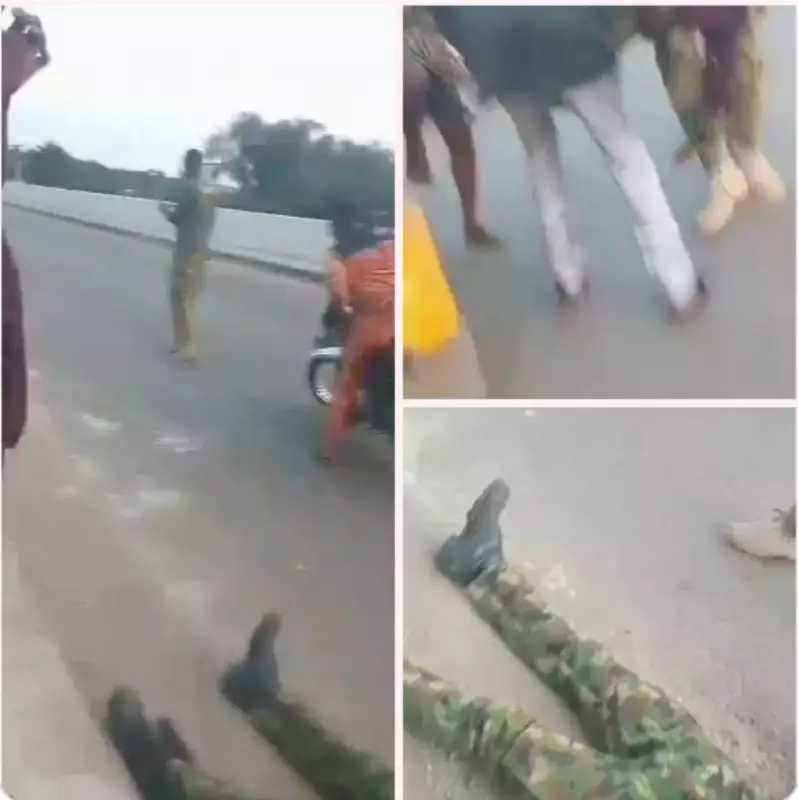
A tragic incident unfolded in the Imota area of Ikorodu, Lagos State, when a man believed to be struggling with mental health issues attacked and killed a soldier on duty. The shocking event occurred in broad daylight on Sunday, November 16, 2025, sending bystanders scrambling for safety.
Chaotic Scene in Imota
The violent encounter happened around 4 p.m. when soldiers were attempting to de-escalate a chaotic situation in the community. According to official statements from the 81 Division of the Nigerian Army, the deceased soldier was deployed for internal security duty in the area.
The acting Deputy Director of Army Public Relations, Lt. Col. Musa Yahaya, provided crucial details about what transpired. Rather than a shooting as initially speculated, the soldier was struck on the head with a heavy log by the mentally unstable individual.
Official Army Statement Clarifies Events
The Nigerian Army's statement revealed that the attack happened unexpectedly from behind while the soldier was trying to calm the situation. The attacker struck the soldier on the head with a heavy log, causing severe injury that ultimately led to his death.
Other soldiers present at the scene quickly brought the situation under control. They neutralized the attacker and recovered the body of their fallen colleague. The Army emphasized that their investigation into the incident is ongoing.
Social Media Versus Official Account
Earlier viral videos on social media had shown disturbing footage of the lifeless body of the soldier lying in a pool of blood. The body of the attacker, dressed in tattered clothes, was also visible in the footage.
Some voices in the circulating videos had suggested that the attacker had shot the soldier using the deceased's rifle. However, the Army's official statement has clarified that the actual weapon used was a heavy log, not a firearm.
The incident highlights the complex challenges faced by security personnel when dealing with individuals suffering from mental health issues in public spaces. It also underscores the importance of accurate information during rapidly developing situations.