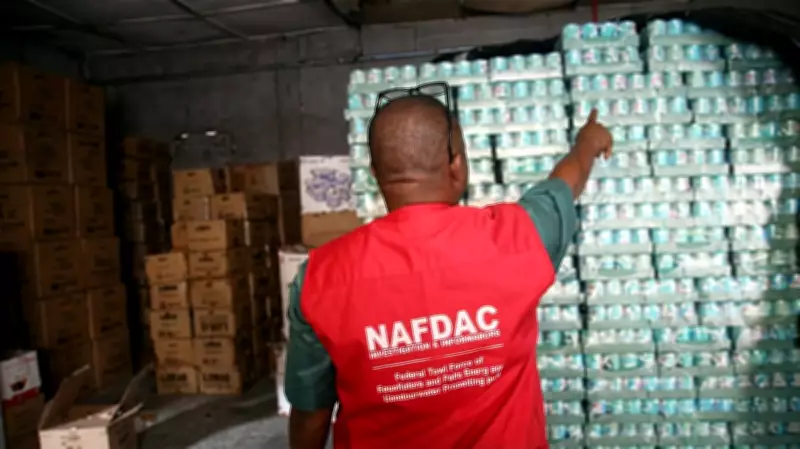
NAFDAC Uncovers Massive Counterfeit Drug Operation in Lagos, Highlighting Grave National Security Concerns
The National Agency for Food and Drug Administration and Control (NAFDAC) has made a startling revelation with the discovery of extensive quantities of counterfeit and prohibited medicines concealed within residential-style warehouses in Lagos. This alarming find not only underscores the profound infiltration of criminal elements into Nigeria's pharmaceutical sector but also serves as a critical call to action for the government and all stakeholders to address these egregious violations. The seizure includes more than 10 million doses of fake and substandard medications, such as injectable anti-malarials and antibiotics, valued at over N3 billion, indicating a highly organized and well-funded criminal syndicate operating within the country.
Dire Public Health Implications and Criminal Networks
Martins Iluyomade, the Director of Investigation and Enforcement and Chairman of the Federal Task Force on Fake and Substandard Products, emphasized the severity of this discovery, stating, "What we discovered should make every Nigerian cry. These were not just fake vitamins. These were life-saving medicines: injections used in emergency cases such as cerebral malaria. When fake injections are used in such situations, it becomes a death sentence." The falsification of essential medicines represents a reckless gamble with human lives, driven by profit without conscience. Counterfeit antibiotics and anti-malarials contribute significantly to antimicrobial resistance, diminishing the effectiveness of genuine treatments over time. According to the World Health Organisation (WHO), counterfeit drugs are responsible for approximately 500,000 deaths annually in sub-Saharan Africa, with fake anti-malarial and tuberculosis medicines causing nearly 700,000 deaths across the continent each year.
Systemic Failures and Complicity in the Supply Chain
This incident raises pressing questions about how such a large-scale operation could evade detection for months in a major commercial city like Lagos. The ability of counterfeit goods of this magnitude to bypass ports and checkpoints, despite the presence of numerous watchdog agencies, points to two critical issues. First, existing frameworks and legislation have proven insufficient, with enforcement agencies often engaging in more rhetoric than effective action. Second, there is strong evidence of complicity at various levels, which must be treated as a national security threat. As NAFDAC has indicated, no counterfeit product can enter the market without some degree of collaboration within the distribution chain, implicating distributors, wholesalers, transporters, retailers, and potentially compromised officials.
Urgent Government Response and Strategic Measures Needed
The recent bust, while commendable, likely represents only the tip of the iceberg, revealing a sophisticated network with extensive storage, logistics, and distribution capabilities. To combat this menace, the government must implement a multi-faceted approach:
- Strengthen Inter-Agency Coordination: Enhance collaboration among NAFDAC, Customs, and port authorities to improve surveillance and interception of illicit goods.
- Deploy Advanced Technology: Invest in modern inspection technologies at borders and ports, along with digital tracking systems to prevent the concealment of falsified products through fraudulent paperwork.
- Enforce Severe Penalties: Ensure swift and harsh punishments for those involved in the counterfeit drug trade, including asset confiscation and expedited trials under existing laws to deter future offenders.
- Overhaul Drug Distribution Systems: Reform the unregulated sale of medicines and address underlying issues of poverty that drive consumers to seek cheap, unsafe alternatives due to lack of access to affordable healthcare and health insurance.
Counterfeit drug trafficking is a form of terrorism that exploits vulnerable citizens seeking medical relief, and the government cannot afford complacency. By meeting this audacious threat with resolute action, Nigeria can safeguard public health and uphold its responsibility to protect its citizens from such deadly enterprises.