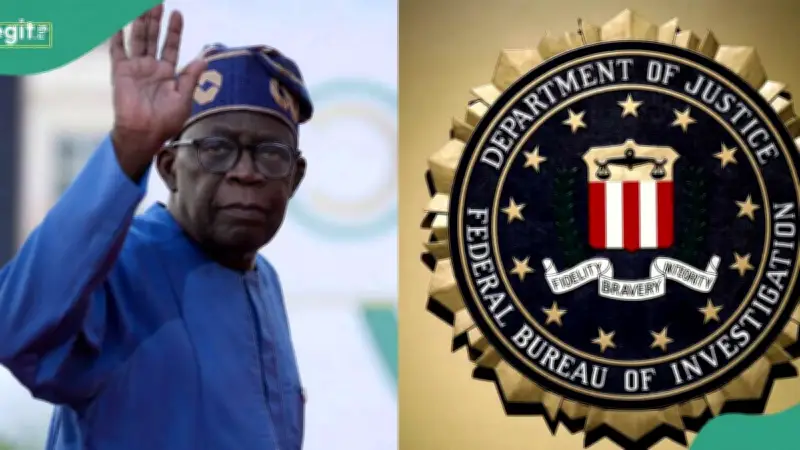
Lawyers representing President Bola Tinubu and the United States government have separately asked a federal court in Washington, D.C., to block transparency activist Aaron Greenspan from widening the scope of discovery in an ongoing Freedom of Information Act (FOIA) lawsuit. The request was reported on Sunday, September 27, by The Nation.
Background of the FOIA lawsuit
Greenspan, who runs PlainSite, a for-profit legal transparency website, filed the FOIA suit against several American federal agencies seeking documents tied to investigations involving President Tinubu. His requests include the FBI's full file on Tinubu, FBI Form 302 interview records from 1992 to 1993, and materials related to a 1993 civil forfeiture proceeding in the US involving roughly $460,000 linked to Tinubu.
In the case, Tinubu's legal team is acting as an intervenor. They told the United States District Court for the District of Columbia that Greenspan was attempting to turn a FOIA action into a wide-ranging investigation of private parties. Greenspan had sought interrogatories, requests for admission, and requests for production from Tinubu, as well as a third-party subpoena against DCI Group AZ, LLC, a public relations and lobbying firm, and its unidentified parent company.
Tinubu's lawyers argue against discovery
Tinubu's lawyers argued that FOIA is meant to compel transparency from government agencies, not to examine the conduct of private individuals or organisations. "Discovery is generally unavailable in FOIA actions," they said in their filing, noting that where courts do allow it, the standard is high and tied to genuine concerns about a government agency's search process.
Greenspan had alleged that PlainSite suffered denial-of-service attacks and suggested a link to activity in the case. Tinubu's lawyers rejected this, pointing out that Greenspan himself admitted he did not know who carried out the attacks and that botnets made identifying the perpetrators difficult. They also noted that the website had been attacked at other times unrelated to court filings.
"The relationship that Plaintiff draws between the website issues and this case remains wholly speculative," the filing said. The team also opposed Greenspan's request for expedited discovery, arguing that there was no urgent basis for it since, by Greenspan's own account, the attacks had stopped at the end of August 2026. His suggestion that they could resume was, they said, too theoretical to justify urgent action.
FBI and DEA defend their searches
In a separate filing submitted on September 23, the FBI and Drug Enforcement Administration (DEA) asked the court to grant summary judgment in their favour. Both agencies maintained that their searches for records responsive to Greenspan's FOIA requests were thorough and conducted in good faith.
The FBI said its search covered the terms "Bola" and "Tinubu" separately, followed by a manual, page-by-page review of a multi-subject file. The DEA noted that Greenspan had not challenged the adequacy of its search at all. Both agencies defended their decisions to withhold certain records under multiple FOIA exemptions, including protections for grand-jury material, prosecutorial strategy, confidential sources, and information whose disclosure could endanger individuals' physical safety.
Atiku's earlier call for records release
Earlier, Legit.ng reported that the presidential candidate of the African Democratic Congress (ADC) in the 2027 election, Atiku Abubakar, urged the FBI to release, where legally permissible, records relating to President Tinubu. Atiku explained that Nigerians have a democratic right to information about the history and character of the man seeking to retain the country's highest elective office.