The United States Department of Homeland Security (DHS) has been forced to pause the collection of a controversial $100,000 fee on H-1B visa petitions, after a federal appeals court rejected the government's bid to keep the charge in place during ongoing litigation.
On July 24, 2026, the US Court of Appeals for the First Circuit denied DHS's motion to stay the lower court's order pending appeal. The ruling followed a June 8, 2026 decision by the US District Court for the District of Massachusetts, which vacated the agency guidance that implemented the $100,000 payment requirement. The case is identified as State of California v. Mullin, 1:25-cv-13829 (D. Mass.).
DHS Reacts to Court's Decision
DHS said it "strongly disagrees" with the First Circuit's decision but would comply with the order while it considers its next steps. The department also warned that if the court order is later lifted, it still plans to collect the payment from affected petitioners.
This development brings temporary relief to employers and visa applicants who were bracing for the hefty fee, which amounts to approximately N136 million in Nigerian currency.
Origin of the $100,000 H-1B Fee
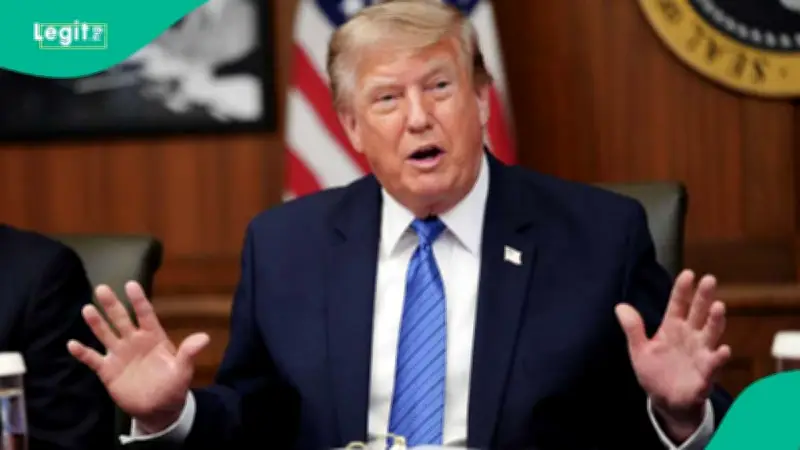
According to the US immigration agency, the fee originated from a Presidential Proclamation signed by President Donald Trump on September 19, 2025, titled "Restriction on Entry of Certain Nonimmigrant Workers." The proclamation required a $100,000 payment to accompany any new H-1B petition submitted after 12:01 a.m. Eastern Daylight Time on September 21, 2025, including petitions filed for the 2026 lottery.
The measure directed DHS and the Department of State to coordinate on implementation. US Citizenship and Immigration Services (USCIS) and US Customs and Border Protection both issued separate guidance documents in line with the proclamation, while the State Department circulated guidance to consular offices worldwide.
Rationale Behind the Fee
Trump's administration framed the fee as an "initial and incremental step" to address what it described as abuses within the H-1B programme and to protect American workers. The H-1B programme is a lifeline for American employers in specialised fields like software engineering, healthcare, and research.
However, critics argued that the fee was excessive and would deter skilled foreign workers from seeking employment in the US, potentially harming American competitiveness.
Legal Proceedings and Compliance
Following the District Court's June ruling, the order was administratively stayed while the government pursued its appeal before the First Circuit. That stay expired with the appeals court's July 24 denial, leaving DHS without the legal backing to continue enforcing the fee requirement in its current form.
Despite the setback, DHS made clear it has not abandoned the policy, signalling that the legal battle is far from over. The department's statement emphasised its disagreement with the ruling and hinted at possible further appeals or alternative measures.
Impact on Employers and Applicants
The pause in fee collection provides temporary relief to companies like Microsoft, Alphabet, and Amazon, which had scrambled to reassure employees, advising them to avoid foreign travel until the rules were clarified. These firms heavily rely on H-1B visas to hire skilled workers from around the world.
In a related story, Legit.ng reported that the White House had stated that the H-1B fee could be a one-time fee. Additionally, Legit.ng previously reported that the US had allayed people's fears regarding the H-1B fee, and that the US barred four companies from sponsoring H-1B work visas for Nigerians and other foreign workers.
As the legal proceedings continue, employers and prospective H-1B applicants are advised to stay informed about the evolving situation. The outcome of this case could have significant implications for the US immigration system and the global tech industry.