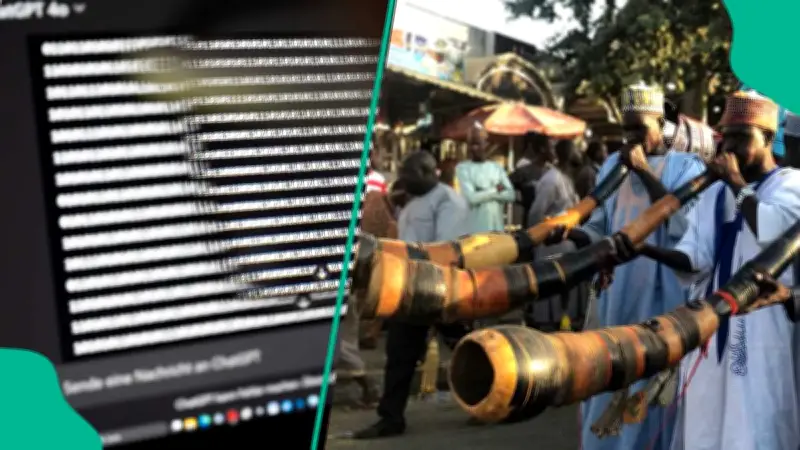
During the 2023 gubernatorial campaign in Kano State, an AI summarization tool flagged a traditional Hausa praise poem for Abba Kabir Yusuf as a call for violence. The tool, used to manage quick translation during a team call, returned a verdict: "User calls for violence attack against political opponents and threatens physical harm." The post was kirari, a praise epithet built on the imagery of a lion that neither sleeps nor negotiates. A team member was ready to flag it as incitement. The editor caught the error, recognizing the lion as metaphor, not threat.
The Hausa Language and Its Computational Challenges
Hausa is spoken by more than 100 million people across West Africa and is the most widely spoken language in the Chadic branch of Afroasiatic languages. Yet, from a computational linguistics perspective, it is classified as "low-resource," reflecting a scarcity of annotated datasets and NLP tools. Researchers have documented that moderation gaps in low-resource languages like Hausa lead to misclassification by systems trained primarily on English. More than 98% of Africa's languages are essentially invisible to moderation and verification systems.
The problem extends beyond missing vocabulary. Hausa carries meaning in layers. Karin magana, the Hausa term for proverbs, translates literally as "folded speech." The folding is the point. "Water does not get bitter without a cause" is not about water. "The hawk has long been familiar with what is inside the chicken" is not about hawks. An AI system reads the surface and misses the argument.
Habaitci and Kirari: When AI Misses the Intent
Habaitci, or innuendo, allows a skilled Hausa speaker to accuse, challenge, or mock in language that reads as neutral without cultural context. The accusation lives in the gap between the literal and the intended. A recent example is how singer Dauda Kahutu Rarara addressed Prof. Isa Ali Ibrahim Pantami as "Fantsami" in a mockery song against the Gombe PDP 2027 governorship candidate, getting away with it. Researchers building the first annotated dataset of offensive Hausa content identified the challenge of examining "the interplay between idiomatic expressions with a subtle abusive or threatening tone" and distinguishing banter from genuine threats.
Kirari, the praise epithet tradition, uses imagery of lions, fire, and elemental force to declare identity and rally community sentiment. To a moderation system without cultural grounding, kirari looks like violent incitement. This is exactly what happened on the editor's desk.
The Editorial Risk of Confident Errors
The danger in a newsroom is not that AI tools make mistakes, but that they make mistakes without signalling uncertainty. In September 2025, when a viral video showing a woman being humiliated circulated on X in Nigeria, users turned to Grok to verify what they were seeing. Grok misidentified the incident as an anti-LGBTQ+ flogging in southern Nigeria, despite no evidence of that framing or location-specific data. Nigeria had 107 million internet users at the start of 2025, and in a low-literacy environment, people increasingly treat AI summaries as fact-checks.
The same failure mode applies to Hausa content across platforms. Facebook uses automated tools to translate non-English content for moderation, and inaccurate translation and loss of cultural context result in wrongful removal or poor oversight. In Ethiopia, false claims alleging that soldiers had seized a Red Sea port spread widely on Facebook before fact-checkers caught them. In northern Nigeria, HumAngle documented jihadist groups spreading Hausa-language propaganda on Facebook specifically because the platform's moderation systems could not parse it. In each case, the tool returned a verdict, and editors and users acted on it. The verdict was wrong.
What Newsrooms Should Do Before Deploying AI
The conversation that is almost entirely absent is the one that should happen before a newsroom turns the tool on. Here is what that conversation needs to cover.
First, require human-in-the-loop review for Hausa content. No AI output should drive editorial action without a Hausa-speaking editor sign-off. The kirari incident was caught because the editor was in the chain. In newsrooms where a Hausa speaker is not in the review loop, the wrong verdict goes forward.
Second, involve Hausa-speaking annotators in any tool fine-tuning. The first annotated dataset of offensive Hausa content was only created recently, and researchers noted the scarcity of linguistic resources. General-purpose models cannot be calibrated for Hausa context without Hausa-competent human input at the annotation stage.
Third, test before deploying, using real Hausa content. Run kirari, karin magana, and habaitci through the tool before assigning it editorial responsibility. If it cannot classify those correctly, it is not ready for Hausa content. This is a one-hour test that almost no newsroom is running.
Fourth, set uncertainty thresholds. Any AI used for content moderation or fact-checking should escalate low-confidence outputs to a human rather than returning a binary verdict. Most tools can be configured to do this, but most newsrooms are not configuring them this way.
Fifth, track and log human overrides. When an editor corrects an AI verdict on Hausa content, that correction should be recorded and reviewed. Over time, this data reveals where the tool fails most consistently and builds the case for better calibration.
Sixth, advocate for Hausa language data. Research groups like AfricaNLP are producing multilingual datasets and benchmarks for African languages, with the 2025 AfricaNLP workshop including work specifically on hate speech detection in Hausa. Newsrooms can contribute examples, flag gaps, and push platforms to support this research rather than waiting for commercial tools to catch up.
The AI industry is adopting fast and evaluating slow. Nigerian newsrooms are following the same pattern. Using an AI fact-checker on Hausa content without cultural calibration is not innovation; it is outsourcing editorial judgment to a tool that will give a confident wrong answer and log it as accuracy. The tortoise has no fingers, and knowing that before putting it in the ring is the entire job.