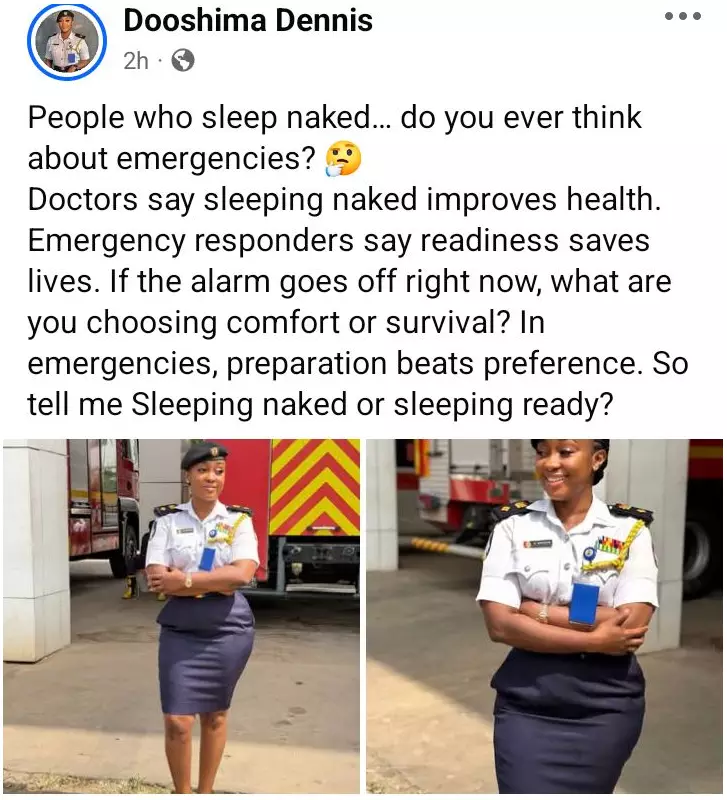
A Nigerian firefighter has sparked a vital conversation about personal safety and emergency readiness by addressing a common yet overlooked habit: sleeping naked. Dooshima Dennis, in a recent public statement, highlighted the potential risks this practice poses during sudden fire outbreaks, urging Nigerians to prioritize preparedness over personal comfort.
The Health Benefits Versus Emergency Realities
While acknowledging that medical professionals often advocate for sleeping naked due to its health advantages—such as improved sleep quality and better skin health—Dennis pointed out a critical contradiction. In the event of a fire emergency, every second counts, and being unclothed can significantly delay evacuation efforts. She emphasized that the few moments spent searching for clothing could mean the difference between life and death, especially in high-stress situations where smoke and flames spread rapidly.
A Firefighter's Perspective on Readiness
Drawing from her experience as an emergency responder, Dennis posed a thought-provoking question to the public: "People who sleep naked... do you ever think about emergencies?" She stressed that while doctors promote the health benefits of sleeping unclothed, emergency professionals prioritize survival strategies. Her message underscores a broader theme in safety education: balancing daily habits with potential crisis scenarios. In Nigeria, where fire incidents can escalate quickly due to infrastructure challenges, this advice takes on added urgency.
Choosing Between Comfort and Survival
In her remarks, Dennis challenged individuals to reflect on their priorities. "If the alarm goes off right now, what are you choosing: comfort or survival?" she wrote, highlighting that in emergencies, preparation should always outweigh preference. This call to action resonates in a context where many might overlook simple safety measures in favor of convenience. By framing it as a choice between being "sleeping naked or sleeping ready," she makes the issue relatable and immediate, encouraging proactive behavior.
Implications for Public Safety Awareness
This discussion extends beyond individual habits to broader public safety concerns in Nigeria. Firefighters and emergency services often face challenges in response times and public awareness. Dennis's address serves as a reminder that personal preparedness is a key component of community resilience. It also aligns with ongoing efforts to educate Nigerians on fire prevention and emergency protocols, which are crucial in urban areas prone to electrical faults and other fire hazards.
Ultimately, Dooshima Dennis's message is a timely wake-up call. While enjoying the health perks of sleeping naked is understandable, integrating safety considerations into nightly routines can enhance overall well-being. As she aptly notes, in emergencies, being ready can save lives—a lesson that applies not just to fire safety but to all aspects of disaster preparedness in today's unpredictable world.