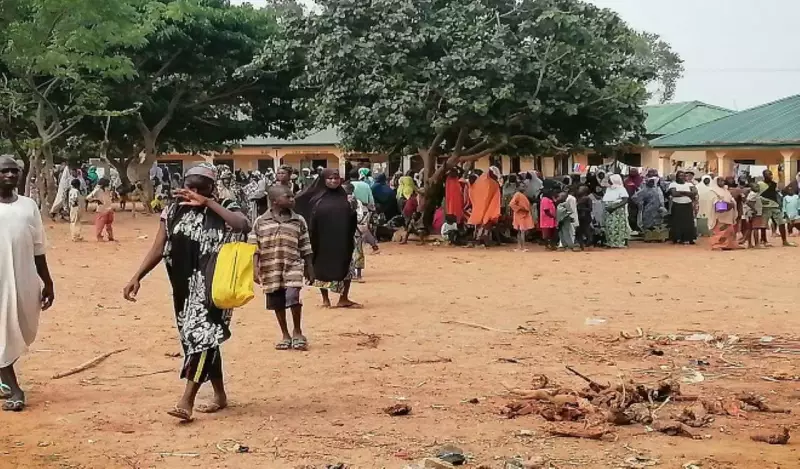
The National Human Rights Commission has unveiled a disturbing picture of Nigeria's displacement crisis, revealing that children bear the overwhelming brunt of the emergency. According to its October 2025 Human Rights Dashboard, a staggering 82 per cent of the 9,290 Internally Displaced Persons tracked across 11 states are minors.
A Deepening Humanitarian Emergency
Presenting the dashboard in Abuja, the Executive Secretary of the NHRC, Dr Tony Ojukwu (SAN), described the situation as a deepening humanitarian crisis. He attributed the mass displacement to a combination of insecurity, climate shocks, and collapsing livelihoods. Dr Ojukwu was represented at the event by the Director of the Economic, Social and Cultural Rights Department, Harry Obe.
The data pinpointed Yobe and Benue states as the epicentres of the crisis. Yobe recorded 2,047 IDPs, while Benue had 1,850. The commission cited herders' attacks, insurgent raids, and the destruction of critical infrastructure as primary drivers in these regions.
Ojukwu emphasized that displacement disproportionately exposes children to severe risks, including hunger, violence, disrupted education, and heightened health dangers.
Widespread Rights Violations and Protection Gaps
The dashboard documented a grim landscape of human rights abuses during the reporting period. The NHRC recorded more than 1,800 specific violations. Key concerns included:
- 530 cases of denied access to food and shelter in Benue, Taraba, and Kano states.
- 278 restrictions on freedom of movement linked to insecurity in Yobe State.
- 195 incidents of Gender-based Violence (GBV).
- 324 barriers to education threatening children's futures in Kano and Taraba.
Beyond IDPs, the report noted 215 asylum seekers facing registration challenges in Taraba and Cross River states, alongside 583 refugees mostly in the same areas. It also recorded 472 returnees, 81 per cent of whom are children struggling to reintegrate into still-insecure communities.
Despite a UNHCR-backed protection project reaching over 15,000 vulnerable individuals since early 2025, these efforts were overshadowed by a 58 per cent surge in violations against children.
Interventions and Urgent Calls to Action
Amid the bleak statistics, the NHRC highlighted its field interventions. Commission teams resolved 372 cases, referred 1,157 others to relevant agencies, conducted 104 detention visits, and carried out 331 community outreaches that sensitized 6,551 people on GBV prevention and rights reporting.
Dr Ojukwu, who also serves as President of the Network of National Human Rights Institutions in West Africa, lamented the operational challenges facing monitors, including transport shortages, high data costs, and security risks. He commended their resilience and acknowledged UNHCR's support.
To stem the tide, Ojukwu issued urgent recommendations. He called on federal and state governments to:
- Domesticate the Kampala Convention for the protection of IDPs.
- Integrate NHRC data into national and state humanitarian response plans.
- Strengthen security measures for returnees.
He reaffirmed the Commission's commitment to data-driven strategies for protecting Nigeria's estimated 6.7 million displaced persons.