Nigerian Students' Role in Anti-Apartheid Struggle
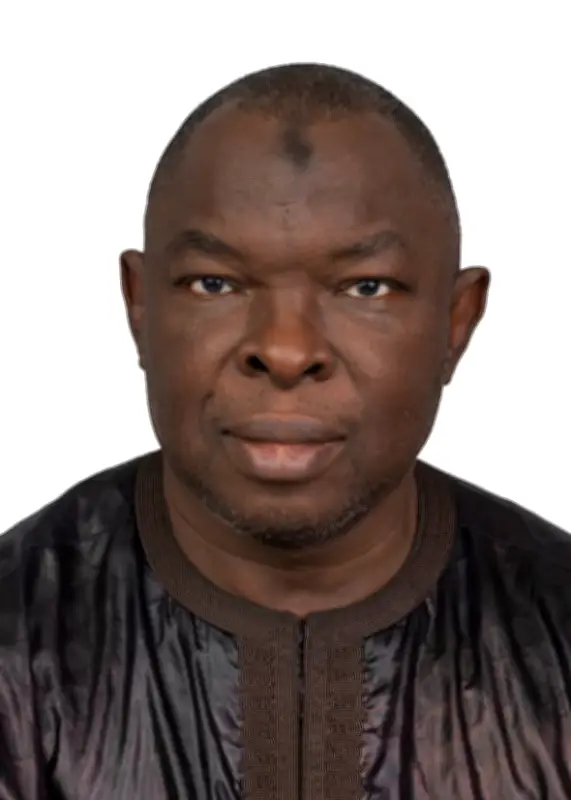
Ahmed Aminu-Ramatu Yusuf, a former deputy director at the Cabinet Affairs Office in the Presidency and retired General Manager (Administration) at NiMet, has detailed the extensive support Nigerian students provided to the African National Congress (ANC) during the anti-apartheid struggle. He now threatens to charge the ANC in the International Court of Human Conscience and the African Court of Ubuntu for the ongoing afrophobia and xenophobia in South Africa.
Yusuf recalls that he was first introduced to the realities of apartheid by his British secondary teacher, “Titomthy”, who read abridged editions of EA Ritter’s Shaka Zulu and Alan Paton’s Cry, The Beloved Country to his class. While Ritter’s work inspired admiration for Shaka Zulu’s wisdom and audacity, it also highlighted the unnecessary wars and political upheaval of the Mfecane. Paton’s novel introduced the horrors of white settler colonialism, racism, and apartheid, including a warning to Black South Africans not to become too hopeful.
The 1976 Soweto Uprising and the torture and murder of Steve Biko further radicalized Yusuf. He learned about these events through discussions with seniors, print media like Drum and Trust magazines, and the music of the era, especially Sonny Okosun’s “Papa’s Land” and “Fire in Soweto.” The lyrics of “Papa’s Land” (1977) demand: “Africa is my father’s land… Africa should be ruled by Africans.” “Fire in Soweto” describes the violence: “Fire in Soweto / Burning all my people… The colour of God / Neither black nor white.”
Student Movements and Concrete Support
During his undergraduate years at Ahmadu Bello University, Zaria, Yusuf took a conscious decision to make the liberation struggle his own. He joined the Movement for a Progressive Nigeria (MPN) and the Youth Solidarity on Southern Africa (YUSSA), holding leadership positions. These groups, along with the National Association of Nigerian Students (NANS) and the Patriotic Youth Movement of Nigeria (PYMN), saw the struggle against apartheid as organically linked to Nigeria’s own fight for democracy, development, and social justice.
Three major reasons were advanced: first, that Nigerians and Black South Africans share a common enemy—imperialism, which manifests as apartheid in South Africa and neo-colonialism in Nigeria. Second, solidarity was an act of mutual aid, not charity. Third, only through mutual solidarity could Africa be liberated and developed. Yusuf notes that students did not merely voice opposition: they insisted that Nigerian governments recognize the ANC as the sole authentic representative of South Africans, and they succeeded. They collected signatures for the release of Nelson Mandela and other political prisoners, and commemorated historic days and personalities.
Financial and Personal Sacrifices
Nigerian students compelled their governments to fund ANC activities within and outside Nigeria. Scholarships were provided for Black South African students to study in Nigerian universities and polytechnics. Students personally hosted South African students at their own expense, contributing parts of their pocket money and scholarship stipends to produce, reproduce, and circulate ANC documents, posters, and materials throughout Nigeria. They held exhibitions, public lectures, symposia, and seminars, regularly inviting ANC representatives to speak.
From 1982 to 1992, NANS organized national student uprisings that raised issues and demands of the ANC. Students pressured Nigerian governments to nationalize multinational companies operating in South Africa. Yusuf asserts that virtually everything Nigerian governments did against apartheid was driven by the need to secure student support. Anti-apartheid sentiments were so popular that governments dared not act against the liberation movements.
Costs of Activism
Yusuf emphasizes that students paid a heavy price. Anti-apartheid activists were considered “security threats,” constantly harassed by security agents, and suspended, rusticated, or expelled from schools. YUSSA’s patron, Dr. Francis Patrick Wilmot, was kidnapped, criminally detained, and illegally deported by General Ibrahim Babangida’s administration on grounds of being a “security threat.”
Yusuf concludes that he has the locus standi to charge the ANC in the International Court of Human Conscience and the African Court of Ubuntu for the ongoing afrophobia and xenophobia in South Africa, given the sacrifices Nigerian students made to support the ANC’s liberation struggle.