The recent United States military airstrike in parts of Sokoto State has ignited a crucial national debate on Nigeria's security framework and the role of foreign powers. The event, confirmed by both US authorities and Nigeria's Ministry of Foreign Affairs, has security experts urging caution, arguing that external military action alone cannot solve the nation's deep-rooted insecurity.
A Call for Caution and Sovereignty
In an exclusive discussion, prominent security analyst Dr Yahuza Getso issued a stark warning to the Nigerian government. He emphasized that while international support can be valuable, the nation must learn from the destabilizing outcomes of foreign interventions in other countries like Libya and Sudan. "Military strikes alone—especially those carried out by external powers—do not address the root causes of terrorism, banditry and violent extremism in Nigeria and the wider Sahel region," Dr Getso stated.
He questioned the underlying motives of the US involvement, stressing that Nigeria must protect its national interests. "Nigeria must ask critical questions. Is the intention to genuinely support Nigeria’s security architecture, or is it tied to other interests, including religious or geopolitical considerations?" he argued, advising that any partnership must be approached with clear terms and transparency to avoid over-dependence.
Five Strategic Areas for Potential US Support
Despite his reservations, Dr Getso acknowledged that carefully managed US assistance could be beneficial in specific, limited domains. He outlined five key areas where Nigeria could leverage external support without compromising its sovereignty:
- Training of Nigerian Troops: Focused on enabling Nigerian forces to operate independently, rather than relying on foreign firepower for missions.
- Intelligence Sharing and Advanced Technology: Bridging critical gaps in intelligence capabilities that Nigeria cannot fully address on its own.
- Technical Support for Specialized Combat: Providing expertise in niche military capabilities, strictly under Nigerian command and oversight.
- Satellite and Aerial Surveillance: Enhancing Nigeria's situational awareness and monitoring of vast territories.
- Strategic Training Frameworks: Demonstrating best practices and organizational models for Nigerian security agencies to adapt locally.
Long-Term Stability Requires Local Solutions
Dr Getso concluded with a powerful admonition for Nigerian policymakers. "Nigeria must be extremely careful about how it engages the US or any foreign power in security matters," he cautioned, pointing to nations that lost control of their security architecture after foreign involvement. He insisted that sustainable peace will only come from strengthening Nigeria's own institutions, improving domestic intelligence coordination, and decisively tackling the governance and socioeconomic issues that fuel insecurity.
"Security support must strengthen Nigeria, not weaken it," Dr Getso asserted. "Anything short of that will only create bigger problems in the future." The analyst's remarks highlight the delicate balance Nigeria must strike as it deepens security cooperation with international partners like the United States, amidst ongoing controversies over direct foreign military action on Nigerian soil.
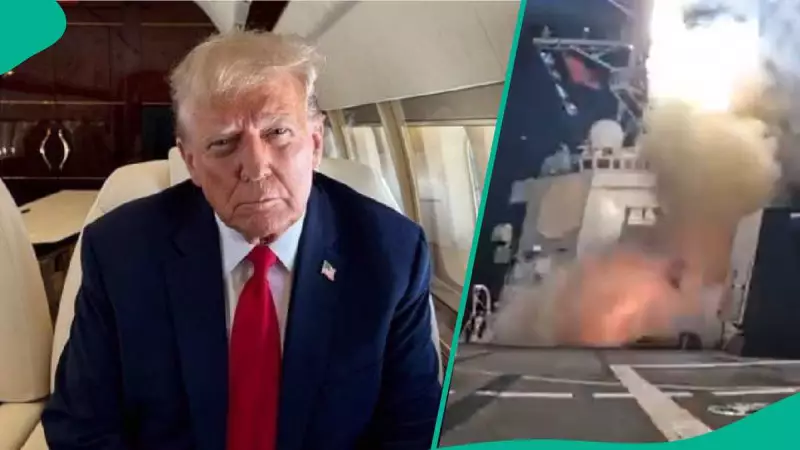
The US Department of War released a video of the Sokoto airstrike, which it described as targeting ISIS-linked positions. Former US President Donald Trump claimed the operation was directed by him to neutralize terrorists allegedly responsible for attacks on Christians. Nigeria's Foreign Affairs Ministry, in its confirmation, characterized the actions as "precision hits" conducted within existing security cooperation frameworks, respecting international law and Nigerian sovereignty.