The director of the defunct Chernobyl nuclear power station has issued a stark warning: a Russian missile or drone strike could cause the collapse of the facility's critical internal radiation shelter. This alarming assessment comes amidst ongoing attacks on the site of the world's worst nuclear disaster.
Direct Hit Could Trigger 'Mini-Earthquake'
In an exclusive interview with AFP, plant director Sergiy Tarakanov detailed the grave dangers facing the containment structures. He explained that a direct impact from a weapon like Russia's Iskander short-range ballistic missile could have catastrophic local effects.
"If a missile or drone hits it directly, or even falls somewhere nearby, for example, an Iskander, God forbid, it will cause a mini-earthquake in the area," Tarakanov stated. "No one can guarantee that the shelter facility will remain standing after that. That is the main threat."
Damaged Outer Shell Loses Safety Functions
The threat follows significant damage already inflicted on the plant's protective structures. The site is protected by two layers: an inner steel-and-concrete shell, known as the Sarcophagus, built after the 1986 meltdown, and a modern outer structure called the New Safe Confinement (NSC).
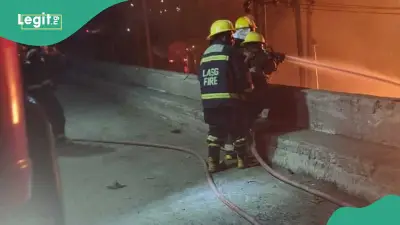
In February 2025, a Russian drone strike severely damaged the roof of the NSC, causing a major fire. This attack punched a hole in the outer radiation shell, leading the International Atomic Energy Agency (IAEA) to declare it had "lost its primary safety functions."
Tarakanov confirmed the severity, noting, "Our NSC has lost several of its main functions. And we understand that it will take us at least three or four years to restore these functions." While the IAEA's recent inspection found no permanent damage to load-bearing structures, the loss of confinement capability remains a major concern.
Ongoing Risks and Current Status
Despite the damage, current readings offer a sliver of relief. Director Tarakanov assured that radiation levels at the site remain "stable and within normal limits." Emergency repairs are underway; the large hole from the drone strike has been covered with a protective screen.
However, hundreds of smaller holes made by firefighters during the blaze still need sealing. The spectre of further attacks looms large over the protracted repair timeline. Russia's army captured the plant at the start of its February 2022 invasion, withdrawing weeks later, but the facility remains in the crosshairs of a continued conflict.
The warning underscores the persistent nuclear safety risks stemming from the war in Ukraine, with the world watching the fragile state of the Chernobyl containment structures.