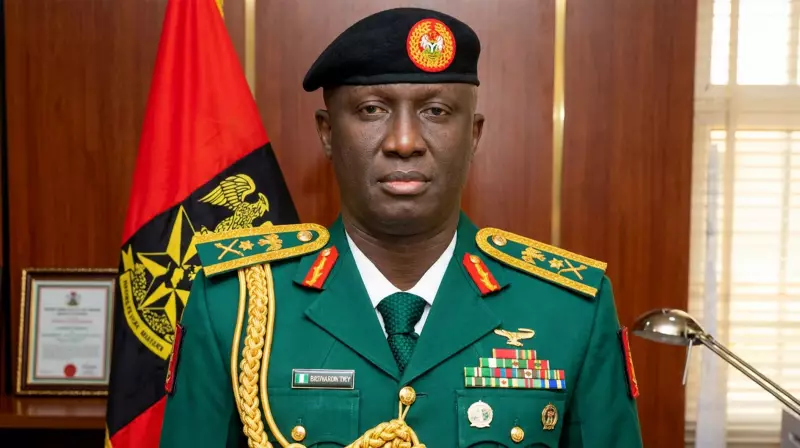
Nigeria's Chief of Army Staff, Lieutenant General Waidi Shaibu, has given a firm assurance that the military will curb the rising wave of terrorism, particularly in the country's northern region. He made this pledge on Tuesday, January 6, 2026, in Minna, Niger State, during the opening ceremony of the Nigerian Army's annual Doctrine and Training Conference.
Military Strategy and Presidential Directive
Lt.-Gen. Shaibu emphasized the army's unwavering commitment to executing President Bola Tinubu's directive to restore security. He spoke at the event hosted by the Doctrine and Training Command of the Nigerian Army (TRADOC). The COAS explained that the conference serves as a crucial platform to review field operations, gather feedback, and develop effective strategies to adapt to the nation's complex and evolving security challenges.
He stated that the gathering aimed to critically assess the army's current doctrinal and training efforts to enhance operational effectiveness. The Commander of TRADOC, Major General Peter Malla, noted that the conference marked the official commencement of training activities for the Nigerian Army's institutions in 2026.
Think-Tank Warns of Strategy Shortfalls
In a related development, a new policy report has raised alarms about the potential limitations of the government's current security approach. Public policy think-tank Nextier has published an analysis suggesting that the national security emergency declared by President Tinubu on November 26, 2025, might not achieve lasting peace if it remains largely dependent on military expansion.
The report, authored by Nextier's governance expert, Dr. Ndidi (Anyanwu) Njoku, argues that Nigeria's insecurity is mobile, economically motivated, and thrives in governance vacuums. It contends that these root causes cannot be addressed by merely recruiting more troops or reactive security measures alone.
The analysis strongly recommends that the emergency declaration must be complemented by two key reforms: the establishment of state policing and the institutional deployment of forest guards to reclaim ungoverned spaces. Without these, the current strategy risks becoming a temporary kinetic fix rather than a transformative solution.
Security Incidents and Responses in Niger State
The warnings and assurances come against a backdrop of continued violence. Niger State has recently witnessed tragic attacks, including the killing of people, among them children, in Agwara and Borgu Local Government Areas by suspected bandits.
The Institute for Peace and Conflict Resolution, in a statement by its Director-General, Joseph Ochogwu, described these assaults as desperate actions by fleeing criminals under pressure from security forces. The institute called for stronger collaboration between citizens and security agencies.
In a separate incident, explosive devices were discovered on January 5, 2026, near Ganaru village in the Zugurma district of Mashegu Local Government Area, Niger State. Farmers heading to their fields found the bombs planted by the roadside and raised an alarm.
The Chairman of Mashegu Local Council, Jibrin Egade, confirmed the find but assured the public that the area had been secured. The Niger State Commissioner of Police, Adamu Elleman, clarified that one bomb, not three as initially reported, was discovered. He announced that police bomb disposal experts had been deployed to the location to safely evacuate the explosive and protect lives and property. The traditional ruler, Dalatun Zugurma Kudu Mohammad, also confirmed the mobilization of security forces to maintain order.
Meanwhile, the Niger State Commissioner for Basic Education, Dr. Hadiza Asebe Mohammed, has announced a cautious reopening of schools. Only institutions in local governments deemed safe by security reports—specifically Chanchaga, Suleja, Bida, and parts of Bosso—are permitted to resume academic activities on Monday, January 12, 2026.