A Nigerian Air Force precision airstrike in the Sambisa Forest has killed nine Islamic State West Africa Province (ISWAP) fighters, including a senior commander identified as Abu Khalid Al Muhajir, according to a statement from the military. The operation, conducted on Saturday, August 8, 2026, followed credible intelligence on terrorist movements and is expected to significantly disrupt ISWAP's leadership operations in Borno State.
Intelligence-Led Strike Targets ISWAP Hideout
The Nigerian Air Force (NAF) said the mission was intelligence-driven, relying on a Remotely Piloted Aircraft (RPA) to conduct persistent surveillance over the Sambisa Forest. Air Commodore Ehimen Ejodame, Director of Public Relations and Information at NAF Headquarters, explained that the aircraft tracked a group of terrorists as they moved towards a suspected hideout deep inside the forest.
“The successful operation, conducted on Saturday, 8 August 2026, followed credible intelligence on the activities and movement of suspected terrorists within the Sambisa Forest area. Acting on the intelligence, the NAF deployed a Remotely Piloted Aircraft to conduct persistent Intelligence, Surveillance and Reconnaissance, enabling the identification and tracking of a group of terrorists as they moved towards a suspected hideout,” Ejodame said in a statement released on Sunday.
Precision Engagement and Battle Damage Assessment
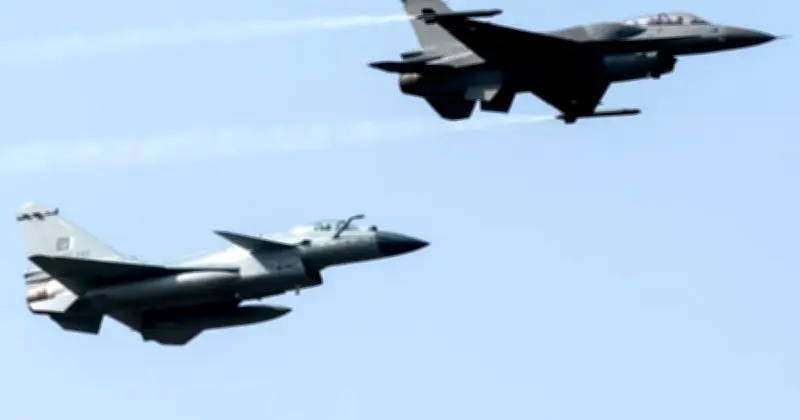
Once the target was positively identified and confirmed, the NAF aircraft launched a precision engagement on the location. Subsequent battle damage assessment indicated significant effects on the targeted compound, with several terrorists neutralised. Further intelligence received after the strike confirmed that nine ISWAP fighters were killed, while several others were wounded.
Among those reportedly neutralised was Abu Khalid Al Muhajir, described as a prominent ISWAP commander responsible for providing special security escorts for the movement of senior members of the terrorist group. According to the military, Al Muhajir was also familiar with key routes, terrain, and movement corridors linking major ISWAP enclaves across the Sambisa Forest and nearby areas.
Impact on ISWAP Operations
The death of Al Muhajir is expected to disrupt ISWAP's operations and make it more difficult for top commanders to move around safely. The NAF also revealed that intelligence gathered after the operation linked some of the terrorists hit in the airstrike to those suspected of carrying out a recent ambush on Nigerian troops along the Bita-Yamtage axis in Gwoza Local Government Area of Borno State.
Military authorities said the latest operation highlights the growing impact of intelligence-led air missions, where persistent surveillance is combined with precision strikes to target terrorist movements with greater accuracy. The military has continued to intensify air and ground operations across Nigeria's North-East as part of ongoing efforts to dismantle ISWAP and Boko Haram strongholds in Borno and neighbouring states.
Context: Ongoing Counter-Terrorism Efforts
This airstrike is part of a broader campaign by the Nigerian military to degrade terrorist capabilities in the region. The use of Remotely Piloted Aircraft allows for sustained surveillance and timely strikes, reducing risks to ground troops while increasing operational effectiveness. The military has not released details on the exact location of the strike within the vast Sambisa Forest, but the area has long been a known hideout for Boko Haram and ISWAP factions.
The operation underscores the importance of intelligence sharing and real-time monitoring in modern counter-insurgency operations. As the military continues its offensive, residents of Borno State have expressed cautious optimism that such strikes will help restore peace to the region, which has been plagued by insurgency for over a decade.