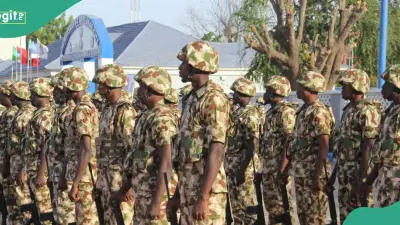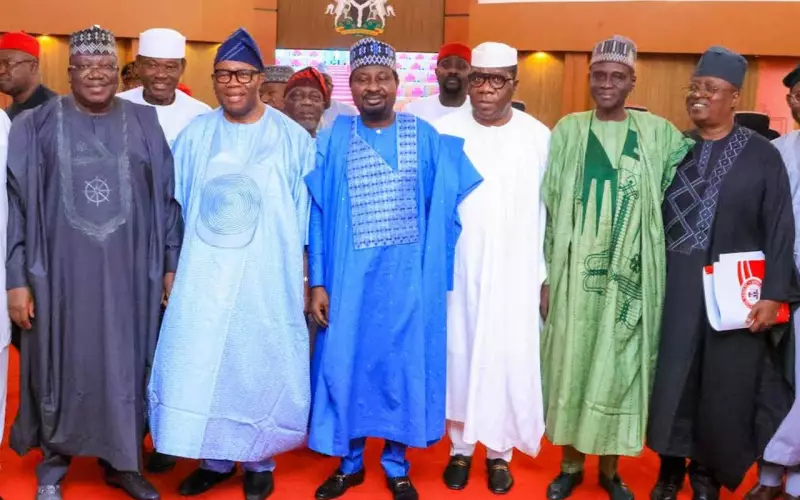
In a decisive move to overhaul Nigeria's faltering security framework, the National Assembly on Wednesday confirmed General Christopher Musa (Retd) as the Minister of Defence and adopted a series of stringent resolutions aimed at curbing terrorism and kidnappings.
Senate Grills Musa, Rejects "Bow and Go" Tradition
The Senate's confirmation followed a rigorous three-hour screening session marked by intense bipartisan scrutiny. The chamber firmly rejected initial suggestions for the nominee to "take a bow and go," a customary practice for certain confirmations. Instead, senators subjected General Musa to extensive questioning on critical issues including defence funding, intelligence failures, and the military's response to rising banditry and terrorist infiltration.
The session turned dramatic when Senator Sani Musa proposed the traditional bow, triggering loud protests from other lawmakers. Senate President Godswill Akpabio intervened, stating, "This is not a time for bow and go. Our constituents are asking questions. Our children, brothers, and sisters are in the bush." Akpabio also raised serious concerns about alleged security breaches, questioning who leaked operational information prior to the kidnapping of schoolchildren in Kebbi.
Musa's Firm Stance and Action Plan
Responding to questions, the new Defence Minister-designate was unequivocal in his approach. He declared a policy of "no negotiation with criminals" and insisted Nigeria must stop all ransom payments. He emphasized that the fight against insecurity is only 25-30% kinetic, with the rest dependent on good governance, justice, and equity.
General Musa outlined a comprehensive action plan, which includes:
- Withdrawing soldiers from routine checkpoints for redeployment to hunt terrorists in forests.
- Establishing a unified national database to track criminals.
- Enhancing community cooperation and tackling illegal mining linked to terror financing.
- Improving border surveillance and expanding maritime security operations.
He vowed to investigate the controversial capture of a brigade commander by insurgents, promising that anyone found culpable would face the law. "We will not allow terrorists to build such capacity," he stated.
House of Representatives Backs Hard-Line Measures
Concurrently, the House of Representatives adopted over 40 resolutions from an exhaustive security debate. Key among them is the prohibition of amnesty and ransom payments to terrorists, mandating that only lawful criminal justice procedures be followed.
The Green Chamber also called for:
- A national audit of all firearms and security equipment to prevent diversion.
- Treating security budgets as a "First Line Charge" for timely funding.
- Deploying modern technology like drones and AI for border security.
- Creating a Special Court for terrorism and kidnapping cases.
- Publicly naming and prosecuting financiers of terrorism.
A contentious point was the resolution to reduce police and military personnel on VIP protection details. Deputy Speaker Benjamin Kalu cautioned that removing protection from governors and justices could be counterproductive, while the Chairman of the Police Affairs Committee, Makki Abubakar Yalleman, defended the move, noting that over 11,500 officers had already been reassigned to frontline duties.
Legislative Backing for Harsher Laws
Providing the incoming minister with a stronger legal framework, Senate President Akpabio disclosed that the Senate has begun the process of classifying kidnapping as a terrorist act punishable by death, without an option of fine. "We are giving you the enabling framework," he told General Musa. "If they are not deterred, they will face a death sentence."
Senators also pushed for urgent reforms. Former Senate Leader Ali Ndume urged that the Armed Forces be placed on First Line Charge for funding, similar to INEC, to eliminate bureaucratic delays. He also lamented that Nigerian soldiers are not among the best paid in West Africa, calling for improved welfare.
General Musa acknowledged the massive public expectations and pledged a strict professional regime within the military. "I cannot afford to fail myself, my nation or my family," he said, promising to return to the Senate within three weeks of assuming office for a closed-door session on defence gaps.
The resolutions from both chambers will be transmitted to the executive, all security agencies, State Governments, and require concurrence between the Senate and the House.