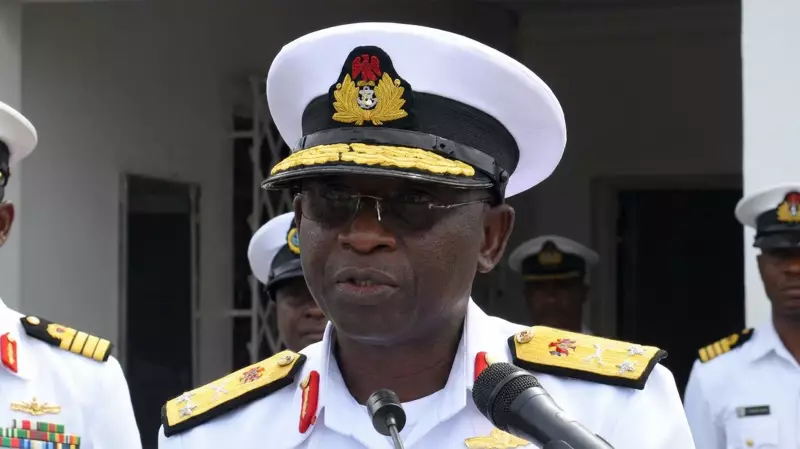
In a significant address to frontline troops, the Chief of Naval Staff, Vice Admiral Idi Abbas, has emphasized that the deployment of military personnel to the extreme flank of Nigeria's North-Eastern border, while challenging, is an indispensable measure for national security.
Frontline Visit and Strategic Imperative
Vice Admiral Abbas made these remarks on Friday, 3 January 2026, during a luncheon he hosted for officers and men of the Naval Base Lake Chad (NBLC) and the 196 Amphibious Battalion. Both units are co-located in Baga, Borno State. The Naval Chief was accompanied by senior officers including the Chief of Operations, Rear Admiral M.B. Katagum, and the Chief of Logistics, Rear Admiral S.H. Abdullahi.
He stated that such deployments are critical for two primary reasons: to secure the nation's territorial integrity and to assert control over the vital waterways within the Lake Chad Basin. Abbas reaffirmed the Nigerian Navy's unwavering commitment to denying terrorist groups the use of these waterways through sustained and coordinated operations conducted in synergy with sister services and other security agencies.
Restoring Navigation and Economic Life
According to a statement released by the Director of Navy Information, Commodore Aiwuyor Adams-Aliu, the Naval Chief undertook a boat ride on Lake Chad. This activity was symbolic, demonstrating the recent clearance operations by the Naval Base which have restored navigation and are aimed at reviving economic activities in the area that has long been impacted by insurgency.
Earlier in his visit, Vice Admiral Abbas was at the Headquarters of Operation Hadin Kai (OPHK), the counter-terrorism theatre command. There, the Theatre Commander, Major-General Abdulsalam Abubakar, briefed him on the recent gains made by the Joint Task Force (JTF), ongoing challenges, and future plans. Abubakar highlighted the effective contributions of the land, maritime, and air components, noting that seamless joint offensives have severely degraded the capabilities of insurgent groups.
The CNS commended the Theatre Commander and all OPHK personnel, assuring them that the highlighted challenges would be addressed promptly.
High Command Tracks Terrorist Relocations
In a related development, the Military High Command has acknowledged awareness of terrorists relocating from their strongholds to other communities. This movement follows the recent U.S.-Nigeria joint airstrikes on their positions in Sokoto and sustained military pressure.
The Director of Defence Media Operations (DMO), Major-General Michael Onoja, provided this update while summarizing troops' achievements in 2025. He also addressed concerns about an influx of armed herders into certain communities, stating that the situation is being taken seriously.
"Intelligence, Surveillance, and Reconnaissance (ISR) assets were actively monitoring terrorists movements across various operational theatres," Onoja said. He confirmed that these movements have been identified and are being tracked, urging communities to remain calm, vigilant, and to continue cooperating with security agencies.
The visit and subsequent statements underscore the military's multi-pronged strategy in the North-East, combining direct kinetic action with efforts to secure key economic zones and maintain public confidence through transparency.