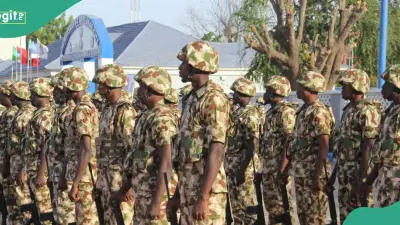
The Nigerian Navy is facing calls for a high-level investigation following serious allegations that one of its officers assaulted an Anglican priest at a checkpoint in Anambra State.
Bishop Demands Probe into Alleged Brutality
The Anglican Bishop of the Diocese of Ogbaru, Rt Rev Prosper Amah, has formally requested the Chief of Naval Staff to launch an inquiry into the incident. In a letter dated December 2, 2025, the bishop detailed that the alleged assault occurred on Sunday, November 30, at about 5:00 p.m.
The location was a naval checkpoint situated in Okpotouno, within the Ogbaru Local Government Area of Anambra State. The victim was identified as Revd Tochukwu Agina, a priest serving under the Ogbaru Diocese.
Details of the Checkpoint Incident
According to the bishop's account, the naval officer attacked the clergyman based on a false accusation. The officer allegedly claimed that Revd Agina was making a phone call while at the checkpoint, which prompted the violent response.
Rt Rev Amah described the event as "a deeply disturbing incident" and condemned the officer's actions in strong terms. He stated that the behaviour represented not just an abuse of authority but also a clear violation of fundamental human rights, the military code of conduct, and the professional ethics expected of the Nigerian Navy.
The bishop emphasised that the priest had identified himself both by his clerical attire and verbally, yet the assault still proceeded.
Calls for Accountability and Systemic Reform
Beyond seeking justice for this specific case, Bishop Amah's letter outlined several demands aimed at preventing future occurrences. He called for a thorough, transparent, and independent investigation into the matter.
The bishop insisted that the Nigerian Navy must take appropriate disciplinary action against the officer involved. He also urged the naval authorities to provide adequate compensation to the affected priest, his family, and the wider church community.
To address the root causes, Rt Rev Amah recommended renewed training for personnel on civilian-military relations and the proper rules of engagement. He stressed that the uniform of the Nigerian Navy should symbolise honour, discipline, and service to the nation, not intimidation or oppression.
"While we acknowledge their service to the nation, no circumstance justifies brutality, false accusation, or the dehumanisation of any Nigerian citizen," the bishop wrote.
Preserving Public Confidence in the Armed Forces
The bishop's letter concluded with an appeal to preserve the esteem in which Nigerians hold the Armed Forces. He argued that public confidence can only be maintained through demonstrated justice, accountability, and swift corrective measures when wrongdoing occurs.
"Justice for one citizen is justice for all," he asserted, expressing trust in the naval leadership's sense of duty to address the matter with the seriousness it deserves.
As of the time this report was compiled, the Nigerian Navy had not issued an official public response to the allegations. The claims made in the bishop's letter have not yet been independently verified.