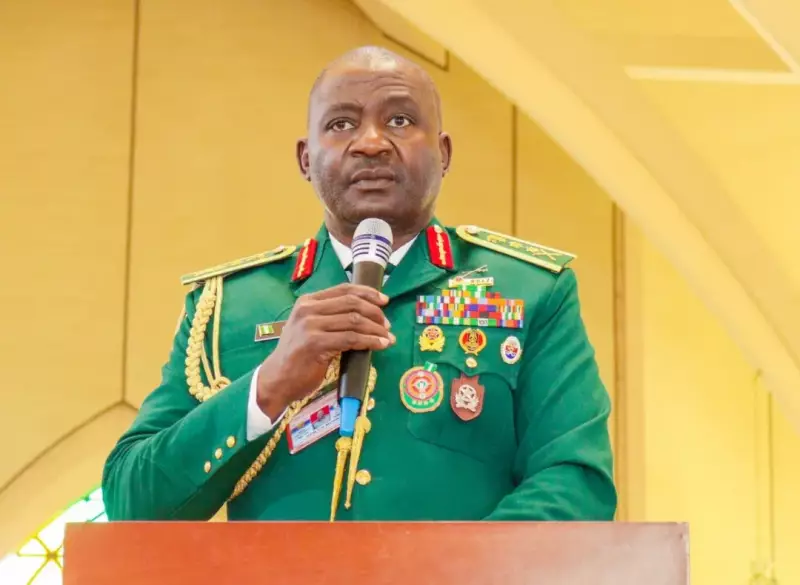
Nigeria's Minister of Defence, General Christopher Musa, has taken a definitive and uncompromising stance against the nation's security challenges. During his recent screening at the Senate, the minister declared that there should be no further negotiation or payment of ransom to terrorists and kidnappers, arguing that such practices only empower criminal networks and prolong the cycle of violence.
A Firm Stance on Funding Terrorism
General Musa warned that providing ransom money allows terrorist groups to regroup, re-arm, and plan fresh attacks. He pointed to communities that had previously engaged in negotiations, noting they often suffered subsequent attacks regardless. The minister revealed that Nigeria's banking system possesses the capability to trace suspicious financial transactions, but this requires the full activation of the right tools and frameworks.
He identified illegal mining as a major funding source for armed groups operating in the country's forest regions and demanded a total ban on the activity. Musa also expressed deep concern over Nigeria's slow judicial process, particularly for terrorism and kidnapping cases that can drag on for years. He called for urgent legal reforms, including the establishment of special courts for terrorism cases, stricter penalties, and accelerated hearings to bolster the national security architecture.
Beyond Kinetic Operations: Addressing Root Causes
The Defence Minister emphasised that military force alone is insufficient to defeat insecurity. He estimated that kinetic operations contribute only about 25 to 30 percent of the overall solution. Musa highlighted deeper socio-economic and governance issues—including poverty, illiteracy, weak governance, and ineffective local government structures—as fundamental factors feeding criminal networks.
He called on state and local government administrators to take greater responsibility for intelligence gathering and early intervention, stressing that security agencies cannot bear the entire burden alone. “A hungry man is an angry man. Protecting farmers means protecting the nation,” Musa stated, underscoring that restoring safe access to farmlands for food security is a top priority for national stability.
Strategic Shifts and Systemic Reforms
On operational strategy, General Musa announced plans to reduce routine military checkpoints across the country. This move is designed to free up more troops for active field operations in forests and other ungoverned spaces where threats are most prevalent.
The minister also raised an alarm about renewed criminal activity in maritime corridors linking Akwa Ibom to Cameroon, involving sea robbery, piracy, and coastal kidnappings. He confirmed that Operation Delta Safe is expanding its reach into areas that were previously calm but now show signs of criminal infiltration.
On personnel, Musa revealed that while over 70,000 Nigerians apply for military recruitment annually, many resist deployment to active conflict zones. He stressed the critical need for a unified national database to verify identities, eliminate recruitment fraud, and improve the tracking of criminals across state lines. He described Nigeria's current fragmented data systems—held separately by immigration, quarantine, and other agencies—as a serious obstacle exploited by terrorists, kidnappers, and cybercriminals.
This ministerial position aligns with broader legislative action, as the House of Representatives recently adopted extensive national security reform resolutions after a special three-day debate. Lawmakers called for the open and transparent prosecution of all terrorism-related cases to help reduce violent crimes and restore public trust.